
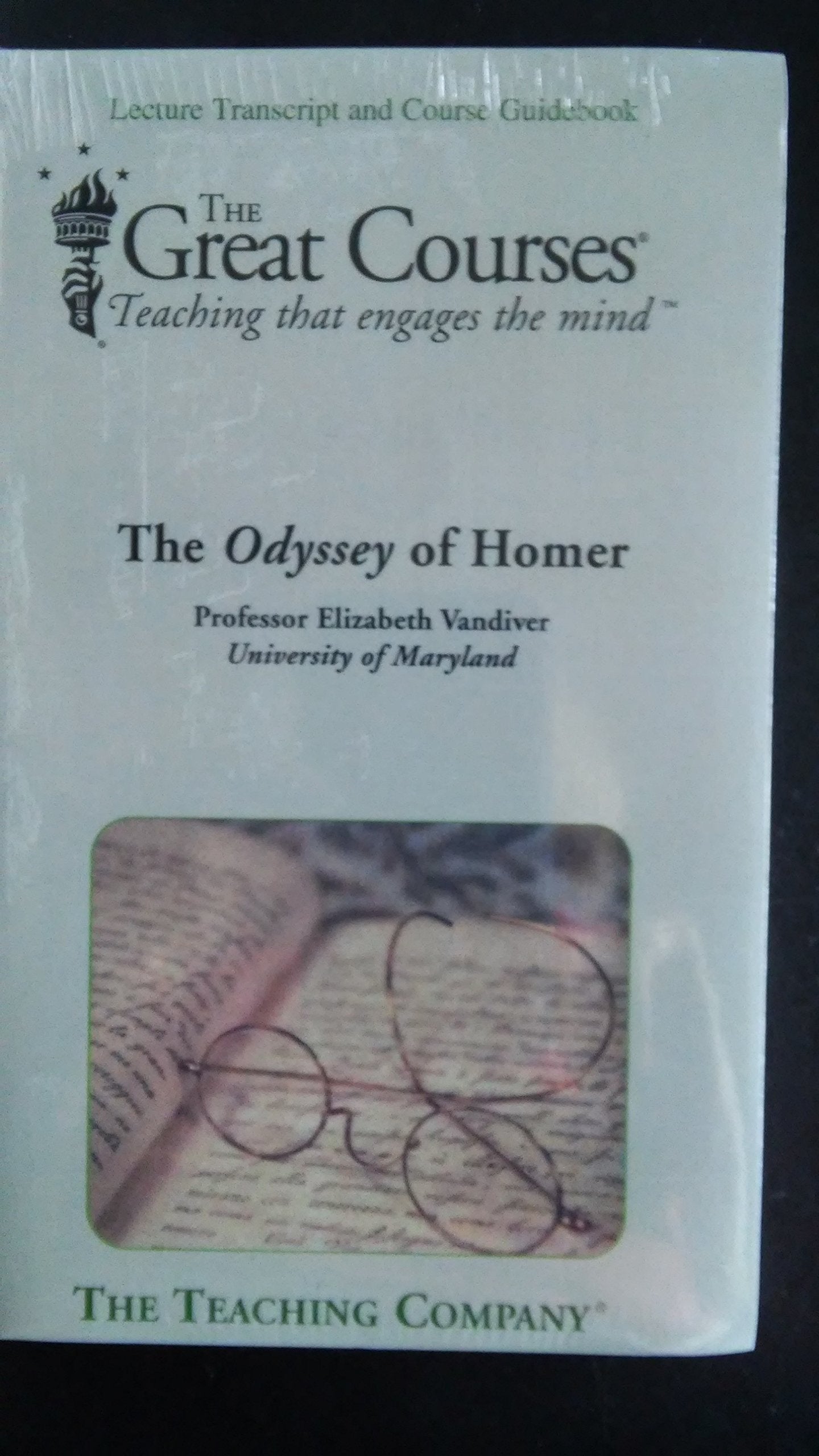
Title
The Odyssey Of Homer: Lecture Transcript And Course Guidebook (The Great Courses: Teaching That Engages The Mind)
Sold by Ergodebooks, an authorized reseller.
Returns accepted within 30 days | support@ergodebooks.com
Shipping Information
- Free Standard Shipping — United States only
- Processing Time: 3–5 business days
- Estimated Delivery: 6–10 business days after dispatch
- Double-boxed, fully insured & discreetly packaged
- Tracking number sent via email once dispatched
Returns & Refund
Returns accepted within 30 days of delivery.
Damaged or Defective Item
Free return shipping + replacement or full refund
Wrong Item Received
Free return shipping + replacement or full refund
Change of Mind
Return shipping at customer's expense · 25% restocking fee applies
Payment Option

Keats Compared Discovering Homer To Finding A New Planet. What Is It In Homer'S Great Worksand Especially The Odysseythat So Enthralled Him? Why Have Readers Before And Since Reacted The Same Way? By Joining Awardwinning Classics Professor Elizabeth Vandiver For These Lectures On The Odyssey, You Can Get Answers To These And Hundreds Of Other Questions.At First Glance, Those First Two Questions Indeed Seem Troubling.For The Odyssey Tells Of A Longdead Epoch That Seems Utterly Alien To Us. Indeed, The Bronze Age Aegean Was A Distant Memory Even To The Original Audiences Of These Works.But Age Seems Only To Have Burnished The Luster Of This Epic.It May Be Precisely Because Of Its Very Strangeness And Distance That Generation After Generation Of Readers Have Come To Love It So Much.This Strangeness And Distance Throw Sharply Into Focus The Timeless Human Issues That Ride Along On Odysseus'S Journey, Voyaging To Strange Lands On The Shores Of Winedark Seas, Dealing Facetoface With Gods And Monsters.A Single Riveting Question... And The Others It Raisesthe Epic'S Exploration Centers Around A Single Question About The Protagonist, And The Two Related Questions It Immediately Suggests:Why Does Odysseus Long So Powerfully To Go Home? What Holds People Together And Keeps Them Going In Extreme Situationn Such As War Or Shipwreck? Why Do We Love Our Own So Strongly? It Is This Universal Theme That Seems Of Paramount Importance. What Does It Mean To Live?Professor Vandiver Builds Her Analyses Skillfully Around Meticulous, Insightful Examinations Of The Most Important Episodes In The Odyssey.She Explains The Cultural Assumptions That Lie Behind Homer'S Lines, And You Join Her In Weighing The Basic Critical And Interpretive Issues.Just As Knowledge Of The Trojan War Legend Is Necessary For Understanding The Iliadavailable As A Companion Coursethe Odyssey Assumes That Its Audience Knows How The War Ended And What Happened Next.Learn The Story Between The Epicslecture 1. We Begin With An Overview Of The Traditional Trojan War Story That Took Place After The Iliad. Next We Examine The Difference Between Kleos Epic, With Its Primary Focus On Glory, And Nostos Epic, Which Focuses Instead On Homecoming. Lecture 2. This Lecture Defines And Examines Xenia, A Concept That Is Of Key Importance For Understanding The Odyssey And The Characters Of Telemachos And The Suitors.Xenia Is Usually Translated Guesthost Relationship. It Is A Reciprocal Relationship Between Two Xenoia Word Which Means Guest, Host, Stranger, Friend, And Foreigner. It Is Not Based On Friendship, But Rather On Obligation.In Addition To Examining Xenia, The Lecture Also Highlights Two Other Important Narrative Elements Established In The Telemachy: The Use Of Agamemnon'S Story As A Parallel For Odysseus'S Own Telemachos'S Need To Assert His Maturity. Lecture 3. In This Lecture, We Turn To Odysseus Himself As A Character In The Odyssey. The Lecture Concentrates On The Aspects Of Odysseus'S Character That Are Introduced In These Two Books: His Desire To Return Home As A Desire To Reestablish His Own Identity His Superb Skills As A Rhetorician, Able To Craft His Speech To Appeal To Whomever He Is Addressing. Enter Odysseus... In His Own Voicelecture 4. This Lecture Continues To Follow Odysseus'S Interactions With The Phaiakians, And Moves On Into The Beginnings Of His Own Great Narrative Of His Past Adventures.The Lecture Addresses Several Key Themes, Including The Continued Importance Of Xenia As Offered By The Phaiakians And How The Conception Of Kleos In The Odyssey Differs From That Of The Iliad. Professor Vandiver Also Discusses How The Appearance Of The Bard Demodokos In Book Viii May Reflect The Original Threeday Performance Structure Of The Odyssey. As The Lecture Concludes, We See How The Encounter With The Cyclops Polyphemos Shows Odysseus At His Most Clever And Quickthinking But Also Causes All His Subsequent Troubles.Lecture 5. We Continue Following Odysseus'S Own Narrative Of The Great WanderingsOdysseus'S Narrative Of His Trip To Hadesincluding An Examination Of His Encounter With Circe And The Implications Of The Sexual Double Standard Reflected In It And In The Rest Of The Odyssey. A Journey Into Hadesthe Lecture Looks At The First Half Of The Pivotal Episode In The Great Wanderings And Ends With A Discussion Of The Reasons For And Effects Of The Abrupt Break In The Text, Where The Poem Returns Briefly To The Thirdperson Narrative.Lecture 6. This Lecture Continues To Look At Odysseus'S Narrative Of His Journey To Hades. Professor Vandiver Notes Elements In The Hades Narrative That Seem Particularly Designed To Enchant Odysseus'S Phaiakian Audience.She Also Considers The Vexing Question Of Odysseus'S Own Veracity Before Moving On To The Final Episode Of The Great WanderingsThe Killing Of Helios'S C
⚠️ WARNING (California Proposition 65):
This product may contain chemicals known to the State of California to cause cancer, birth defects, or other reproductive harm.
For more information, please visit www.P65Warnings.ca.gov.
- Q: How many pages does 'The Odyssey of Homer' have? A: The book has zero pages listed, indicating it may not be a traditional print format.
- Q: What is the binding type of this book? A: The binding type is paperback, making it flexible and easy to handle.
- Q: Who is the author of 'The Odyssey of Homer'? A: The author is Elizabeth Vandiver, an award-winning classics professor.
- Q: What is the size of the book? A: The dimensions are eight point four three inches long by five point eight seven inches wide.
- Q: What topics are covered in the lectures? A: The lectures cover themes such as xenia, the concept of homecoming, and Odysseus's character development.
- Q: Who is the target audience for this course? A: The course is suitable for anyone interested in classical literature, especially fans of Homer.
- Q: Is this course suitable for beginners? A: Yes, the course is designed to engage both beginners and those familiar with classical texts.
- Q: How do I access the lectures? A: Lectures can typically be accessed through the Great Courses platform or associated channels.
- Q: What materials do I need to follow this course? A: No specific materials are required, just a willingness to engage with the lectures.
- Q: How should I care for my paperback book? A: Keep it in a dry place away from direct sunlight to prevent fading and damage.
- Q: Can I clean the book if it gets dirty? A: Yes, gently wipe the cover with a soft, dry cloth to remove any stains.
- Q: How should I store the book? A: Store it upright on a shelf or in a bookcase to prevent bending or creasing.
- Q: What should I do if the book arrives damaged? A: Contact the seller for their return policy or to request a replacement.
- Q: Is there a warranty for this book? A: Typically, books do not come with a warranty, but check with the seller for specific policies.
- Q: What if I have trouble accessing the lectures online? A: Reach out to customer support of the platform for assistance with access issues.
- Q: Is this version of 'The Odyssey' suitable for academic study? A: Yes, it provides valuable insights and analyses suitable for academic discussions.