
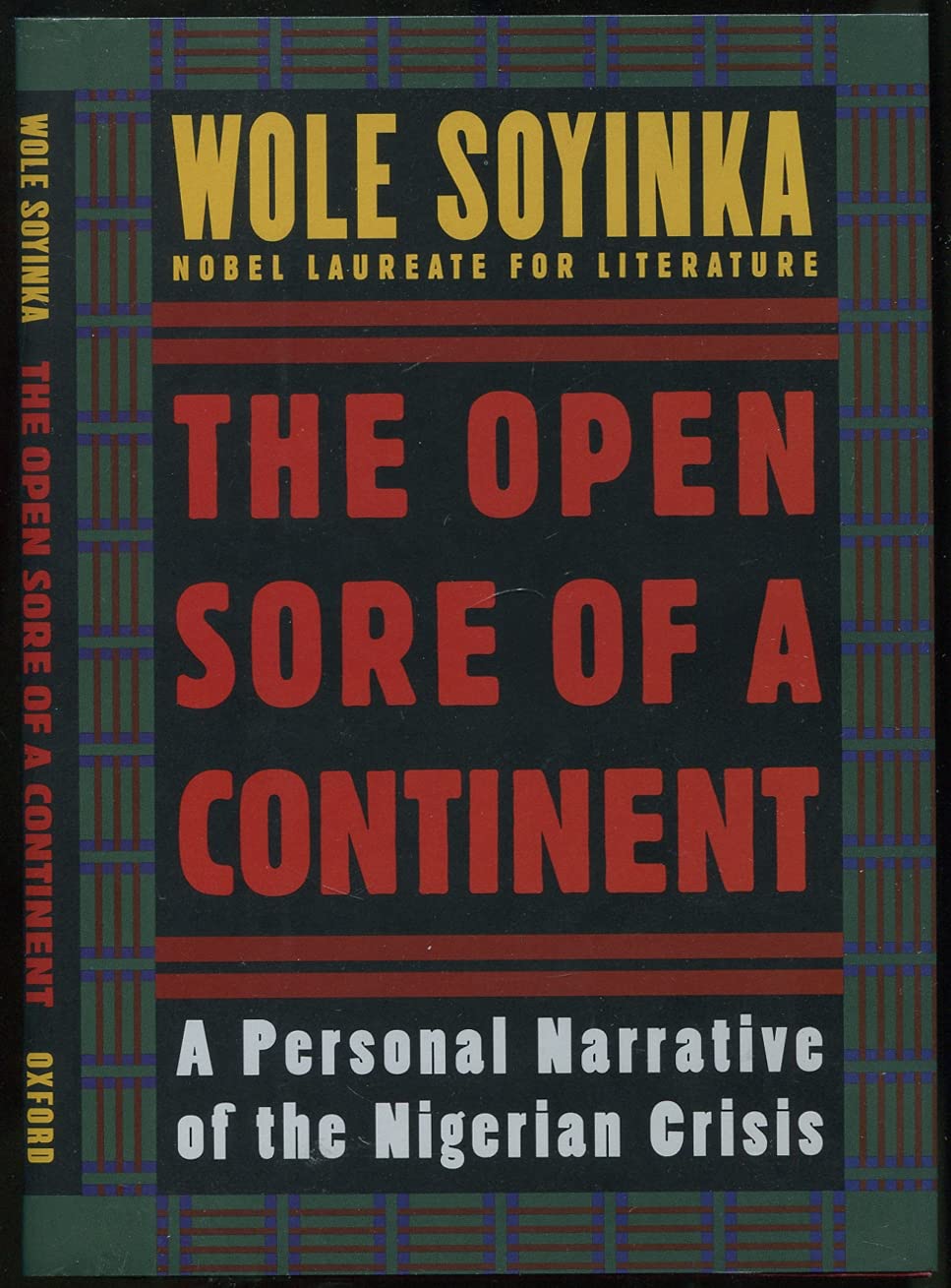
Title
The Open Sore Of A Continent: A Personal Narrative Of The Nigerian Crisis (The ^Aw.E.B. Du Bois Institute Series)
Sold by Ergodebooks, an authorized reseller.
Returns accepted within 30 days | support@ergodebooks.com
Shipping Information
- Free Standard Shipping — United States only
- Processing Time: 3–5 business days
- Estimated Delivery: 6–10 business days after dispatch
- Double-boxed, fully insured & discreetly packaged
- Tracking number sent via email once dispatched
Returns & Refund
Returns accepted within 30 days of delivery.
Damaged or Defective Item
Free return shipping + replacement or full refund
Wrong Item Received
Free return shipping + replacement or full refund
Change of Mind
Return shipping at customer's expense · 25% restocking fee applies
Payment Option

On November 10, 1995, The Nigerian Military Government Under General Sani Abacha Executed Dissident Writer Ken Sarowiwa Along With Eight Other Activists, And The International Community Reacted With Outrage. From The Geneva Based International Commission Of Jurists (Who Called The Executions A Criminal Act Of State Murder) To Governments Around The World (Including The United States) Who Recalled Their Ambassadors, To The Commonwealth Of Former British Colonies, Who Suspended Nigeria From The Group, The Response Was Quick, Decisive, And Nearly Unanimous: Nigeria Is An Outcast In The Global Village. The Events That Led Up To Sarowiwa'S Execution Mark Nigeria'S Decline From A Postcolonial Success Story To Its Current Military Dictatorship, And Few Writers Have Been More Outspoken In Decrying And Lamenting This Decline Than Nobel Prize Laureate And Nigerian Exile Wole Soyinka.In The Open Sore Of A Continent, Soyinka, Whose Own Nigerian Passport Was Confiscated By General Abacha In 1994, Explores The History And Future Of Nigeria In A Compelling Jeremiad That Is As Intense As It Is Provocative, Learned, And Wideranging. He Deftly Explains The Shifting Dramatis Personae Of Nigerian History And Politics To Westerners Unfamiliar With The Players And The Process, Tracing The Growth Of Nigeria As A Player In The World Economy, Through The Corrupt Regime Of Babangida, The Civil War Occasioned By The Secession Of Biafra Under The Leadership Of Chief Odumegwu Ojukwu, The Lameduck Reign Of Ernest Sonekan, And The Coup Led By General Sani Abacha, Arguing That A Glance At The Mildewed Tapestry Of The Stubbornly Unfinished Nation Edifice Is Necessary To Explain Where Nigeria Can Go Next. And, In The Process Of Elucidating The Nigerian Crisis, Soyinka Opens Readers To The Broader Questions Of Nationhood, Identity, And The General State Of African Culture And Politics At The End Of The Twentieth Century. Here Are A Range Of Issues That Investigate The Interaction Of Peoples Who Have Been Shaped By The Clash Of Cultures: Nationalism, Power, Corruption, Violence, And The Enduring Legacy Of Colonialism. In A World Tormented By Devastation From Bosnia To Rwanda, How Do We Define A Nation: Is It Simply A Condition Of The Collective Mind, A Passive, Unquestioned Habit Of Cohabitation? Or Is What We Think Of As A Nation A Rigorous Conclusion That Derives From History? Is It Geography, Or Is It A Bond That Transcends Accidents Of Mountain, River, And Valley? How Do These Varying Definitions Of Nationhood Impact The People Who Live Under Them? Soyinka Concludes With A Resounding Call For International Attention To This Question: The Global Community Must Address The Issue Of Nationhood To Prevent Further Religious Mandates And Calls For Ethnic Purity Of The Sort That Have Turned Algeria, Rwanda, Bosnia, And Sri Lanka Into Killing Fields.Soyinka Brings A Lifetime Of Study And Experience To Bear On His Writing, Combining The Skills Of A Poet And Playwright With The Astute Political Observations Of A Seasoned Activist. An Important And Timely Volume, The Open Sore Of A Continent Will Be Required Reading For Anyone Who Cares About Africa, Human Rights, And The Future Of The Global Village.
⚠️ WARNING (California Proposition 65):
This product may contain chemicals known to the State of California to cause cancer, birth defects, or other reproductive harm.
For more information, please visit www.P65Warnings.ca.gov.
- Q: What are the dimensions of the book? A: The book measures five point five one inches in length, zero point seven five inches in width, and eight point five inches in height.
- Q: How many pages does the book have? A: The book contains one hundred seventy-six pages, providing an in-depth exploration of Nigeria's historical and political landscape.
- Q: What is the binding type of this book? A: The book is bound in hardcover, ensuring durability and longevity for readers.
- Q: Who is the author of this book? A: The author is Wole Soyinka, a Nobel Prize laureate known for his profound insights into African culture and politics.
- Q: What themes does the book explore? A: The book explores themes such as nationalism, power, corruption, violence, and the legacy of colonialism in Nigeria.
- Q: Is this book suitable for young readers? A: No, the book is intended for mature audiences due to its complex themes and historical context.
- Q: How do I read this book effectively? A: To read effectively, take your time to understand the historical context and the political nuances presented by the author.
- Q: What is the target audience for this book? A: The target audience includes individuals interested in African politics, history, and human rights.
- Q: Can this book be used for academic purposes? A: Yes, it is suitable for academic study in fields such as political science, history, and cultural studies.
- Q: How should I store this book to keep it in good condition? A: Store the book upright on a shelf in a cool, dry place away from direct sunlight to prevent damage.
- Q: Is there a warranty or return policy for this book? A: Yes, most retailers offer a standard return policy, allowing returns within a specified period if the book is in new condition.
- Q: What if the book arrives damaged? A: If the book arrives damaged, contact the retailer's customer service for assistance with a return or replacement.
- Q: Are there any special care instructions for this book? A: No special care instructions are needed; simply handle it with clean hands and avoid exposing it to moisture.
- Q: How does this book compare to other works on African politics? A: This book offers a unique perspective through personal narrative, setting it apart from more traditional academic texts.
- Q: What makes this book a recommended read? A: The book is highly recommended for its insightful analysis and compelling narrative on Nigeria's political crisis.
- Q: Is this book part of a series? A: Yes, it is part of The ^AW.E.B. Du Bois Institute Series, which focuses on significant themes in African studies.