
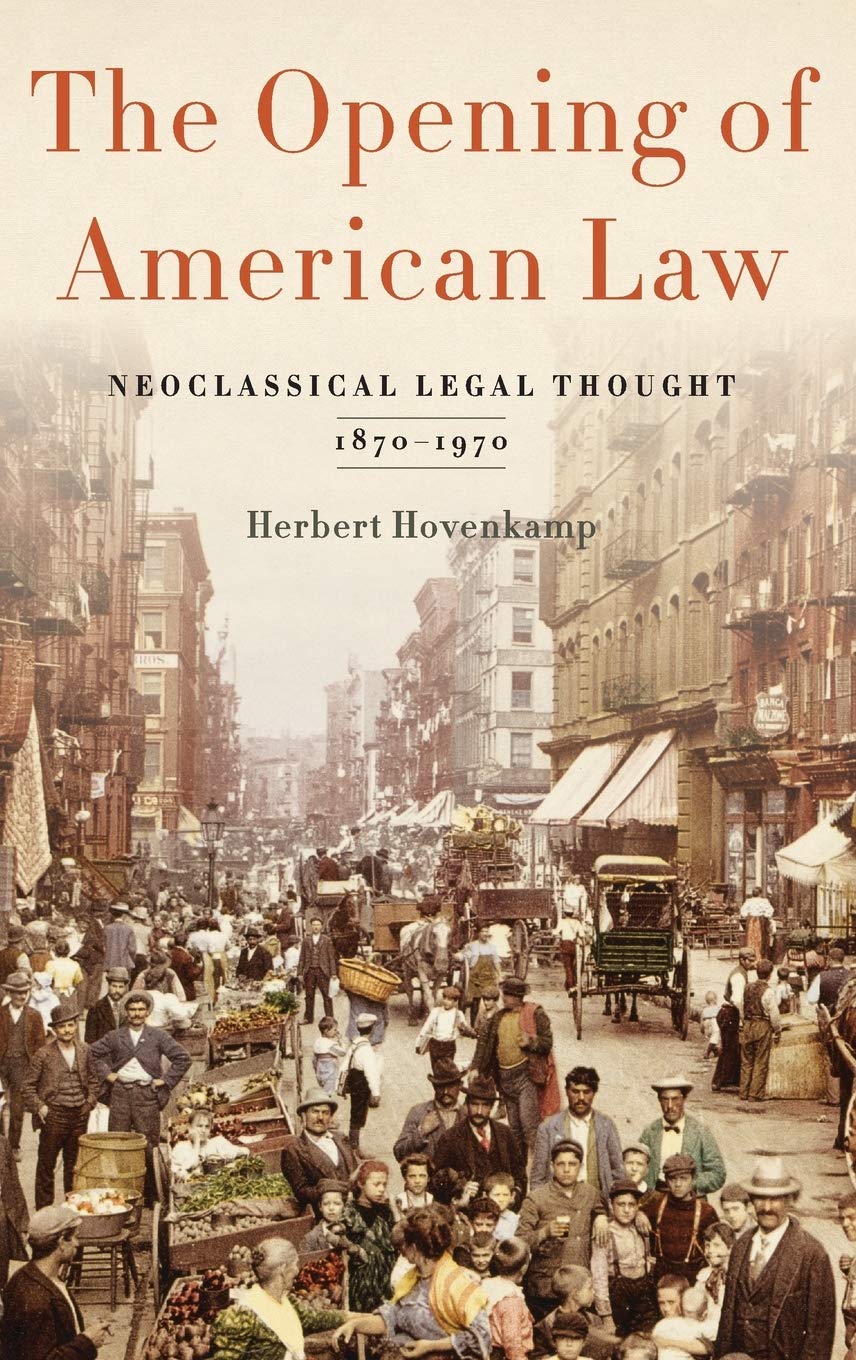
Title
The Opening of American Law: Neoclassical Legal Thought, 18701970,New
Sold by Ergodebooks, an authorized reseller.
Returns accepted within 30 days | support@ergodebooks.com
Shipping Information
- Free Standard Shipping — United States only
- Processing Time: 3–5 business days
- Estimated Delivery: 6–10 business days after dispatch
- Double-boxed, fully insured & discreetly packaged
- Tracking number sent via email once dispatched
Returns & Refund
Returns accepted within 30 days of delivery.
Damaged or Defective Item
Free return shipping + replacement or full refund
Wrong Item Received
Free return shipping + replacement or full refund
Change of Mind
Return shipping at customer's expense · 25% restocking fee applies
Payment Option

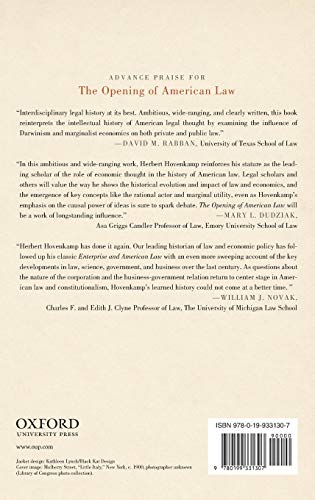
Two Victorian Era intellectual movements changed the course of American legal thought: Darwinian natural selection and marginalist economics. The two movements rested on fundamentally inconsistent premises. Darwinism emphasized instinct, random selection, and determinism; marginalism emphasized rational choice. American legal theory managed to accommodate both, although to different degrees in different disciplines. The two movements also developed mutually exclusive scientific methodologies. Darwinism emphasizing external indicators of welfare such as productivity, education or health, while marginalists emphasized market choice. Historians have generally exaggerated the role of Darwinism in American legal thought, while understating the role of marginalist economics. This book explores these issues in several legal disciplines and time periods, including Progressive Era redistributive policies, American common law, public law, and laws regarding corporations and competition. One is Progressive Era movements for redistributive policies about taxation and public goods. Darwinian science also dominated the law of race relations, while criminal law reflected an inconsistent mixture of Darwinian and marginalist incentivebased theories. The common law, including family law, contract, property, and tort, moved from emphasis on correction of past harms to management of ongoing risk and relationship. A chapter on Legal Realism emphasizes the Realists' indebtedness to institutional economics, a movement that powerfully influenced American legal theory long after it fell out of favor with economists. Five chapters on the corporation, innovation and competition policy show how marginalist economics transformed business policy. The ironic exception was patent law, which developed in relative insulation from economic concerns about innovation policy. The book concludes with three chapters on public law, emphasizing the role of institutionalist economics in policy making during and after the New Deal. A lengthy epilogue then explores the variety of postwar attempts to reconstruct a defensible and more marketoriented rule of law after the decline of Legal Realism and the New Deal.
⚠️ WARNING (California Proposition 65):
This product may contain chemicals known to the State of California to cause cancer, birth defects, or other reproductive harm.
For more information, please visit www.P65Warnings.ca.gov.