
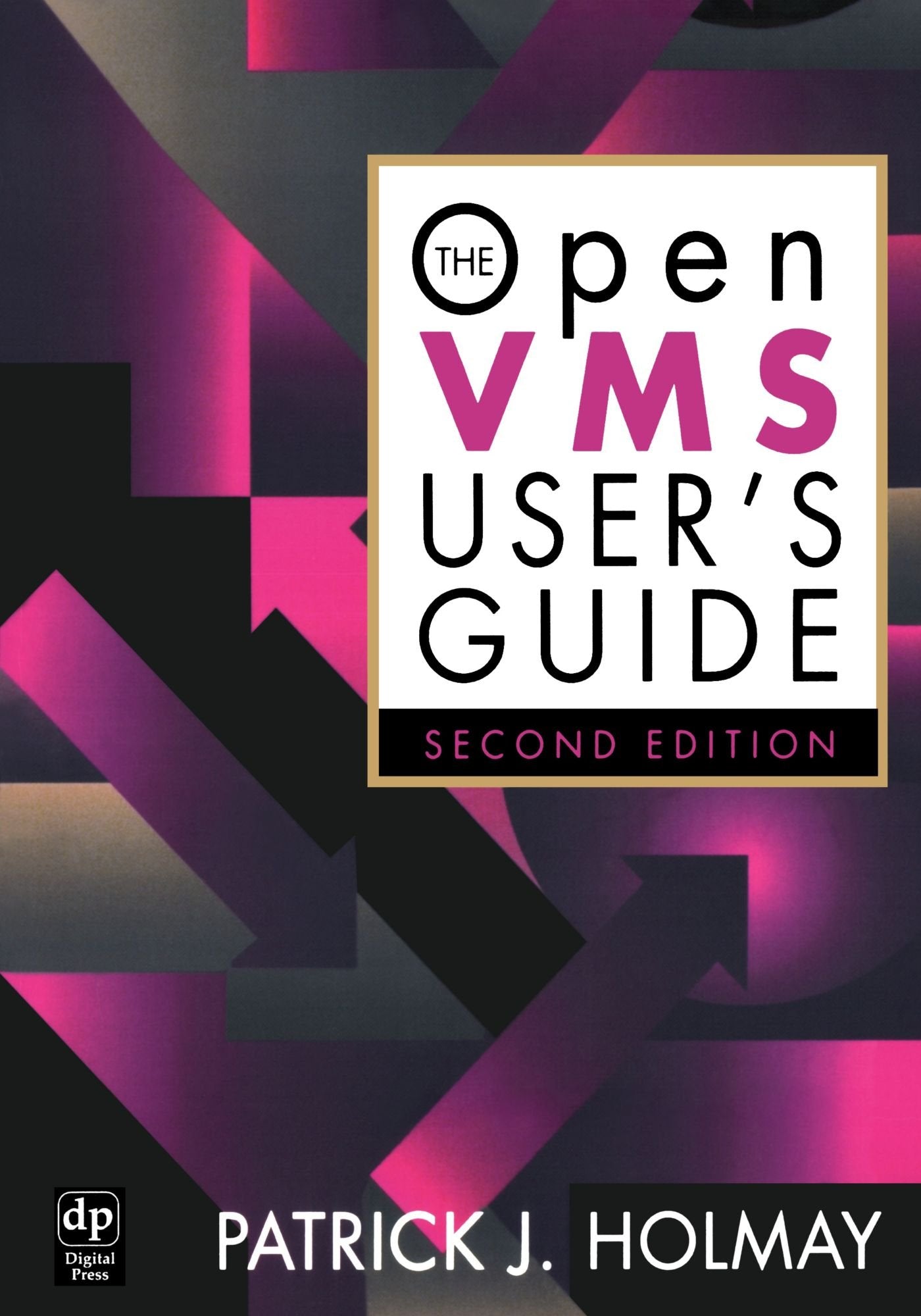
Title
The OpenVMS User's Guide (HP Technologies),New
Sold by Ergodebooks, an authorized reseller.
Returns accepted within 30 days | support@ergodebooks.com
Shipping Information
- Free Standard Shipping — United States only
- Processing Time: 3–5 business days
- Estimated Delivery: 6–10 business days after dispatch
- Double-boxed, fully insured & discreetly packaged
- Tracking number sent via email once dispatched
Returns & Refund
Returns accepted within 30 days of delivery.
Damaged or Defective Item
Free return shipping + replacement or full refund
Wrong Item Received
Free return shipping + replacement or full refund
Change of Mind
Return shipping at customer's expense · 25% restocking fee applies
Payment Option

Completely updated and revised, The OpenVMS User's Guide continues to be the prime resource for new and nontechnical users on how to use OpenVMS and customize it to their working environment. For more proficient users, the book serves as a quick lookup reference.The book begins with an introduction to the OpenVMS operating system and its builtin functions, and then provides a thorough explanation of OpenVMS files and directories, use of DCL, and how to edit files using EVE and EDT. It also discusses how to create command procedures and the Mail and Phone utilities. New to this edition are additional insights into application development and sending email to remote notes via the Internet, remote logins and file transfers. Each chapter is liberally sprinkled with learning aids including summaries and tables of commands, exercises, and review quizzes.
⚠️ WARNING (California Proposition 65):
This product may contain chemicals known to the State of California to cause cancer, birth defects, or other reproductive harm.
For more information, please visit www.P65Warnings.ca.gov.
- Q: How many pages does The OpenVMS User's Guide have? A: This book has three hundred twenty pages. It provides a comprehensive guide for both new and experienced users of OpenVMS.
- Q: What is the binding type of this book? A: The OpenVMS User's Guide is a paperback. This makes it lightweight and easy to handle for reading and reference.
- Q: What are the dimensions of The OpenVMS User's Guide? A: The dimensions are seven point zero one inches in length, zero point seventy-five inches in width, and ten inches in height. These measurements make it a convenient size for reading.
- Q: Who is the author of The OpenVMS User's Guide? A: The author is Holmay Manager from Analysts International Corporation, Patrick. They provide expert insights into the OpenVMS operating system.
- Q: Is The OpenVMS User's Guide suitable for beginners? A: Yes, it is suitable for beginners and non-technical users. The guide offers a thorough introduction and practical insights into using OpenVMS.
- Q: How can I customize OpenVMS using this book? A: You can customize OpenVMS by following the step-by-step instructions provided in the guide. It covers topics like file management and command procedures.
- Q: What features does The OpenVMS User's Guide offer? A: The book features learning aids such as summaries, tables of commands, exercises, and review quizzes. These enhance the learning experience for users.
- Q: Is there a focus on application development in this book? A: Yes, this edition includes additional insights into application development. It covers how to send emails to remote nodes and manage file transfers.
- Q: Are there any exercises included in the book? A: Yes, the book includes exercises and review quizzes. These are designed to reinforce the concepts covered in each chapter.
- Q: Can I use this book as a quick reference guide? A: Yes, for proficient users, it serves as a quick look-up reference. It provides concise information on various OpenVMS functionalities.
- Q: Is there a focus on using DCL in The OpenVMS User's Guide? A: Yes, the guide provides a thorough explanation of using DCL. It is a crucial part of working with OpenVMS effectively.
- Q: Does the book cover file management in OpenVMS? A: Yes, it discusses OpenVMS files and directories extensively. Users will learn how to manage files efficiently.
- Q: What utilities are discussed in The OpenVMS User's Guide? A: The book discusses the Mail and Phone utilities. It explains how to use these tools within the OpenVMS environment.
- Q: Is The OpenVMS User's Guide in good condition? A: Yes, it is listed as a used book in good condition. This indicates that it has been well-maintained and is still functional.
- Q: What topics are covered in the introduction of the book? A: The introduction covers the OpenVMS operating system and its built-in functions. It sets the stage for the deeper topics explored in the book.