
Title
The Opinion System: Impasses Of The Public Sphere From Hobbes To Habermas,Used
Sold by Ergodebooks, an authorized reseller.
Returns accepted within 30 days | support@ergodebooks.com
Shipping Information
- Free Standard Shipping — United States only
- Processing Time: 3–5 business days
- Estimated Delivery: 6–10 business days after dispatch
- Double-boxed, fully insured & discreetly packaged
- Tracking number sent via email once dispatched
Returns & Refund
Returns accepted within 30 days of delivery.
Damaged or Defective Item
Free return shipping + replacement or full refund
Wrong Item Received
Free return shipping + replacement or full refund
Change of Mind
Return shipping at customer's expense · 25% restocking fee applies
Payment Option

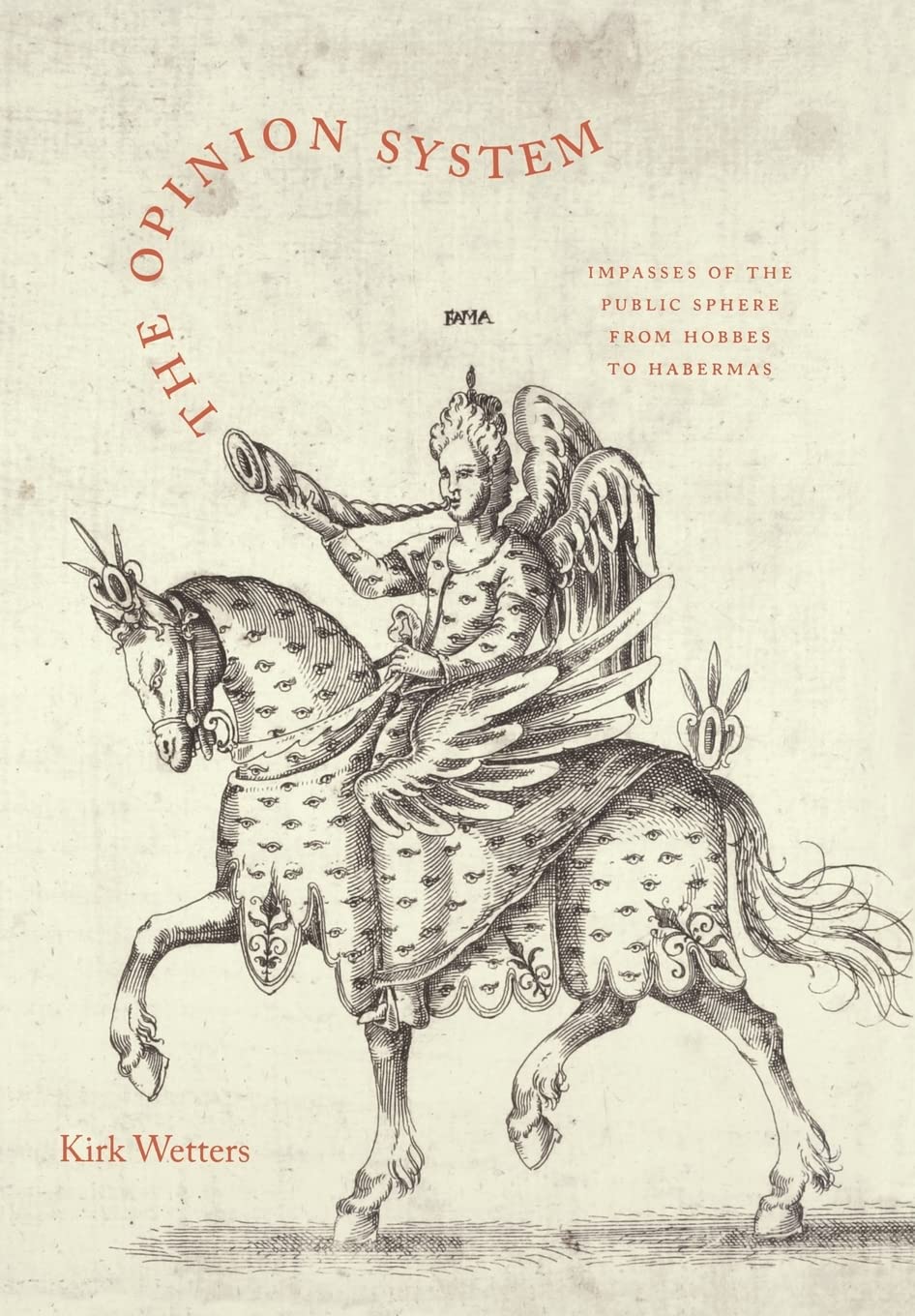
This book revises the concept of the public sphere by examining opinion as a foundational concept of modernity. Indispensable to ideas like 'public opinion' and 'freedom of opinion,' opinionthough sometimes held in dubious reputehere assumes a central position in modern philosophy, literature, sociology, and political theory, while being the object of extremely contradictory valuations.Kirk Wetters focuses on interpretative shifts begun in the Enlightenment and cemented by the French Revolution to restore the concept of 'opinion' to a central role in our understanding of the political public sphere. Locke's 'law of opinion,' underwritten by the ancient conceptions of nomos and fama, proved to be inconsistent with the modern ideal of a rational political order. The contemporary dynamics of this problem have been worked out by Jrgen Habermas and Reinhart Koselleck: for Habermas the private law of opinion can be brought under the rational control of public discourse and procedural form, whereas Koselleck views modernity as the period in which irrational potentials were unleashed by a politicalconceptual language that only intensified and accelerated the upheavals of history. Modernity risked making opinions into the idols of collective representations, sacrificing opinion to ideology and individualism to totalitarianism.Drawing on an intriguing range of thinkers, some not widely known to American readers today, Kirk Wetters argues that this transformation, though irreversible, is resisted by literary language, which opposes the rigid formalism that compels individuals to identify with their opinions. Rather than forcing thought to bind itself to stable opinions, modern literary forms seek to suspend this moment of closure and representation, so that held opinions do not bring all deliberative processes to a standstill.
⚠️ WARNING (California Proposition 65):
This product may contain chemicals known to the State of California to cause cancer, birth defects, or other reproductive harm.
For more information, please visit www.P65Warnings.ca.gov.