
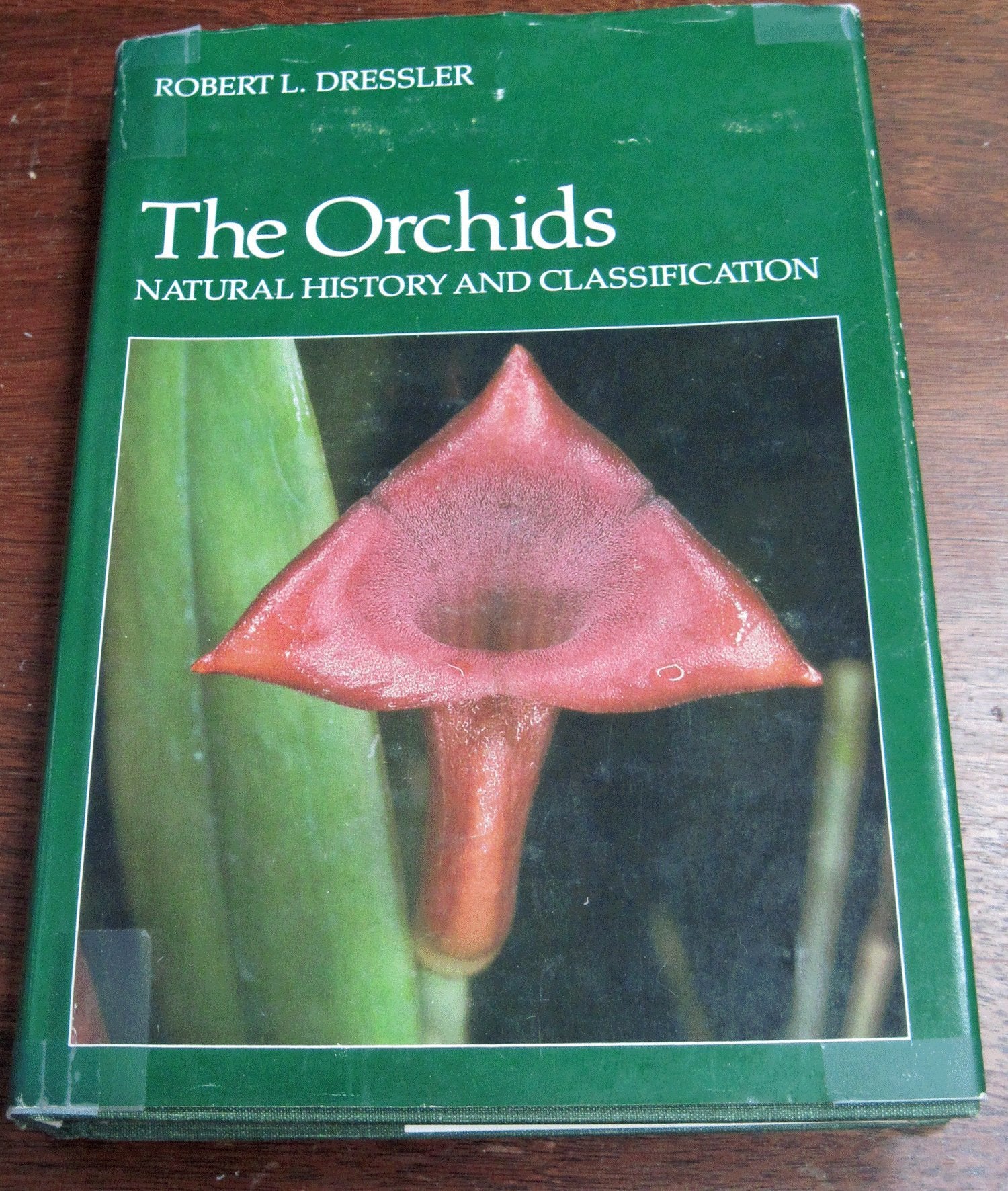
Title
The Orchids: Natural History And Classification,New
Sold by Ergodebooks, an authorized reseller.
Returns accepted within 30 days | support@ergodebooks.com
Shipping Information
- Free Standard Shipping — United States only
- Processing Time: 3–5 business days
- Estimated Delivery: 6–10 business days after dispatch
- Double-boxed, fully insured & discreetly packaged
- Tracking number sent via email once dispatched
Returns & Refund
Returns accepted within 30 days of delivery.
Damaged or Defective Item
Free return shipping + replacement or full refund
Wrong Item Received
Free return shipping + replacement or full refund
Change of Mind
Return shipping at customer's expense · 25% restocking fee applies
Payment Option

This Lively Examination Of The Structure, Classification, Evolution, And Ecology Of The Orchidaceae Will Appeal To Anyone With An Eye For Beauty Or A Bent For Natural History. It Will Provide Professional Biologists And Amateur Orchidists Alike With A Deeper Understandingand A Thoroughly New Classificationof This, The Largest Flowering Family In The Plant Kingdom.The Book Is Richly Illustrated, With 95 Color Photographs And 99 Line Drawings Emphasizing Orchid Morphology. But In The Context Of Serious Orchidology, Aesthetic Richness Is Not A Superficial Vanity. It Is The Result Of Evolutionary Processes That Demand Adaptation And Reward Diversity, And Dresslers Exploration Of These Mechanisms Demonstrates How Well The Orchids Have Met The Challenge, With Over 20,000 Species, A Geographical Range From Sweden To Tierra Del Fuego, And, At Times, As Many As 47 Different Species On A Single Tree. But Both The Orchids Success And Their Profligate Beauty Are Grounded, In Part, In Their Voluptuary Nature, And One Of Dresslers Most Engaging Themes Is The Reproductive Adaptations, Worthy Of A Renaissance Courtesan, That Orchids Use To Attract, Deceive, And Manipulate Pollinating Insects.The Orchid Family Is Actively Evolving, Providing Rich Possibilities For Comparative Study. Yet No One, Whether Professional Or Amateur, Could Reasonably Proceed Without First Addressing Robert Dresslers The Orchids. Its New Classification Alone, Including Pollination Biology, Phyletic Trends, Chromosome Counts, And Generic Relationships, Will Stand As A Watershed Contribution To The Field.
⚠️ WARNING (California Proposition 65):
This product may contain chemicals known to the State of California to cause cancer, birth defects, or other reproductive harm.
For more information, please visit www.P65Warnings.ca.gov.
- Q: How many pages does the book have? A: The book contains three hundred fifty-two pages. This length allows for a comprehensive exploration of orchid taxonomy and ecology.
- Q: What is the binding type of this book? A: The book is hardcover. This durable binding enhances the book's longevity and makes it suitable for repeated use.
- Q: What are the dimensions of the book? A: The book measures six point seventy-five inches in length, one inch in width, and nine point seventy-six inches in height. These dimensions make it easy to handle and store.
- Q: Who is the author of the book? A: The author is Robert Dressler. He is a respected figure in the field of orchidology, contributing significantly to the understanding of orchids.
- Q: What is the main subject of the book? A: The book focuses on the natural history and classification of orchids. It provides insights into their structure, evolution, and ecological roles.
- Q: Is this book suitable for beginners? A: Yes, the book is suitable for both beginners and professionals. It offers foundational knowledge while also delving into advanced classification systems.
- Q: What kind of illustrations does the book contain? A: The book is richly illustrated with ninety-five color photographs and ninety-nine line drawings. These visuals support the text by highlighting orchid morphology.
- Q: How do I use this book for research? A: You can use this book as a reference for understanding orchid classification and evolution. It's ideal for both academic research and personal interest.
- Q: Is there a specific reading level for this book? A: The book is appropriate for adults and older teens interested in natural history. Its content is detailed and may require some prior knowledge.
- Q: How should I store this book? A: Store the book upright in a cool, dry place. This will help preserve its condition and protect it from moisture and damage.
- Q: Can I clean the book if it gets dirty? A: Yes, you can gently wipe the cover with a dry cloth. Avoid using water or cleaning products that could damage the pages or cover.
- Q: What if the book arrives damaged? A: If the book arrives damaged, you should contact the seller for a return or exchange. Most sellers offer a satisfaction guarantee.
- Q: Is this book safe for all ages? A: Yes, the book is safe for all ages. It focuses on educational content about orchids and does not contain inappropriate material.
- Q: What makes this book unique compared to others on orchids? A: This book presents a new classification system for orchids, integrating pollination biology and phyletic trends, making it a significant contribution to the field.
- Q: Is there a glossary or index in the book? A: Yes, the book includes an index. This feature helps readers easily locate specific topics related to orchid classification and biology.
- Q: What are the ecological themes discussed in the book? A: The book explores ecological themes such as adaptation, diversity, and reproductive strategies of orchids. It highlights their evolutionary success across various habitats.