
Title
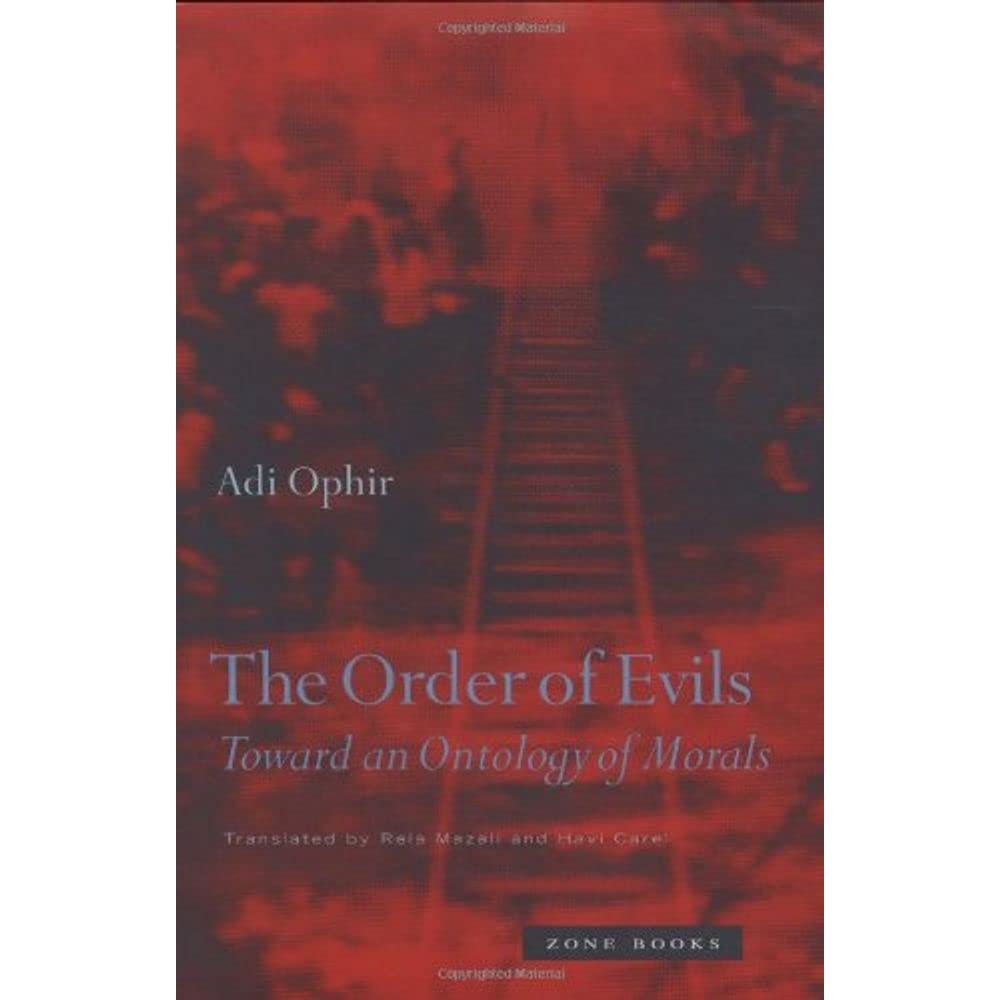
The Order of Evils: Toward an Ontology of Morals (Mit Press),New
Sold by Ergodebooks, an authorized reseller.
Returns accepted within 30 days | support@ergodebooks.com
Shipping Information
- Free Standard Shipping — United States only
- Processing Time: 3–5 business days
- Estimated Delivery: 6–10 business days after dispatch
- Double-boxed, fully insured & discreetly packaged
- Tracking number sent via email once dispatched
Returns & Refund
Returns accepted within 30 days of delivery.
Damaged or Defective Item
Free return shipping + replacement or full refund
Wrong Item Received
Free return shipping + replacement or full refund
Change of Mind
Return shipping at customer's expense · 25% restocking fee applies
Payment Option

What remains of moral judgment when truth itself is mistrusted, when the validity of every belief system depends on its context, when power and knowledge are inextricably entangled? Is a viable moral theory still possible in the wake of the postmodern criticism of modern philosophy? The Order of Evils responds directly to these questions and dilemmas with one simple and brilliant change of focus.Rather than concentrating on the ageold themes of justice and freedom, Adi Ophir offers a moral theory that foregrounds the existential and political nature of Evil. Ophirs main contention is that evil is neither a diabolical element residing in the hearts of men nor a meaningless absence of the good. Rather, it is the socially structured order of superfluous evils.Evils, like pain, suffering, loss, and humiliation, are superfluous when they could have but have not been prevented. Through close analysis of seminal works by modern and postmodern philosophers from Rousseau, Kant, Marx, Sartre, and Arendt to Foucault, Lvinas, Derrida, and Lyotard Ophir forges a new perspective for thinking about what it means to be a moral being; to be moral, he argues, is to care for others and to be committed to preventing, at all costs, their suffering and distress.A theoretically sophisticated work, The Order of Evils also bears the traces of Ophirs own political and personal experiences as an Israeli philosopher and activist. Two major events in recent Jewish history have profoundly influenced his thinking: the Holocaust and the prolonged Israeli domination of Palestinians in the occupied territories, both of which are interpreted within the authors moral framework as systematic productions of evils.Ophir does not compare the two events. Instead, he introduces a typology of disasters that allows them to be located within the wide spectrum of humangenerated calamities whose specificity and general patterns emerge clearly and distinctly as what they are and are not.
⚠️ WARNING (California Proposition 65):
This product may contain chemicals known to the State of California to cause cancer, birth defects, or other reproductive harm.
For more information, please visit www.P65Warnings.ca.gov.