
Title
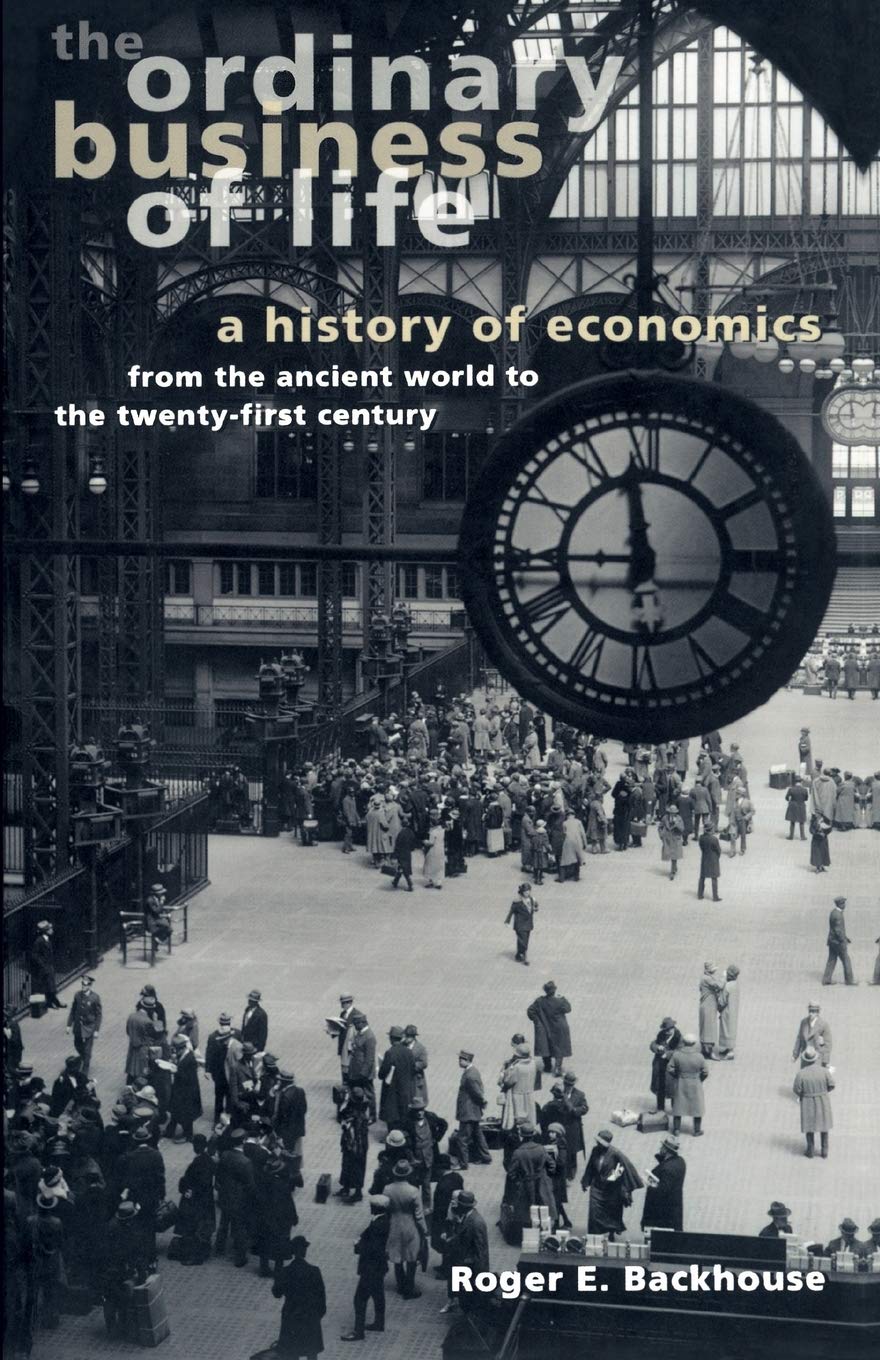
The Ordinary Business of Life: A History of Economics from the Ancient World to the TwentyFirst Century,Used
Sold by Ergodebooks, an authorized reseller.
Returns accepted within 30 days | support@ergodebooks.com
Shipping Information
- Free Standard Shipping — United States only
- Processing Time: 3–5 business days
- Estimated Delivery: 6–10 business days after dispatch
- Double-boxed, fully insured & discreetly packaged
- Tracking number sent via email once dispatched
Returns & Refund
Returns accepted within 30 days of delivery.
Damaged or Defective Item
Free return shipping + replacement or full refund
Wrong Item Received
Free return shipping + replacement or full refund
Change of Mind
Return shipping at customer's expense · 25% restocking fee applies
Payment Option

In some of Western culture's earliest writings, Hesiod defined the basic economic problem as one of scarce resources, a view still held by most economists. Diocletian tried to save the falling Roman Empire with wage and price fixesa strategy that has not gone entirely out of style. And just as they did in the late nineteenth century, thinkers trained in physics renovated economic inquiry in the late twentieth century. Taking us from Homer to the frontiers of game theory, this book presents an engrossing history of economics, what Alfred Marshall called 'the study of mankind in the ordinary business of life.'While some regard economics as a modern invention, Roger Backhouse shows that economic ideas were influential even in antiquityand that the origins of contemporary economic thought can be traced back to the ancients. He reveals the genesis of what we have come to think of as economic theory and shows the remarkable but seldom explored impact of economics, natural science, and philosophy on one another. Along the way, he introduces the fascinating characters who have thought about money and markets, including theologians, philosophers, politicians, lawyers, and poets as well as economists themselves. We learn how some of history's most influential concepts arose from specific times and places: from the Stoic notion of natural law to the mercantilism that rose with the European nationstate; from postwar development economics to the recent experimental and statistical economics made possible by affluence and powerful computers.Vividly written and unprecedented in its integration of ancient and modern economic history, this book is the best history of economicsand among the finest intellectual historiesto be published since Heilbroner's The Worldly Philosophers. It proves that economics has been anything but 'the dismal science.'
⚠️ WARNING (California Proposition 65):
This product may contain chemicals known to the State of California to cause cancer, birth defects, or other reproductive harm.
For more information, please visit www.P65Warnings.ca.gov.