
Title
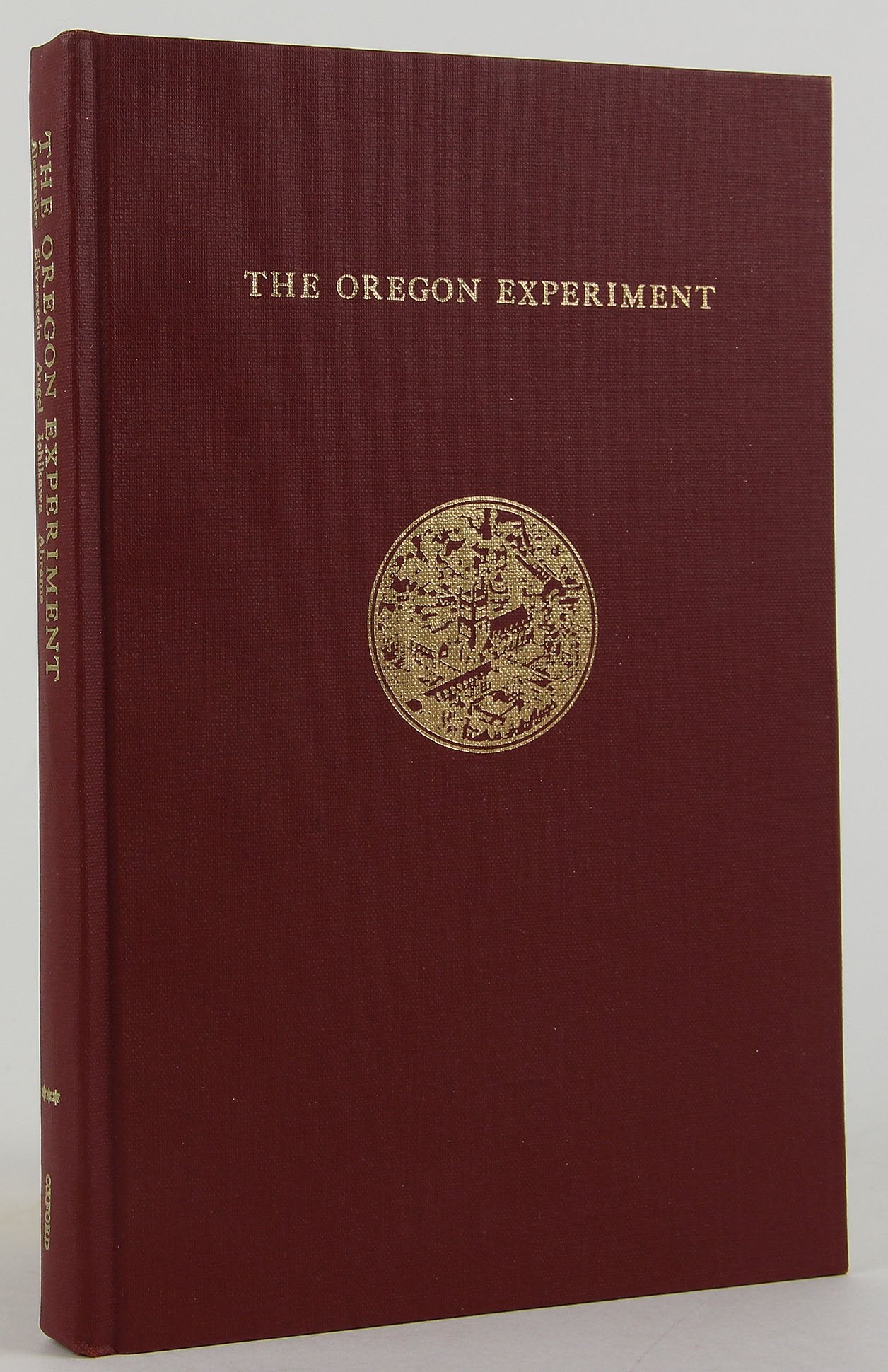
The Oregon Experiment (Center For Environmental Structure Series),New
Sold by Ergodebooks, an authorized reseller.
Returns accepted within 30 days | support@ergodebooks.com
Shipping Information
- Free Standard Shipping — United States only
- Processing Time: 3–5 business days
- Estimated Delivery: 6–10 business days after dispatch
- Double-boxed, fully insured & discreetly packaged
- Tracking number sent via email once dispatched
Returns & Refund
Returns accepted within 30 days of delivery.
Damaged or Defective Item
Free return shipping + replacement or full refund
Wrong Item Received
Free return shipping + replacement or full refund
Change of Mind
Return shipping at customer's expense · 25% restocking fee applies
Payment Option

After A Tenyear Silence, Christopher Alexander And His Colleagues At The Center For Environmental Structure Are Not Publishing A Major Statement In The Form Of Three Works Which Will, In Their Words, 'Lay The Basis For An Entirely New Approach To Architecture, Building, And Planning, Which Will, We Hope, Replace Existing Ideas And Practices Entirely.' The Three Books Are The Timeless Way Of Building, A Pattern Language, And The Oregon Experiment.At The Core Of These Books Is The Idea That People Should Design For Themselves Their Own Houses, Streets, And Communities. This Idea May Be Radical (It Implies A Radical Transformation Fo The Architectural Profession) But It Comes Simply From The Observation That Most Of The Wonderful Places Of The World Were Not Made By Architects But By The People.This Book Is The Master Plan For The University Of Oregon, And Is Now Being Implemented At That University; But It Shows At The Same Time How Any Community The Size Of A University Or Small Town Might Go About Designing Its Own Future Environmentwith All Members Of The Community Participating Personally. It Is A Concrete Example At The Center'S Theories In Practice, Showing In Simple Detail, With Numerous Illustrations, How To Implement Six Guiding Principles: Organic Order, Participation, Piecemeal Growth, Patterns, Diagnosis, And Coordination.
⚠️ WARNING (California Proposition 65):
This product may contain chemicals known to the State of California to cause cancer, birth defects, or other reproductive harm.
For more information, please visit www.P65Warnings.ca.gov.
- Q: What is the binding type of the book? A: The binding type is hardcover. This provides durability and a premium feel, making it suitable for long-term use.
- Q: How many pages does the book have? A: The book has two hundred and two pages. This length allows for an in-depth exploration of its subject matter.
- Q: What are the dimensions of the book? A: The book measures five point five two inches in length, zero point seven one inches in width, and eight point zero three inches in height. These dimensions make it easy to handle and store.
- Q: Who is the author of this book? A: The author is Christopher Alexander. He is recognized for his influential work in architecture and design.
- Q: What is the main theme of 'The Oregon Experiment'? A: The main theme is about community-driven design. It emphasizes the importance of participation in shaping environments.
- Q: Is this book suitable for beginners in architecture? A: Yes, it is suitable for beginners. The concepts are presented in an accessible manner, making it easy to understand.
- Q: How can this book be used in a community planning project? A: It can be used as a guide for community members to participate in designing their own environments. The book outlines principles that promote collaboration.
- Q: Is there a specific reading level for this book? A: The book is generally suitable for high school age and above. It contains complex ideas that are ideal for mature readers.
- Q: What guidance does the book provide for implementation? A: The book provides six guiding principles for implementation. These include organic order, participation, and piecemeal growth.
- Q: How should I care for this hardcover book? A: Keep it in a dry place and avoid direct sunlight. This will help maintain its condition over time.
- Q: Is there a specific storage recommendation for this book? A: Store the book upright on a shelf. This prevents bending and damage to the spine.
- Q: What if the book arrives damaged? A: Contact the seller for return instructions. Most sellers have policies in place for damaged items.
- Q: Can I return the book if I’m not satisfied? A: Yes, you can usually return the book within a specified period. Check the seller's return policy for details.
- Q: Does this book include illustrations? A: Yes, it includes numerous illustrations. These visuals help clarify the concepts discussed in the text.
- Q: Is this book part of a series? A: Yes, it is part of the Center for Environmental Structure Series. It relates to other works by the author.
- Q: What distinguishes this book from other architecture books? A: It emphasizes community involvement in design, which is less common in traditional architecture literature.