
Title
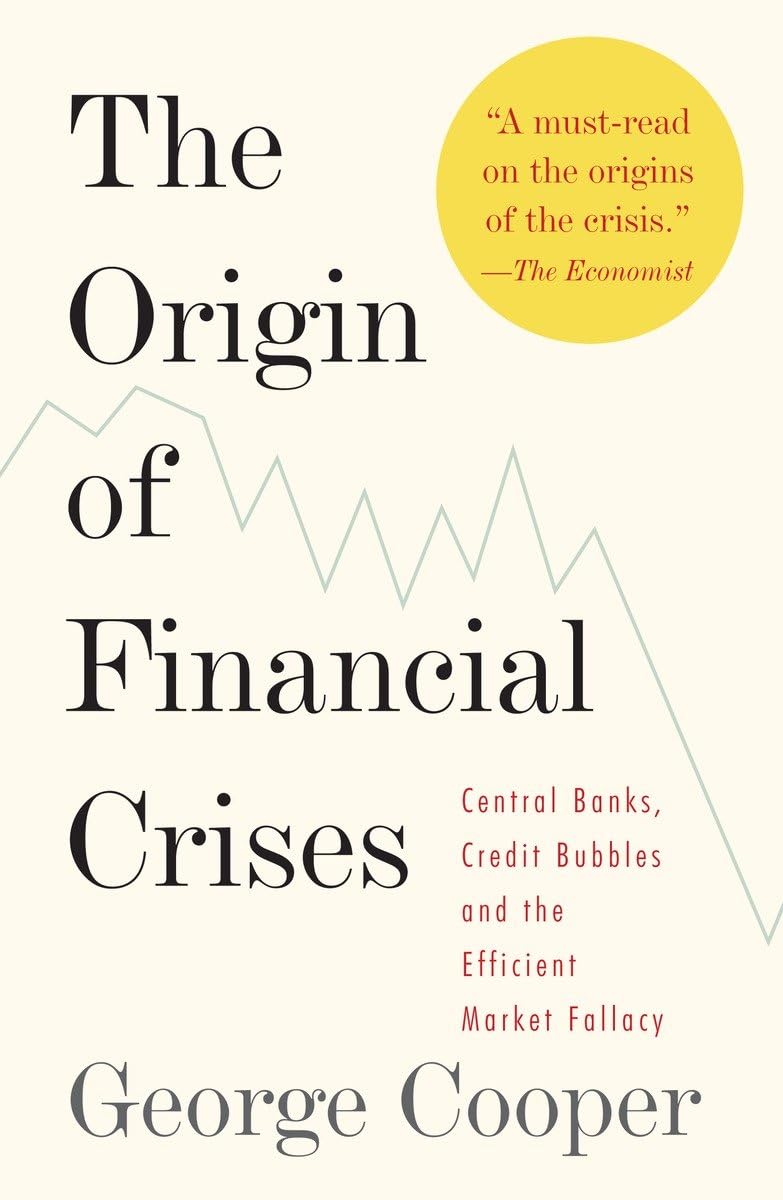
The Origin Of Financial Crises: Central Banks, Credit Bubbles, And The Efficient Market Fallacy,Used
Sold by Ergodebooks, an authorized reseller.
Returns accepted within 30 days | support@ergodebooks.com
Shipping Information
- Free Standard Shipping — United States only
- Processing Time: 3–5 business days
- Estimated Delivery: 6–10 business days after dispatch
- Double-boxed, fully insured & discreetly packaged
- Tracking number sent via email once dispatched
Returns & Refund
Returns accepted within 30 days of delivery.
Damaged or Defective Item
Free return shipping + replacement or full refund
Wrong Item Received
Free return shipping + replacement or full refund
Change of Mind
Return shipping at customer's expense · 25% restocking fee applies
Payment Option

In A Series Of Disarmingly Simple Arguments Financial Market Analyst George Cooper Challenges The Core Principles Of Today'S Economic Orthodoxy And Explains How We Have Created An Economy That Is Inherently Unstable And Crisis Prone. With Great Skill, He Examines The Very Foundations Of Today'S Economic Philosophy And Adds A Compelling Analysis Of The Forces Behind Economic Crisis. His Goal Is Nothing Less Than Preventing The Seemingly Endless Procession Of Damaging Boombust Cycles, Unsustainable Economic Bubbles, Crippling Credit Crunches, And Debilitating Inflation. His Direct, Conscientious, And Honest Approach Will Captivate Any Reader And Is An Invaluable Aid In Understanding Today'S Economy.
⚠️ WARNING (California Proposition 65):
This product may contain chemicals known to the State of California to cause cancer, birth defects, or other reproductive harm.
For more information, please visit www.P65Warnings.ca.gov.
- Q: What is the size of 'The Origin of Financial Crises' book? A: The book measures five point nineteen inches in length, zero point fifty-three inches in width, and eight inches in height.
- Q: How many pages does this book have? A: This book has two hundred and ten pages, providing a comprehensive analysis of financial crises.
- Q: What type of binding is used for this book? A: The book is available in paperback binding, making it lightweight and easy to handle.
- Q: Who is the author of this book? A: The author of 'The Origin of Financial Crises' is George Cooper, a financial market analyst.
- Q: What language is this book available in? A: The book is written in English, making it accessible to a wide audience.
- Q: What features does the book offer? A: The book features gelatine plate paper, ensuring good print quality and durability.
- Q: How do I read 'The Origin of Financial Crises'? A: You can read this book like any standard paperback; simply open it and start reading from the first page.
- Q: Is this book suitable for beginners in economics? A: Yes, the book is suitable for beginners as it presents complex ideas in a clear and straightforward manner.
- Q: What themes are explored in this book? A: The book explores themes of economic instability, credit bubbles, and critiques of modern economic orthodoxy.
- Q: How should I store this book? A: Store the book in a cool, dry place, away from direct sunlight to prevent fading and damage.
- Q: Can I clean the book if it gets dirty? A: Yes, you can clean the cover with a damp cloth. Avoid using harsh chemicals to prevent damage.
- Q: What if the book arrives damaged? A: If the book arrives damaged, you should contact the seller's customer service for a return or exchange.
- Q: Are there any safety concerns with this book? A: No, there are no safety concerns associated with this book as it contains no hazardous materials.
- Q: How does this book compare to other economics books? A: This book offers a unique perspective by challenging economic orthodoxy, making it stand out among typical economics literature.
- Q: Is this book appropriate for young readers? A: The book is primarily aimed at adults and those interested in economics, so it may not be suitable for young readers.
- Q: What should I do if I have questions about the book? A: If you have questions about the book's content, consider reaching out to a local bookstore or library for guidance.