
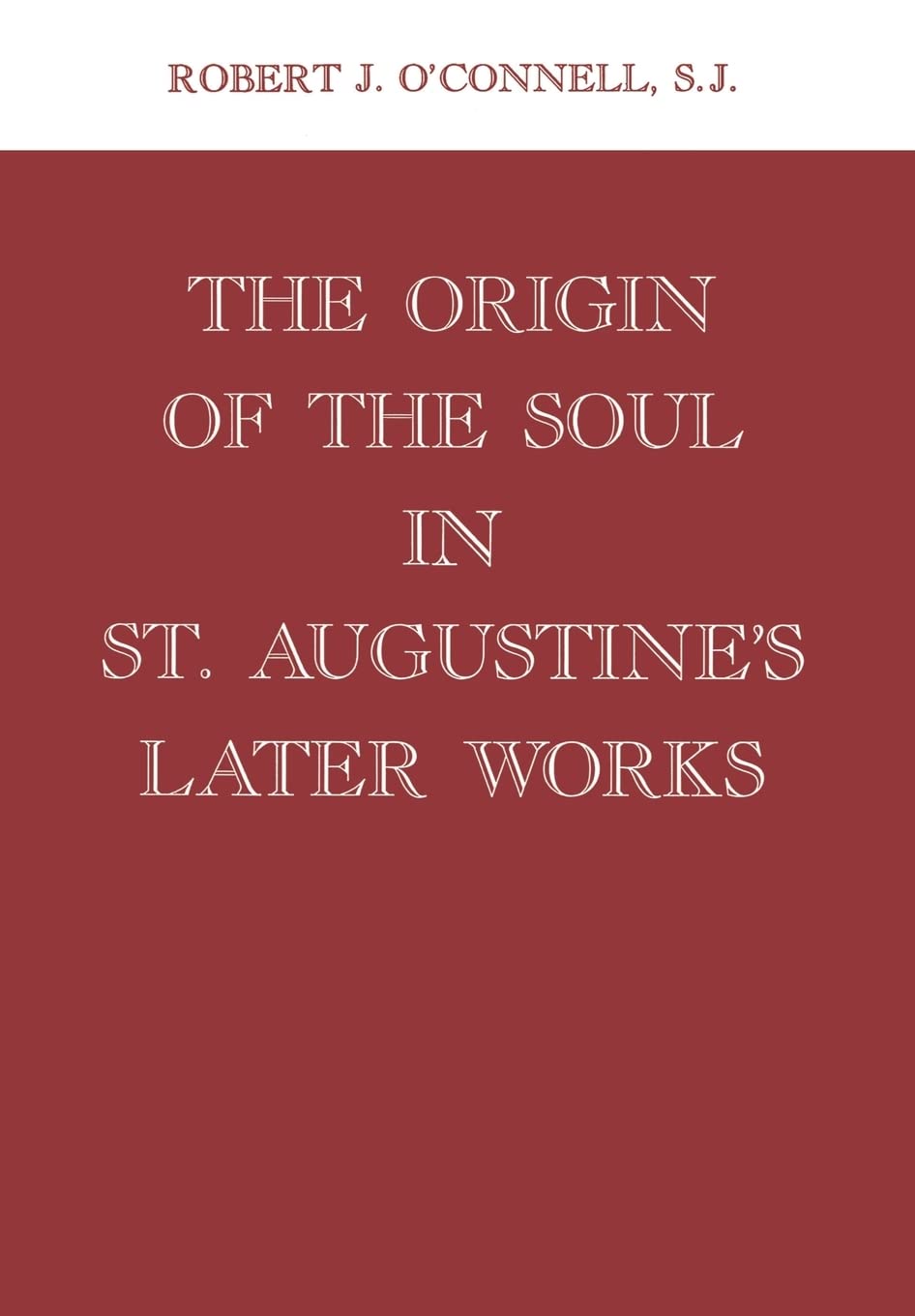
Title
The Origin of the Soul in St. Augustine's Later Works,Used
Sold by Ergodebooks, an authorized reseller.
Returns accepted within 30 days | support@ergodebooks.com
Shipping Information
- Free Standard Shipping — United States only
- Processing Time: 3–5 business days
- Estimated Delivery: 6–10 business days after dispatch
- Double-boxed, fully insured & discreetly packaged
- Tracking number sent via email once dispatched
Returns & Refund
Returns accepted within 30 days of delivery.
Damaged or Defective Item
Free return shipping + replacement or full refund
Wrong Item Received
Free return shipping + replacement or full refund
Change of Mind
Return shipping at customer's expense · 25% restocking fee applies
Payment Option

This book rounds off Robert OConnells study of St. Augustines view of the human condition, begun is St. Augustines Early Theory of Man, A.D. 386391, and continued in St. Augustines Confessions: The Odyssey of Soul. The central thesis of the first book, and guiding hypothesis of the second, proposed that Augustine thought of us, in Plotinian terms, as fallen souls, and that in all sincerity he interpreted the teachings of Scripture as reflecting that same view. Professor OConnell sees the weightiest objection to his proposition as stemming from what scholars generally agree to be Augustines firm rejection of that view in his later works.The central contention in this new book is that Augustine did indeed object his earlier theory, but only for a short time. He came to see the text of Romans 9:11, apparently, as compelling that rejection. But, then, his firm belief that all humans are guilty of Original Sin would have left traducianism as his only acceptable way of understanding the origin of sinful human souls. The materialistic cast of traducianism, however, always repelled Augustine. Hence, he struggles to elaborate a fresh interpretation of Romans 9:11, and he eventually finds one that permits him to return to a slightly revised version of his earlier view. That theory, Professor OConnell argues, is encased in both the De civitate Dei and the final version of De Trinitate.
⚠️ WARNING (California Proposition 65):
This product may contain chemicals known to the State of California to cause cancer, birth defects, or other reproductive harm.
For more information, please visit www.P65Warnings.ca.gov.