
Title
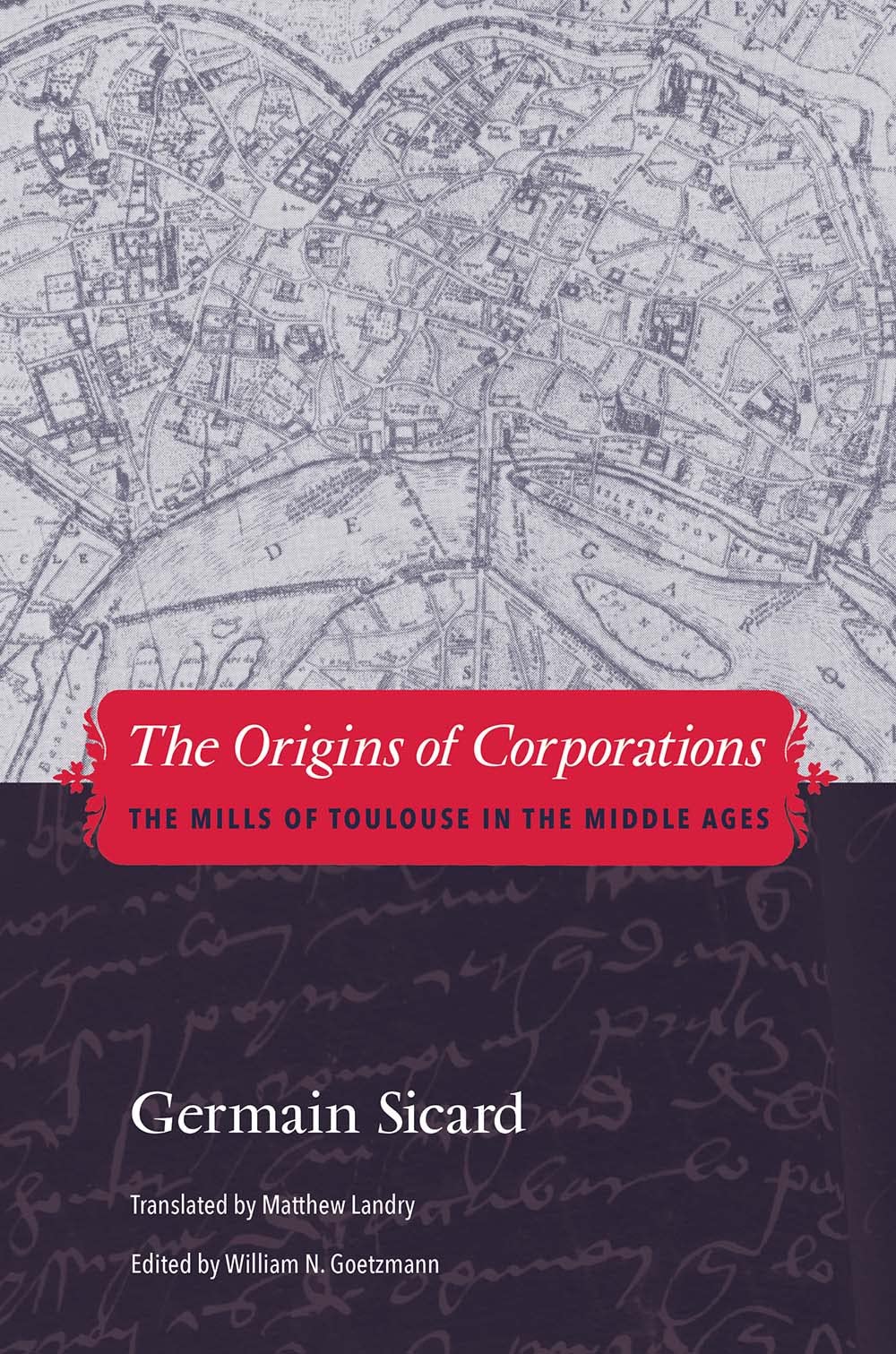
The Origins of Corporations: The Mills of Toulouse in the Middle Ages,Used
Sold by Ergodebooks, an authorized reseller.
Returns accepted within 30 days | support@ergodebooks.com
Shipping Information
- Free Standard Shipping — United States only
- Processing Time: 3–5 business days
- Estimated Delivery: 6–10 business days after dispatch
- Double-boxed, fully insured & discreetly packaged
- Tracking number sent via email once dispatched
Returns & Refund
Returns accepted within 30 days of delivery.
Damaged or Defective Item
Free return shipping + replacement or full refund
Wrong Item Received
Free return shipping + replacement or full refund
Change of Mind
Return shipping at customer's expense · 25% restocking fee applies
Payment Option

Fully modern corporations appeared in fourteenthcentury Toulouse, much earlier than previously believedGermain Sicard proves that Europes first corporations were fourteenthcentury mill companies operating in Toulouse, rather than seventeenthcentury English and Dutch trading companies as commonly believed. He shows that the corporate form derives from a unique ownership contract from Medieval Europe called pariage, and a culture of strong property rights and municipal selfgovernance. Based on archival research, Sicards 1952 thesis has been translated into English with an introduction that places the work in the context of new institutional economics and legal theory. It is an important contribution to research on the history and legal origins of the corporation.
⚠️ WARNING (California Proposition 65):
This product may contain chemicals known to the State of California to cause cancer, birth defects, or other reproductive harm.
For more information, please visit www.P65Warnings.ca.gov.
- Q: What is 'The Origins of Corporations' about? A: This book explores the early history of corporations, specifically focusing on fourteenth-century Toulouse, France, and argues that the first corporations were actually mill companies from this period.
- Q: Who is the author of this book? A: The author is Germain Sicard, who presents his research originally conducted in 1952.
- Q: What is the binding type of the book? A: The book is available in hardcover binding.
- Q: How many pages does this book have? A: This book contains 520 pages.
- Q: When was 'The Origins of Corporations' published? A: The book was published on August 11, 2015.
- Q: Is this book suitable for anyone interested in corporate history? A: Yes, this book is suitable for readers interested in the history and legal origins of corporations, particularly from an economic and legal theory perspective.
- Q: What edition is this book? A: This is the first edition of the book.
- Q: Does this book include any additional context or commentary? A: Yes, the English translation includes an introduction that contextualizes Sicard’s work within new institutional economics and legal theory.
- Q: What is the condition of the book? A: The book is brand new.
- Q: Can this book be useful for academic research? A: Absolutely, it provides valuable insights based on archival research and contributes to the broader understanding of corporate history.