
Title
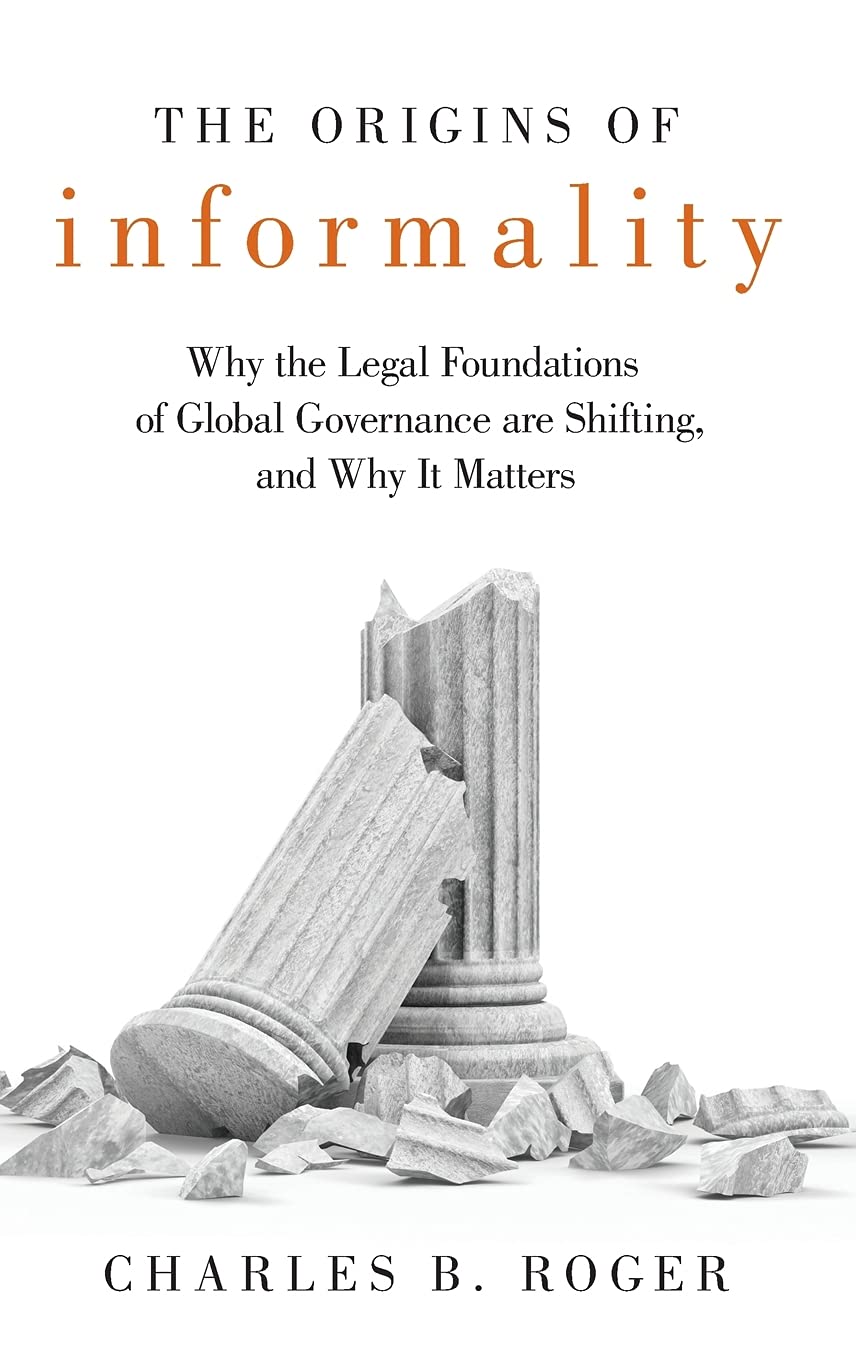
The Origins of Informality: Why the Legal Foundations of Global Governance are Shifting, and Why It Matters,Used
Sold by Ergodebooks, an authorized reseller.
Returns accepted within 30 days | support@ergodebooks.com
Shipping Information
- Free Standard Shipping — United States only
- Processing Time: 3–5 business days
- Estimated Delivery: 6–10 business days after dispatch
- Double-boxed, fully insured & discreetly packaged
- Tracking number sent via email once dispatched
Returns & Refund
Returns accepted within 30 days of delivery.
Damaged or Defective Item
Free return shipping + replacement or full refund
Wrong Item Received
Free return shipping + replacement or full refund
Change of Mind
Return shipping at customer's expense · 25% restocking fee applies
Payment Option

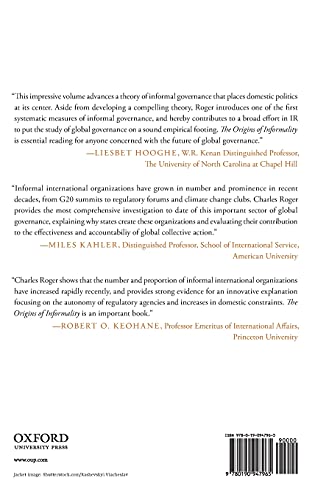
The legal foundations of global governance are shifting. In addition to traditional instruments for resolving crossborder problems, such as treaties and formal international organizations, policymakers are turning increasingly to informal agreements and organizations like the Group of Twenty, the Financial Stability Board, and the Asia Pacific Economic Cooperation. A growing number of policymakers view such weaklylegalized organizations as promising new tools of governance, arguing that informal bodies are faster and more flexible than their formal counterparts, and bettersuited to the complex problems raised by deepening interdependence. Yet, equally, political scientists have puzzled over these international organizations. At present, we still know relatively little about these bodies, why they have become so important, and whether they are indeed capable of addressing the immense challenges faced by the global community.In The Origins of Informality, Charles Roger offers a new way of thinking about informal organizations, presents new data revealing their extraordinary growth over time and across regions, and advances a novel theory to explain these patterns. In contrast with existing approaches, he locates the drivers of informality within the internal politics of states, explaining how major shifts within the domestic political arenas of the great powers have projected outwards and reshaped the legal structure of the global system. Informal organizations have been embraced because they allow bureaucrats in powerful states to maintain autonomy over their activities, and can help politicians to circumvent domestic opponents of their foreign policies. Drawing on original quantitative data, interviews, and archival research, the book analyzes some of the most important institutions governing the global economy, showing how informality has helped domestic actors to achieve their narrow political goalseven when this comes at the expense of the institutions they eventually create.Ultimately, Roger claims, the shift towards informality has allowed the number of multilateral institutions to rapidly increase in response to global problems. But, at the same time, it has coincided with a decline in their quality, leaving us less prepared for the next global crisis.
⚠️ WARNING (California Proposition 65):
This product may contain chemicals known to the State of California to cause cancer, birth defects, or other reproductive harm.
For more information, please visit www.P65Warnings.ca.gov.