
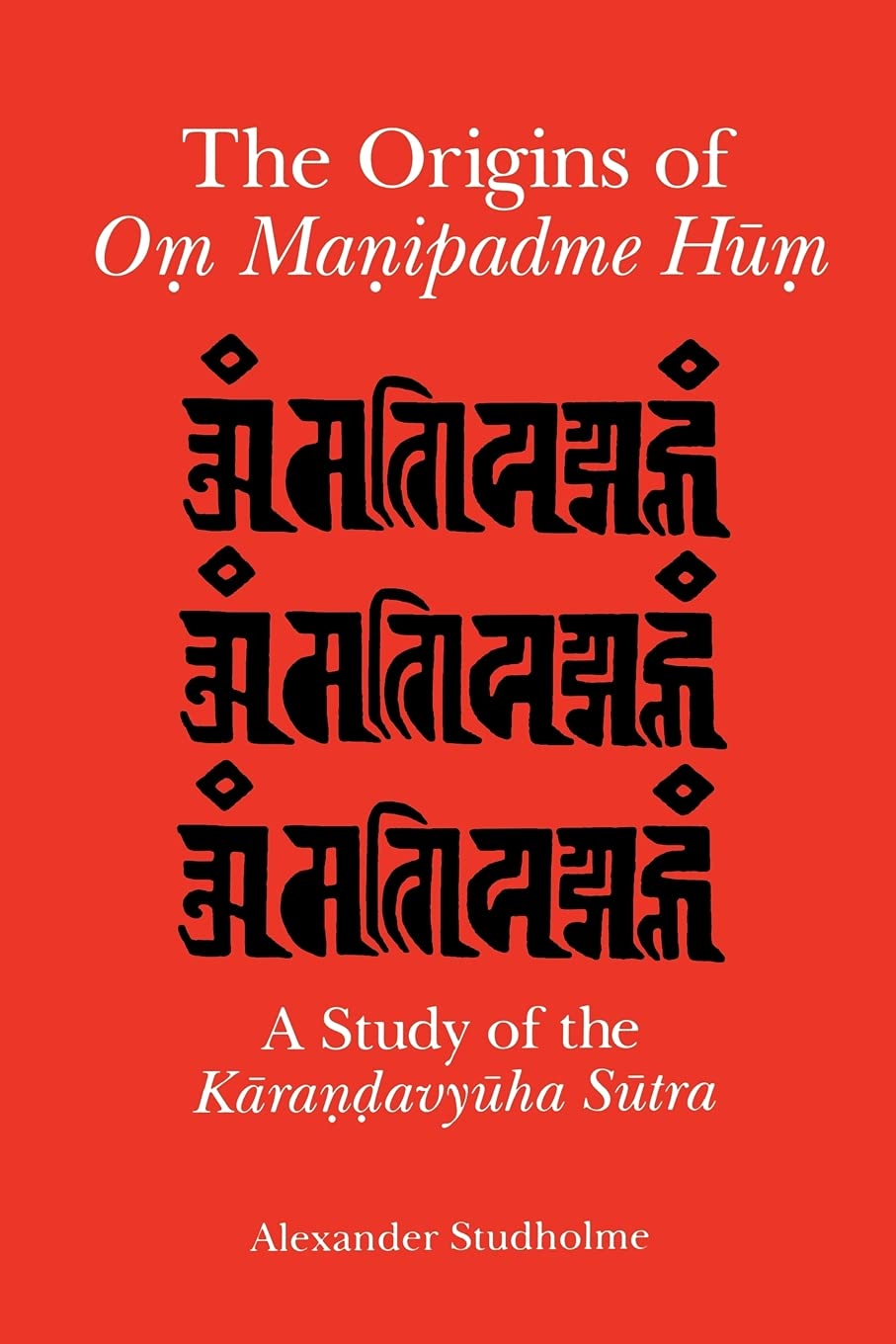
Title

The Origins of Om Manipadme Hum: A Study of the Karandavyuha Sutra,Used
Sold by Ergodebooks, an authorized reseller.
Returns accepted within 30 days | support@ergodebooks.com
Shipping Information
- Free Standard Shipping — United States only
- Processing Time: 3–5 business days
- Estimated Delivery: 6–10 business days after dispatch
- Double-boxed, fully insured & discreetly packaged
- Tracking number sent via email once dispatched
Returns & Refund
Returns accepted within 30 days of delivery.
Damaged or Defective Item
Free return shipping + replacement or full refund
Wrong Item Received
Free return shipping + replacement or full refund
Change of Mind
Return shipping at customer's expense · 25% restocking fee applies
Payment Option

Sets out a history of the famous Buddhist mantra, Om Manipadme Hum, and offers new insights on its meaning.Om Manipadme Hum, perhaps the most wellknown of all Buddhist mantras, lies at the heart of the Tibetan system and is cherished by both layman and lama alike. This book documents the origins of the mantra, and presents a new interpretation of the meaning of Om Manipadme Hum, and includes a detailed, annotated precis of the Karandavyuha Sutra, opening up this important Mahayana Buddhist work to a wider audience.The Karandavyuha the earliest textual source for Om Manipadme Humwhich describes both the compassionate activity of Avalokitesvara, the bodhisattva whose power the mantra invokes, and the mythical tale of the search for and discovery of the mantra. Through a detailed analysis of this sutra, Studholme explores the historical and doctrinal forces behind the appearance of Om Manipadme Hum in India at around the middle of the first millennium C.E. He argues that the Karandavyuha has close affinities to nonBuddhist puranic literature, and that the conception of Avalokitesvara and his sixsyllable mantra is informed by the conception of the Hindu deity Siva and his fivesyllable mantra Namah Sivaya. The sutra reflects an historical situation in which the Buddhist monastic establishment was coming into contact with Buddhist tantric practitioners, themselves influenced by Saivite practitioners.This compact volume will be immediately accessible, and of great benefit, to both Tibetologists and Tibetophiles alike. Journal of the International Association of Tibetan StudiesThis book provides a very good example of the phenomenon of religious integration, and clearly shows how Buddhism managed to integrate ideas and practices from another spiritual tradition. Francis Brassard, author of The Concept of Bodhicitta in Santideva's BodhicaryavataraIt was fascinating to read the author's brilliant insights into the syncretic construction of early tantric Mahayana Buddhist materials like the Karandavyuha. John J. Makransky, author of Buddhahood Embodied: Sources of Controversy in India and Tibet
⚠️ WARNING (California Proposition 65):
This product may contain chemicals known to the State of California to cause cancer, birth defects, or other reproductive harm.
For more information, please visit www.P65Warnings.ca.gov.