
Title
The Origins Of Reasonable Doubt: Theological Roots Of The Criminal Trial (Yale Law Library Series In Legal History And Reference
Sold by Ergodebooks, an authorized reseller.
Returns accepted within 30 days | support@ergodebooks.com
Shipping Information
- Free Standard Shipping — United States only
- Processing Time: 3–5 business days
- Estimated Delivery: 6–10 business days after dispatch
- Double-boxed, fully insured & discreetly packaged
- Tracking number sent via email once dispatched
Returns & Refund
Returns accepted within 30 days of delivery.
Damaged or Defective Item
Free return shipping + replacement or full refund
Wrong Item Received
Free return shipping + replacement or full refund
Change of Mind
Return shipping at customer's expense · 25% restocking fee applies
Payment Option

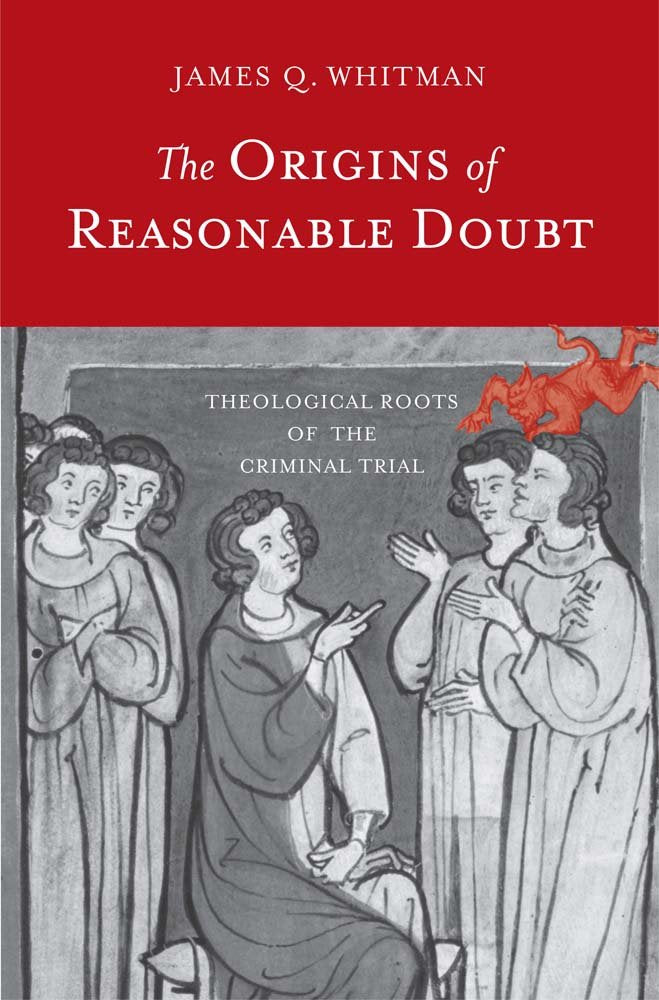
To Be Convicted Of A Crime In The United States, A Person Must Be Proven Guilty Beyond A Reasonable Doubt. But What Is Reasonable Doubt? Even Sophisticated Legal Experts Find This Fundamental Doctrine Difficult To Explain. In This Accessible Book, James Q. Whitman Digs Deep Into The History Of The Law And Discovers That We Have Lost Sight Of The Original Purpose Of Reasonable Doubt. It Was Not Originally A Legal Rule At All, He Shows, But A Theological One.The Rule As We Understand It Today Is Intended To Protect The Accused. But Whitman Traces Its History Back Through Centuries Of Christian Theology And Commonlaw History To Reveal That The Original Concern Was To Protect The Souls Of Jurors. In Christian Tradition, A Person Who Experienced Doubt Yet Convicted An Innocent Defendant Was Guilty Of A Mortal Sin. Jurors Fearful For Their Own Souls Were Reassured That They Were Safe, As Long As Their Doubts Were Not Reasonable. Today, The Old Rule Of Reasonable Doubt Survives, But It Has Been Turned To Different Purposes. The Result Is Confusion For Jurors, And A Serious Moral Challenge For Our System Of Justice.
⚠️ WARNING (California Proposition 65):
This product may contain chemicals known to the State of California to cause cancer, birth defects, or other reproductive harm.
For more information, please visit www.P65Warnings.ca.gov.
- Q: How many pages does the book have? A: This book has two hundred eighty-eight pages. It covers the historical context of reasonable doubt in criminal trials.
- Q: What is the binding type of this book? A: The binding type is paperback. This makes it lightweight and easy to handle.
- Q: What is the size of the book? A: The book measures nine point one inches in length, six inches in width, and zero point eight inches in height. This size is convenient for reading.
- Q: Who is the author of the book? A: The author is James Q. Whitman. He explores the theological roots of the reasonable doubt doctrine in criminal law.
- Q: What genre does this book belong to? A: The book belongs to the genre of Criminal Law. It provides insights into legal history and philosophy.
- Q: What is the focus of the book's content? A: The book focuses on the origins of reasonable doubt in criminal trials. It examines the historical and theological context of this legal principle.
- Q: How do I understand reasonable doubt from this book? A: You can understand reasonable doubt by exploring its historical roots as presented by the author. The book offers a detailed analysis of its evolution.
- Q: Is this book suitable for legal professionals? A: Yes, this book is suitable for legal professionals. It provides a deep understanding of a fundamental legal concept.
- Q: Can a general audience read this book? A: Yes, a general audience can read this book. It is written in an accessible manner for those interested in legal history.
- Q: How should I handle the book to keep it in good condition? A: To keep the book in good condition, store it in a cool, dry place and avoid exposure to direct sunlight. Handle it gently to preserve its binding.
- Q: Are there any special storage requirements for this book? A: No special storage requirements are needed for this book. Just keep it away from moisture and extreme temperatures.
- Q: What if the book arrives damaged? A: If the book arrives damaged, you should contact the seller for a return or replacement. Most sellers have a return policy for damaged items.
- Q: Is there a warranty for this book? A: No, there is typically no warranty for books. However, you can check the seller's return policy for any guarantees.
- Q: How can I return the book if I don't like it? A: You can return the book by following the seller's return process, which usually requires you to request a return within a specific period.
- Q: What makes this book different from other legal history books? A: This book stands out because it connects theological concepts to legal principles, specifically reasonable doubt, offering a unique perspective.
- Q: Is this book recommended for students of law? A: Yes, this book is recommended for law students. It provides foundational knowledge about a significant legal doctrine.