If you have any questions, you are always welcome to contact us. We'll get back to you as soon as possible, withing 24 hours on weekdays.
Customer service
All questions about your order, return and delivery must be sent to our customer service team by e-mail at yourstore@yourdomain.com
Sale & Press
If you are interested in selling our products, need more information about our brand or wish to make a collaboration, please contact us at press@yourdomain.com
Help
If you have any questions, you are always welcome to contact us. We'll get back to you as soon as possible, withing 24 hours on weekdays.
Customer service
All questions about your order, return and delivery must be sent to our customer service team by e-mail at yourstore@yourdomain.com
Sale & Press
If you are interested in selling our products, need more information about our brand or wish to make a collaboration, please contact us at press@yourdomain.com
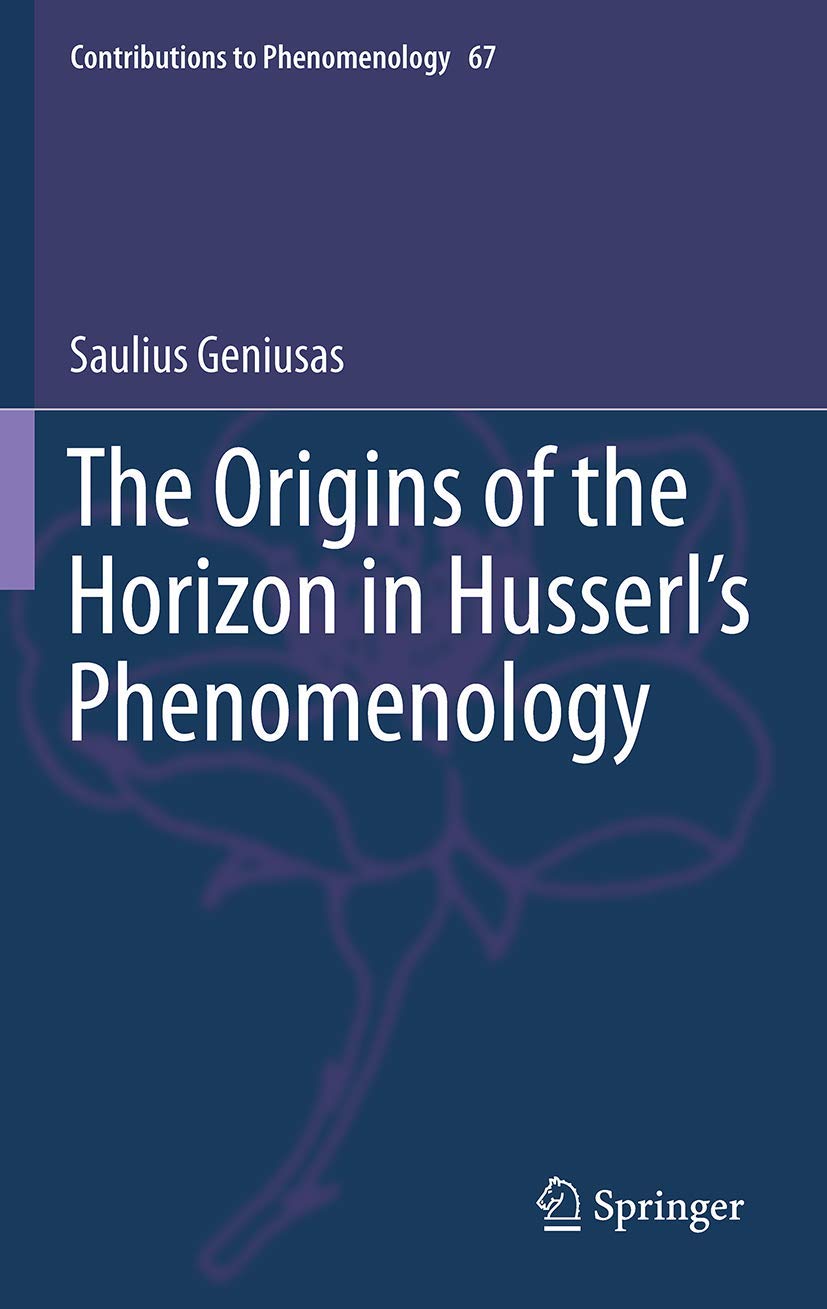
This volume is the first booklength analysis of the problematic concept of the horizon in Edmund Husserls phenomenology, as well as in phenomenology generally. A recent arrival on the conceptual scene, the horizon still eludes robust definition. The author shows in this authoritative exploration of the topic that Husserl, the originator of phenomenology, placed the notion of the horizon at the centre of philosophical enquiry. He also demonstrates the rightful centrality of the concept of the horizon, all too often viewed as an imprecise metaphor of tangential significance. His systematic analysis deploys both early and late work by Husserl, as well as hitherto unpublished manuscripts. Opening out the question to include that of the origins of the horizon, the book explores the horizon as philosophical theme or notion, as a figure of intentionality, and as a signification of ones consciousness of the worldour worldhorizon. It argues that the central philosophical significance of the problematic of the horizon makes itself apparent in realizing how this problematic enriches our philosophical understanding of subjectivity. Systematic, thorough, and revealing, this study of the significance of a core concept in phenomenology will be relevant not only to the phenomenological community, but also to anyone interested in the intersections of phenomenology and other philosophical traditions, such as hermeneutics and pragmatism.
⚠️ WARNING (California Proposition 65):
This product may contain chemicals known to the State of California to cause cancer,
birth defects, or other reproductive harm.
For MAP (Minimum Advertised Price) violations and Intellectual Property (IP) or Trademark concerns, please contact:
support@ergodebooks.com
⚠️ California Proposition 65 Warning: Some products sold on this website may expose you to chemicals known to the State of California to cause cancer, birth defects, or other reproductive harm. For more information, visit www.P65Warnings.ca.gov.