
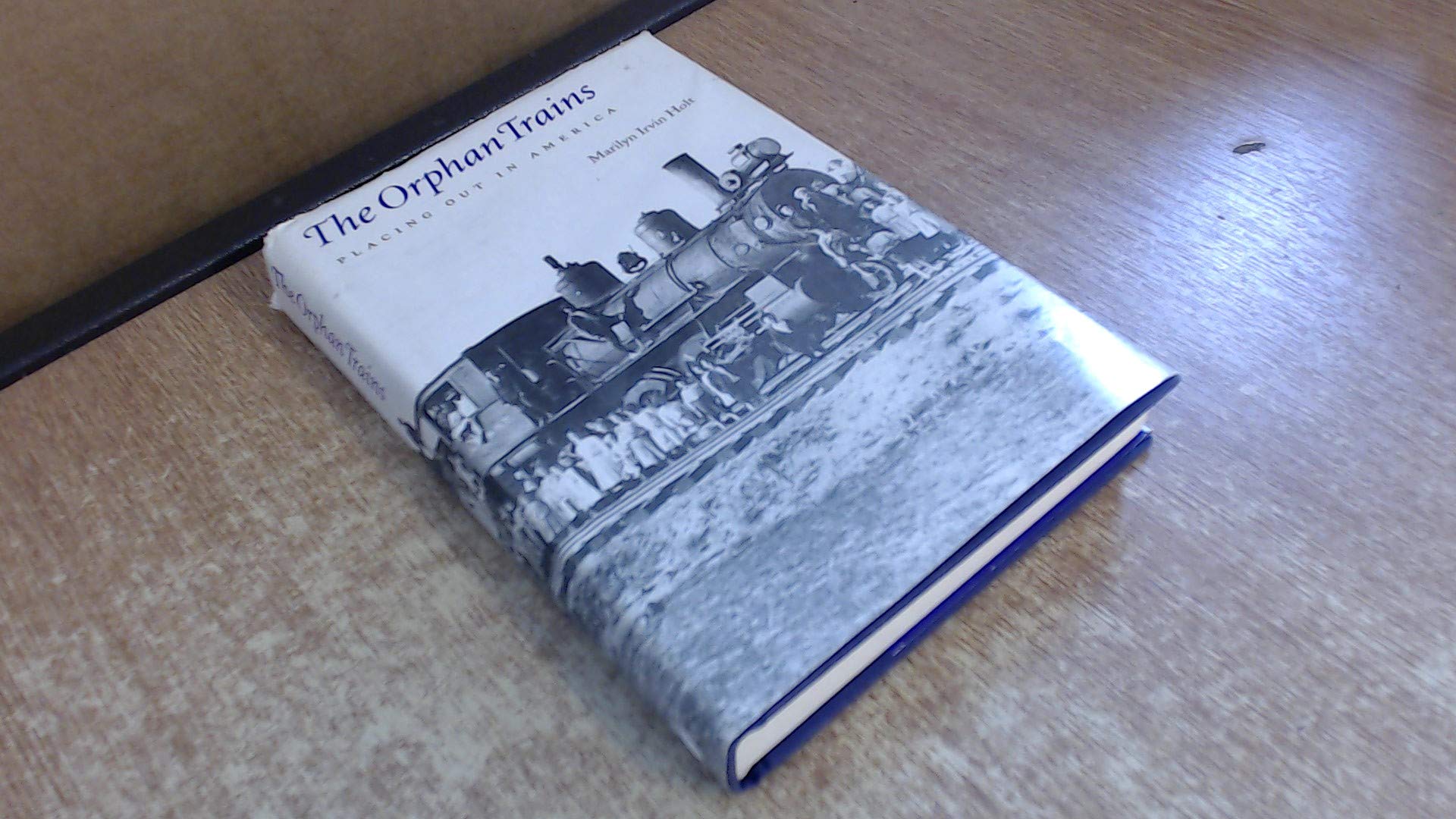
Title
The Orphan Trains: Placing Out In America
Sold by Ergodebooks, an authorized reseller.
Returns accepted within 30 days | support@ergodebooks.com
Shipping Information
- Free Standard Shipping — United States only
- Processing Time: 3–5 business days
- Estimated Delivery: 6–10 business days after dispatch
- Double-boxed, fully insured & discreetly packaged
- Tracking number sent via email once dispatched
Returns & Refund
Returns accepted within 30 days of delivery.
Damaged or Defective Item
Free return shipping + replacement or full refund
Wrong Item Received
Free return shipping + replacement or full refund
Change of Mind
Return shipping at customer's expense · 25% restocking fee applies
Payment Option

From Library Journalfrom 1850 To 1930 America Witnessed A Unique Emigration And Resettlement Of At Least 200,000 Children And Several Thousand Adults, Primarily From The East Coast To The West. This Placing Out, An Attempt To Find Homes For The Urban Poor, Was Best Known By The Orphan Trains That Carried The Children. Freelance Writer Holt Carefully Analyzes The System, Initially Instituted By The New York Children'S Aid Society In 1853, Tracking Its Imitators As Well As The Reasons For Its Creation And Demise. She Captures The Children'S Perspective With The Judicious Use Of Oral Histories, Institutional Records, And Newspaper Accounts. This Wellwritten Volume Sheds New Light On The Multifaceted Experience Of Children'S Emigration, Changing Concepts Of Welfare, And Western Expansion. It Is A Good, Scholarly Social History That Provides More Analytical Information Than James Manguson And Dorothea Petrie'S Orphan Train ( Lj 6/15/78). A Solid Contribution On A Littleknown Phenomenon, This Book Is Suitable For Academic And Large Public Libraries. Charles C. Hay Iii, Eastern Kentucky Univ. Archives, Richmondcopyright 1992 Reed Business Information, Inc.ReviewFrom 1850 To 1930 America Witnessed A Unique Emigration And Resettlement Of At Least 200,000 Children And Several Thousand Adults, Primarily From The East Coast To The West. This 'Placing Out,' An Attempt To Find Homes For The Urban Poor, Was Best Known By The 'Orphan Trains' That Carried The Children. Holt Carefully Analyzes The System, Initially Instituted By The New York Children'S Aid Society In 1853, Tracking Its Imitators As Well As The Reasons For Its Creation And Demise. She Captures The Children'S Perspective With The Judicious Use Of Oral Histories, Institutional Records, And Newspaper Accounts. This Wellwritten Volume Sheds New Light On The Multifaceted Experience Of Children'S Immigration, Changing Concepts Of Welfare, And Western Expansion. It Is Good, Scholarly Social History.Library JournalSoon There Will Be No Memories Of The Little Companies, As They Were Called, Of Children Setting Out With An Adult Leader For A New Life. This Little Book Is Kind Of A Preservation Movement, And A Contribution To Our Understanding Of How The West Was Won.David Shribman, Wall Street JournalAs A Portrait Of The Time'S Charitable Networks, The Orphan Trains Succeeds. . . . [Holt'S] Work Brings To Light A Meaningful Concept: The Idea That Charity; Then And Now, Is Sometimes Tinged With Greed, Indifference, Hostility, Selfpromotion And Is An Institution That Can Serve The Giver More Than The Receiver.David James Rose, Washington Timesabout The Authormarilyn Irvin Holt, Former Director Of Publications At The Kansas State Historical Society; Is A Freelance Editor, Writer, And Researcher And Teaches Historical Editing At The University Of Kansas.
⚠️ WARNING (California Proposition 65):
This product may contain chemicals known to the State of California to cause cancer, birth defects, or other reproductive harm.
For more information, please visit www.P65Warnings.ca.gov.
- Q: How many pages does the book have? A: This book contains two hundred sixty-four pages, providing in-depth insights into the orphan train system.
- Q: What is the binding type of this book? A: The book is bound in hardcover, ensuring durability for long-term use and preservation.
- Q: What are the dimensions of the book? A: The book measures five point seventy-five inches in length, one inch in width, and nine point zero two inches in height.
- Q: Who is the author of The Orphan Trains? A: The author is Marilyn Irvin Holt, a freelance writer and historian with expertise in social history.
- Q: What genre does this book belong to? A: The book falls under the genre of social history, specifically focusing on immigration and welfare.
- Q: What age group is this book suitable for? A: This book is suitable for adults and older teens interested in historical social issues and immigration.
- Q: How do I use this book for research? A: You can use this book as a primary source for understanding the orphan train system and its historical context.
- Q: Is this book appropriate for academic studies? A: Yes, this book is suitable for academic studies, especially in social sciences and history courses.
- Q: Can this book be used for a school project? A: Yes, it can be used for school projects related to American history or social welfare.
- Q: How should I store this book? A: Store this book upright on a shelf in a cool, dry place to maintain its condition.
- Q: What if the book gets damaged? A: If the book arrives damaged, you can contact the retailer for a return or exchange policy.
- Q: How do I clean the book? A: To clean the book, gently wipe the cover with a dry cloth. Avoid using water or cleaning solutions.
- Q: Is there a warranty for this book? A: Typically, books do not come with a warranty, but check with the seller for any specific return policies.
- Q: What if I want to learn more about the author? A: You can research Marilyn Irvin Holt online as she has various publications on historical topics.
- Q: How does this book compare to others on the same topic? A: This book offers a more analytical perspective compared to other works on the orphan train phenomenon.