
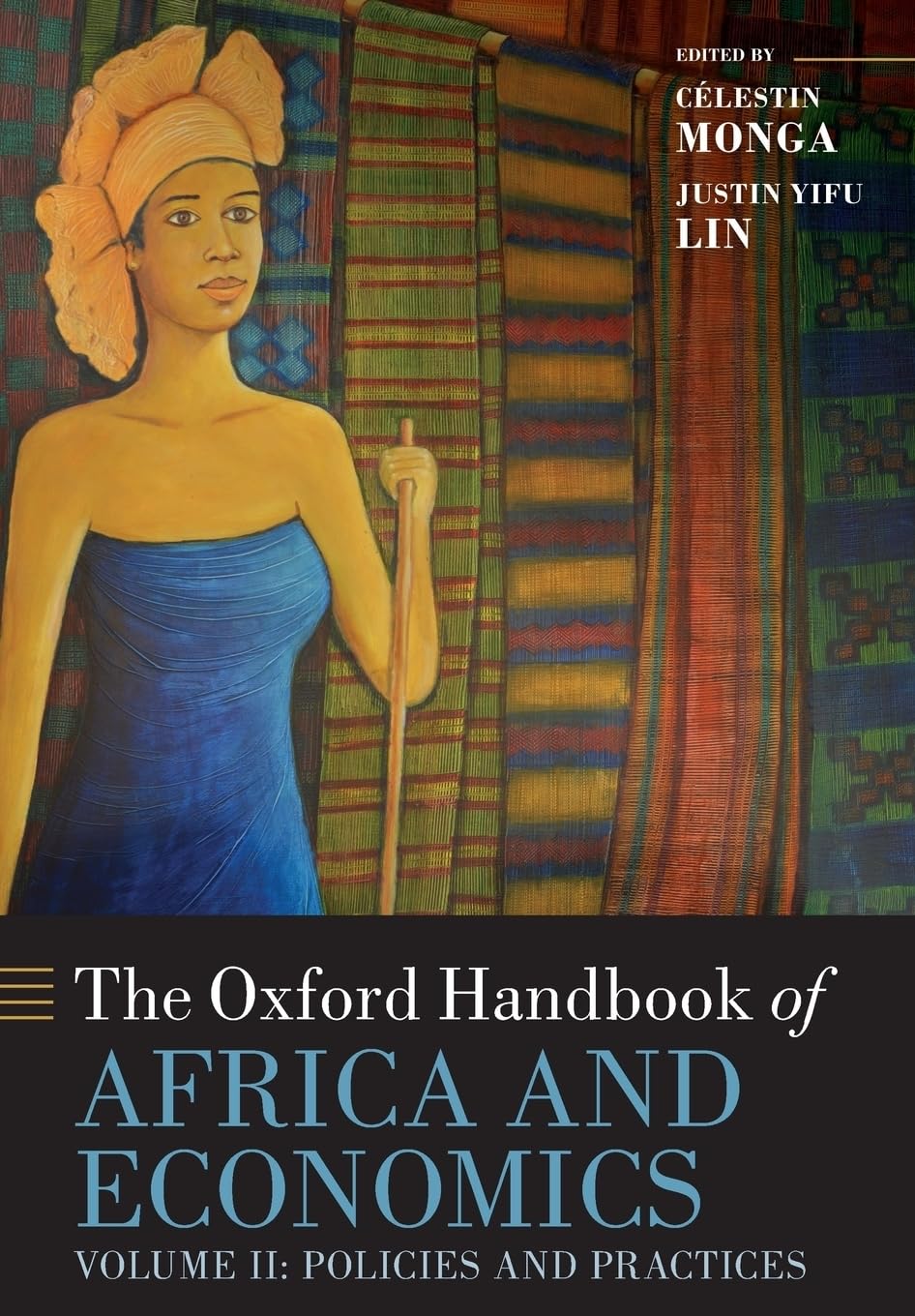
Title
The Oxford Handbook of Africa and Economics: Volume 2: Policies and Practices (Oxford Handbooks),Used
Sold by Ergodebooks, an authorized reseller.
Returns accepted within 30 days | support@ergodebooks.com
Shipping Information
- Free Standard Shipping — United States only
- Processing Time: 3–5 business days
- Estimated Delivery: 6–10 business days after dispatch
- Double-boxed, fully insured & discreetly packaged
- Tracking number sent via email once dispatched
Returns & Refund
Returns accepted within 30 days of delivery.
Damaged or Defective Item
Free return shipping + replacement or full refund
Wrong Item Received
Free return shipping + replacement or full refund
Change of Mind
Return shipping at customer's expense · 25% restocking fee applies
Payment Option

A popular myth about the travails of Africa holds that the continent's long history of poor economic performance reflects the inability of its leaders and policymakers to fulfill the long list of preconditions to be met before sustained growth can be achieved. These conditions are said to vary from the necessary quantity and quality of physical and human capital to the appropriate institutions and business environments. While intellectually charming and often elegantly formulated, that conventional wisdom is actually contradicted by historical evidence and common sense. It also suggests a form of intellectual mimicry that posits a unique path to prosperity for all countries regardless of their level of development and economic structure.In fact, the argument underlining that reasoning is tautological, and the policy prescriptions derived from it are fatally teleological: lowincome countries are by definition those where such ingredients are missing. None of today's highincome countries started its growth process with the 'required' and complete list of growth ingredients. Unless one truly believes that the continent of Africaand most developing countriesare ruled predominantly if not exclusively by plutocrats with a high propensity for sadomasochism, the conventional view must be reexamined, debated, and questioned.This volumethe second of the ^lOxford Handbook of Africa and Economicsreassesses the economic policies and practices observed across the continent since independence. It offers a collection of analyses by some of the leading economists and development thinkers of our time, and reflects a wide range of perspectives and viewpoints. Africa's emergence as a potential economic powerhouse in the years and decades ahead amply justifies the scope and ambition of the book.
⚠️ WARNING (California Proposition 65):
This product may contain chemicals known to the State of California to cause cancer, birth defects, or other reproductive harm.
For more information, please visit www.P65Warnings.ca.gov.