
Title
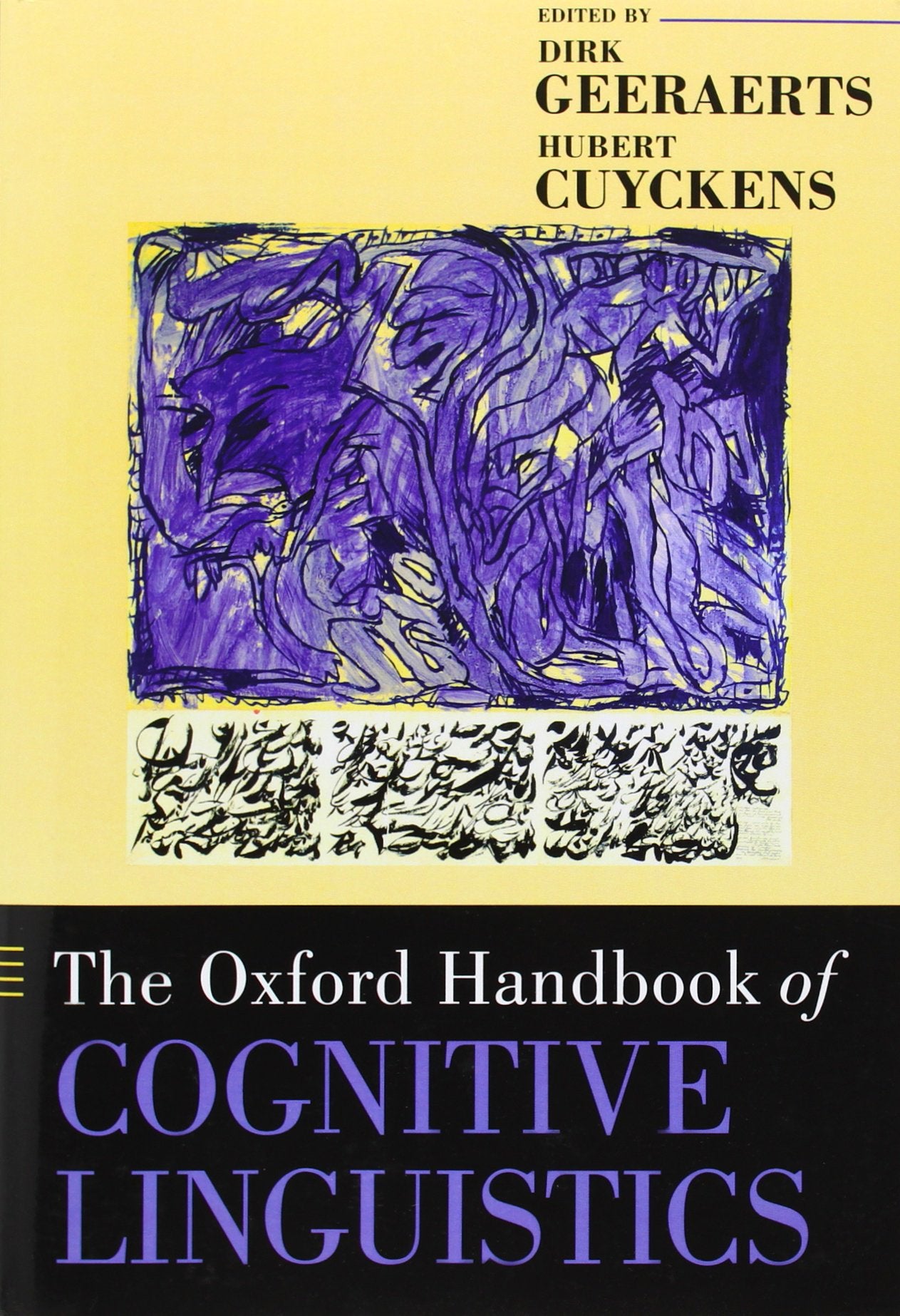
The Oxford Handbook of Cognitive Linguistics (Oxford Handbooks),Used
Sold by Ergodebooks, an authorized reseller.
Returns accepted within 30 days | support@ergodebooks.com
Shipping Information
- Free Standard Shipping — United States only
- Processing Time: 3–5 business days
- Estimated Delivery: 6–10 business days after dispatch
- Double-boxed, fully insured & discreetly packaged
- Tracking number sent via email once dispatched
Returns & Refund
Returns accepted within 30 days of delivery.
Damaged or Defective Item
Free return shipping + replacement or full refund
Wrong Item Received
Free return shipping + replacement or full refund
Change of Mind
Return shipping at customer's expense · 25% restocking fee applies
Payment Option

The Oxford Handbook of Cognitive Linguistics presents a comprehensive overview of the main theoretical concepts and descriptive/theoretical models of Cognitive Linguistics, and covers its various subfields, theoretical as well as applied.The first twenty chapters give readers the opportunity to acquire a thorough knowledge of the fundamental analytic concepts and descriptive models of Cognitive Linguistics and their background. The book starts with a set of chapters discussing different conceptual phenomena that are recognized as key concepts in Cognitive Linguistics: prototypicality, metaphor, metonymy, embodiment, perspectivization, mental spaces, etc. A second set of chapters deals with Cognitive Grammar, Construction Grammar, and Word Grammar, which, each in their own way, bring together the basic concepts into a particular theory of grammar and a specific model for the description of grammatical phenomena. Special attention is given to the interrelation between Cognitive and Construction Grammar. A third set of chapters compares Cognitive Linguistics with other forms of linguistic research (functional linguistics, autonomous linguistics, and the history of linguistics), thus giving a readers a better grip on the position of Cognitive Linguistics within the landscape of linguistics at large.The remaining chapters apply these basic notions to various more specific linguistic domains, illustrating how Cognitive Linguistics deals with the traditional linguistic subdomains (phonology, morphology, lexicon, syntax, text and discourse), and demonstrating how it handles linguistic variation and change. Finally they consider its importance in the domain of Applied Linguistics, and look at interdisciplinary links with research fields such as philosophy and psychology.With a wellknown cast of contributors from around the world, this reference work will be of interest to researchers and advanced students in (cognitive) linguistics, psychology, cognitive science, and anthropology.
⚠️ WARNING (California Proposition 65):
This product may contain chemicals known to the State of California to cause cancer, birth defects, or other reproductive harm.
For more information, please visit www.P65Warnings.ca.gov.