If you have any questions, you are always welcome to contact us. We'll get back to you as soon as possible, withing 24 hours on weekdays.
Customer service
All questions about your order, return and delivery must be sent to our customer service team by e-mail at yourstore@yourdomain.com
Sale & Press
If you are interested in selling our products, need more information about our brand or wish to make a collaboration, please contact us at press@yourdomain.com
Help
If you have any questions, you are always welcome to contact us. We'll get back to you as soon as possible, withing 24 hours on weekdays.
Customer service
All questions about your order, return and delivery must be sent to our customer service team by e-mail at yourstore@yourdomain.com
Sale & Press
If you are interested in selling our products, need more information about our brand or wish to make a collaboration, please contact us at press@yourdomain.com
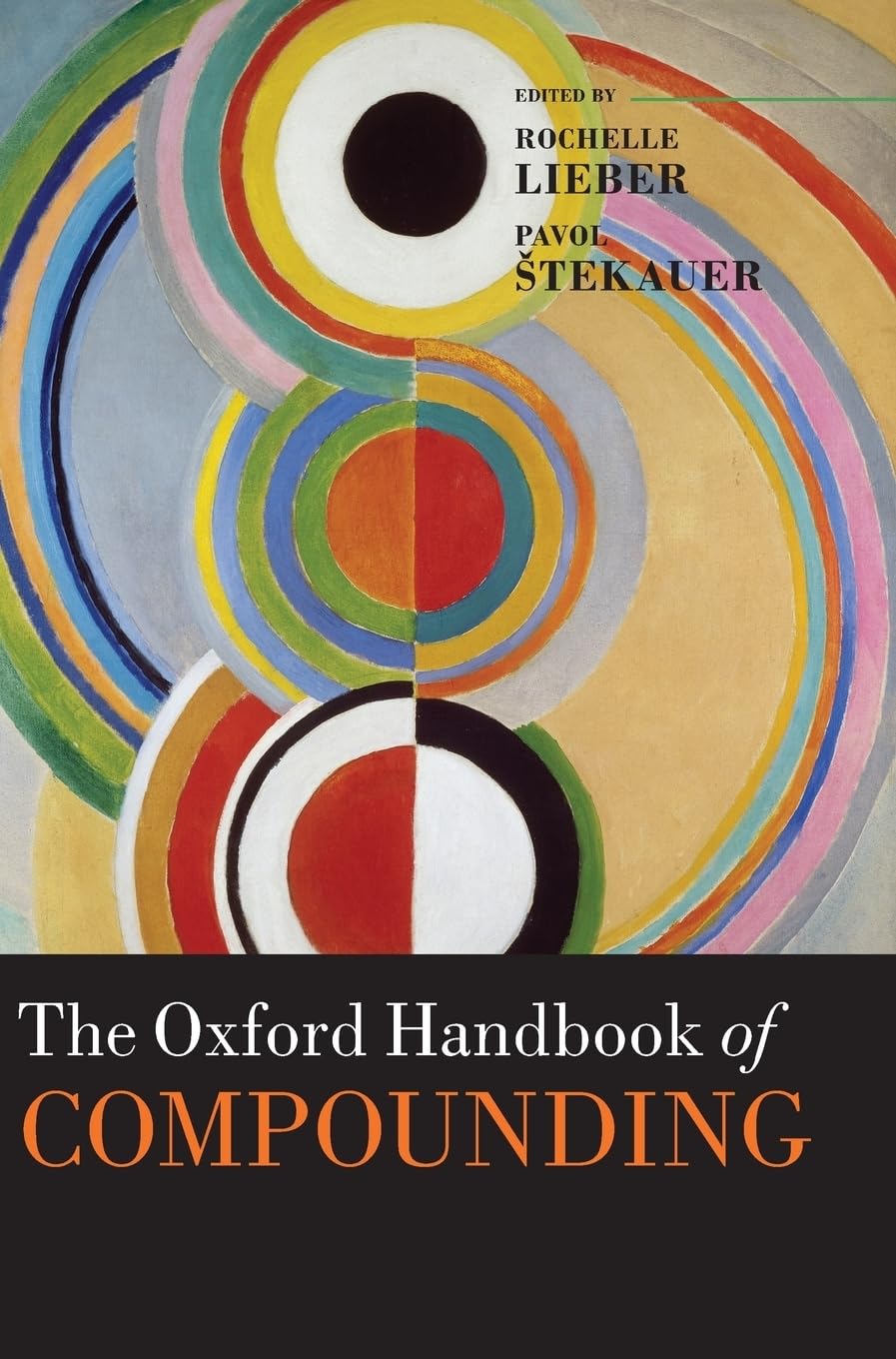
This book presents a comprehensive review of theoretical work on the linguistics and psycholinguistics of compound words and combines it with a series of surveys of compounding in a variety of languages from a wide range of language families. Compounding is an effective way to create and express new meanings. Compound words are segmentable into their constituents so that new items can often be understood on first presentation. However, as keystone, keynote, and keyboard, and breadboard, sandwichboard, and mortarboard show, the relation between components is often far from straightforward. The question then arises as to how far compound sequences are analysed at each encounter and how far they are stored in the brain as single lexical items. The nature and processing of compounds thus offer an unusually direct route to how language operates in the mind, as well as providing the means of investigating important aspects of morphology, and lexical semantics, and insights to child language acquisition and the organization of the mental lexicon. This book is the first to report on the state of the art on these and other central topics, including the classification and typology of compounds, and approaches to crosslinguistic research on the subject from generative and nongenerative, synchronic and diachronic perspectives.
⚠️ WARNING (California Proposition 65):
This product may contain chemicals known to the State of California to cause cancer,
birth defects, or other reproductive harm.
For MAP (Minimum Advertised Price) violations and Intellectual Property (IP) or Trademark concerns, please contact:
support@ergodebooks.com
⚠️ California Proposition 65 Warning: Some products sold on this website may expose you to chemicals known to the State of California to cause cancer, birth defects, or other reproductive harm. For more information, visit www.P65Warnings.ca.gov.