
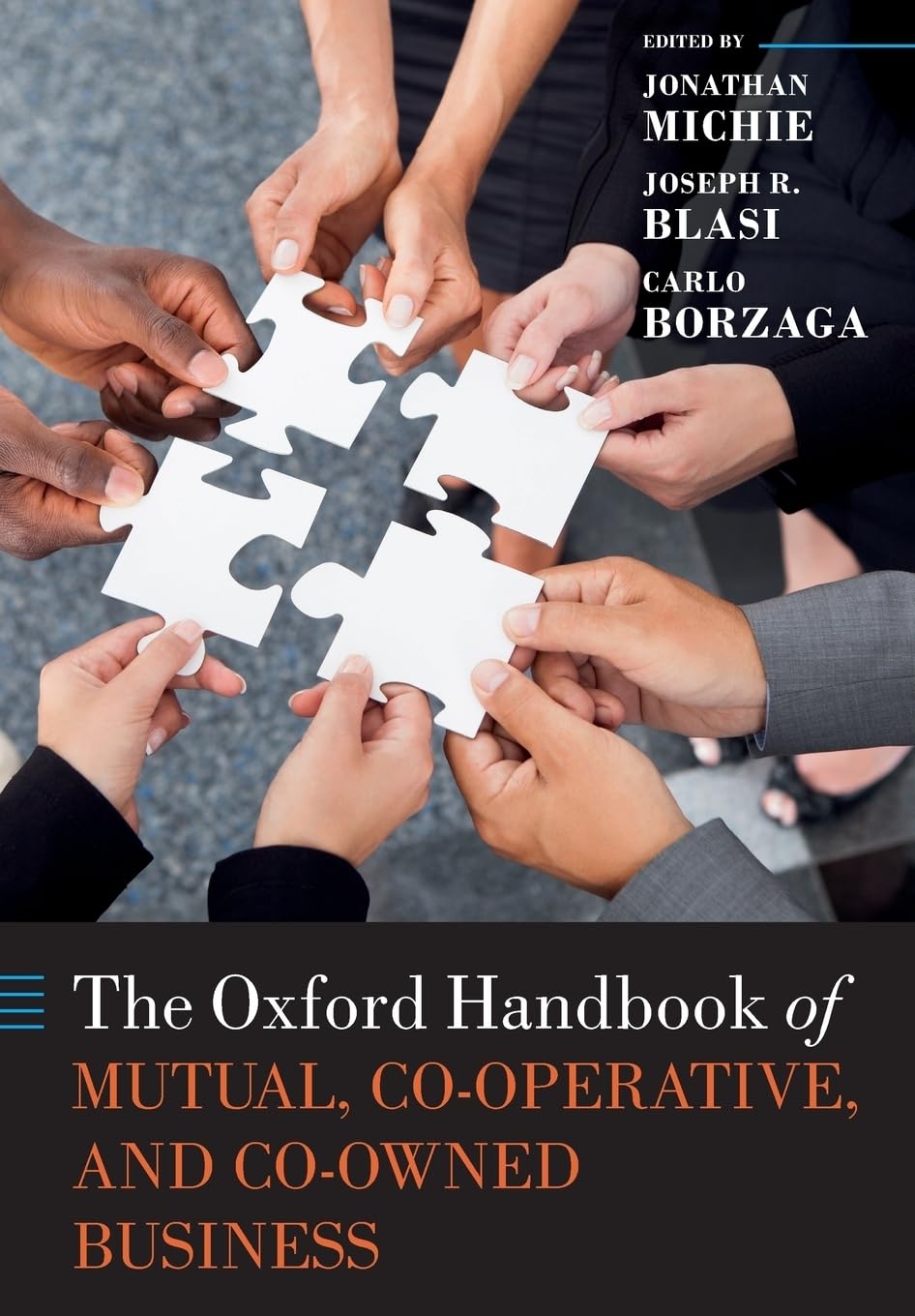
Title
The Oxford Handbook of Mutual, CoOperative, and CoOwned Business (Oxford Handbooks),Used
Sold by Ergodebooks, an authorized reseller.
Returns accepted within 30 days | support@ergodebooks.com
Shipping Information
- Free Standard Shipping — United States only
- Processing Time: 3–5 business days
- Estimated Delivery: 6–10 business days after dispatch
- Double-boxed, fully insured & discreetly packaged
- Tracking number sent via email once dispatched
Returns & Refund
Returns accepted within 30 days of delivery.
Damaged or Defective Item
Free return shipping + replacement or full refund
Wrong Item Received
Free return shipping + replacement or full refund
Change of Mind
Return shipping at customer's expense · 25% restocking fee applies
Payment Option

The Oxford Handbook of Mutual, CoOperative, and CoOwned Business investigates all types of 'member owned' organizations, whether consumer cooperatives, agricultural and producer cooperatives, worker cooperatives, mutual building societies, friendly societies, credit unions, solidarity organizations, mutual insurance companies, or employeeowned companies. Such organizations can be owned by their consumers, the producers, or the employees whether through singlestakeholder or multistakeholder ownership.This complex set of organizations is named differently across countries: from 'mutual' in the UK, to 'solidarity cooperatives' in Latin America. In some countries, such organizations are not even officially recognized and thus lack a specific denomination. For the sake of clarity, this Handbook will refer to memberowned organizations to encompass the variety of noninvestorowned organizations, and in the national case study chapters the terms used will be those most widely employed in that country. These alternative corporate forms have emerged in a variety of economic sectors in almost all advanced economies since the time of the industrial revolution and the development of capitalism, through the subsequent creation and dominance of the limited liability company. Until recently, these organizations were generally regarded as a rather marginal component of the economy. However, over the past few years, memberowned organizations have come to be seen in some countries, at least, as potentially attractive in light of their ability to tackle various economic and social concerns, and their relative resilience during the financial and economic crises of 20072017.
⚠️ WARNING (California Proposition 65):
This product may contain chemicals known to the State of California to cause cancer, birth defects, or other reproductive harm.
For more information, please visit www.P65Warnings.ca.gov.