
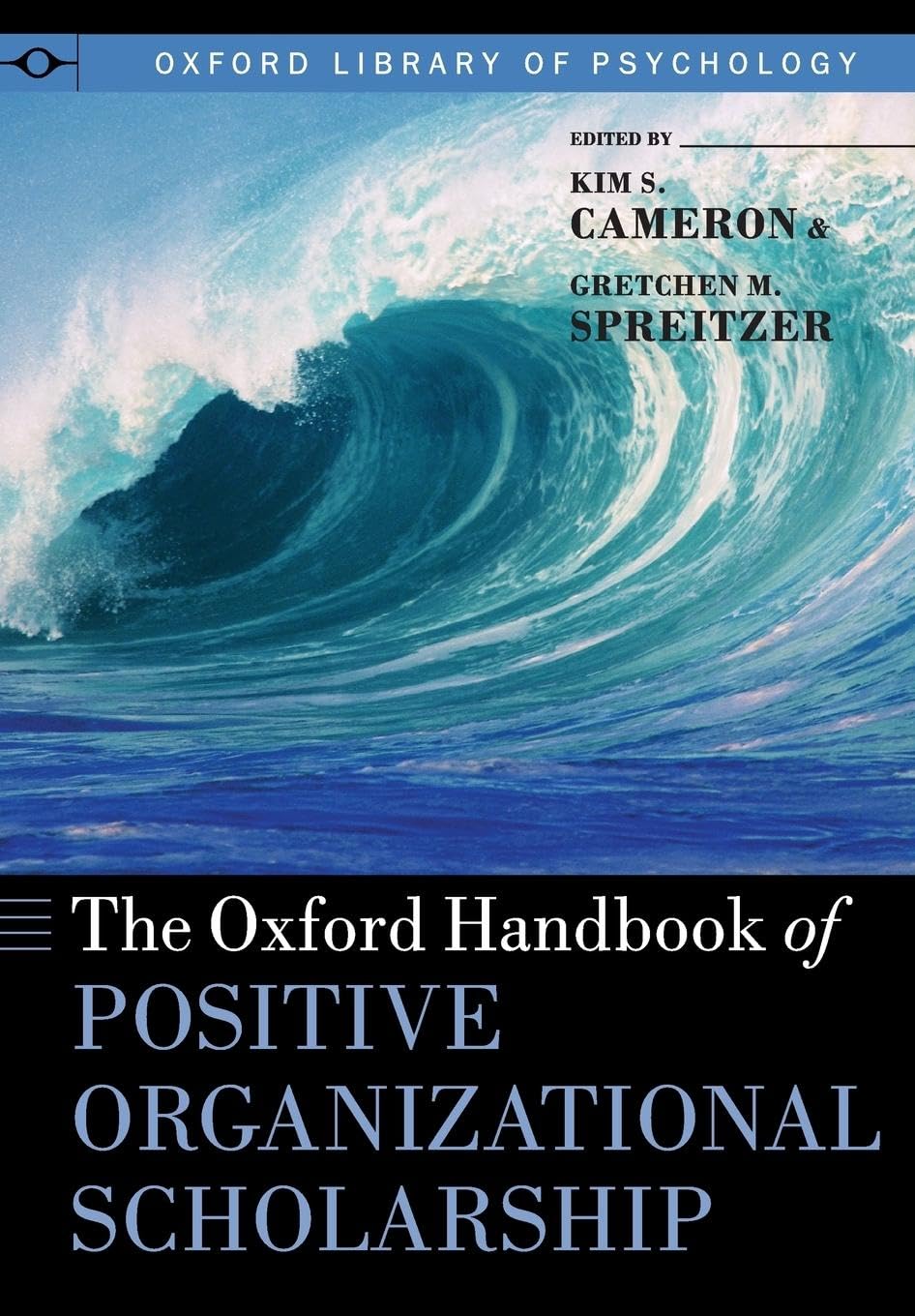
Title
The Oxford Handbook of Positive Organizational Scholarship (Oxford Library of Psychology),Used
Sold by Ergodebooks, an authorized reseller.
Returns accepted within 30 days | support@ergodebooks.com
Shipping Information
- Free Standard Shipping — United States only
- Processing Time: 3–5 business days
- Estimated Delivery: 6–10 business days after dispatch
- Double-boxed, fully insured & discreetly packaged
- Tracking number sent via email once dispatched
Returns & Refund
Returns accepted within 30 days of delivery.
Damaged or Defective Item
Free return shipping + replacement or full refund
Wrong Item Received
Free return shipping + replacement or full refund
Change of Mind
Return shipping at customer's expense · 25% restocking fee applies
Payment Option

Positive Organizational Scholarship (POS) is an umbrella concept used to emphasize what elevates and what is inspiring to individuals and organizations by defining and improving on the challenging, broken, and needlessly difficult. Just as positive psychology explores optimal individual psychological states rather than pathological ones, POS focuses attention on the generative dynamics in organizations that lead to the development of human strength, foster resiliency in employees, enable healing and restoration, and cultivate extraordinary individual and organizational performance. While POS does not ignore dysfunctional or typical patterns of behavior, it is most interested in the motivations and effects associated with remarkably positive phenomenahow they are facilitated, why they work, how they can be identified, and how organizations can capitalize on them.This handbook is the first major resource for scholars and professionals interested in learning about POS. Across 79 chapters, authors comprehensively review basic principles, empirical evidence, and ideas for future research relating to POS. They focus on using a positive lens to address problems and challenges in organizational life and they draw on POS to expand the domain of other disciplines including ethics, economics, peace, spirituality, social movements, and sustainability. This volume is an ideal resource for organizational scholars, students, practitioners, human resource managers, and professional associations, with coverage of the full spectrum of organizational theories and outcomes that define, explain, and predict the occurrence, causes, and consequences of positivity.
⚠️ WARNING (California Proposition 65):
This product may contain chemicals known to the State of California to cause cancer, birth defects, or other reproductive harm.
For more information, please visit www.P65Warnings.ca.gov.
- Q: What is the main focus of Positive Organizational Scholarship? A: Positive Organizational Scholarship (POS) emphasizes the positive aspects that inspire individuals and organizations, aiming to improve challenges and promote human strengths.
- Q: How many chapters are included in 'The Oxford Handbook of Positive Organizational Scholarship'? A: The handbook contains 79 chapters that cover essential principles, empirical evidence, and future research ideas related to POS.
- Q: Who is the author of this handbook? A: The book is authored by Kim S. Cameron, a recognized expert in the field of organizational studies.
- Q: What is the condition of the used book? A: The used book is described as being in good condition.
- Q: What type of binding does this book have? A: This book is available in paperback binding.
- Q: When was 'The Oxford Handbook of Positive Organizational Scholarship' published? A: The book was published on May 1, 2013.
- Q: What topics does the handbook cover? A: The handbook addresses a wide range of topics, including ethics, economics, peace, spirituality, social movements, and sustainability, all through a positive lens.
- Q: Who would benefit from reading this handbook? A: This handbook is ideal for organizational scholars, students, practitioners, human resource managers, and professional associations.
- Q: What is the total number of pages in this handbook? A: The handbook consists of 1106 pages.
- Q: Is there a specific edition of the book? A: Yes, this is a reprint edition of the handbook.