
Title
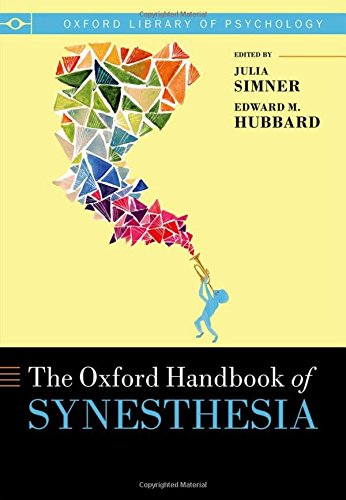
The Oxford Handbook of Synesthesia (Oxford Library of Psychology),Used
Sold by Ergodebooks, an authorized reseller.
Returns accepted within 30 days | support@ergodebooks.com
Shipping Information
- Free Standard Shipping — United States only
- Processing Time: 3–5 business days
- Estimated Delivery: 6–10 business days after dispatch
- Double-boxed, fully insured & discreetly packaged
- Tracking number sent via email once dispatched
Returns & Refund
Returns accepted within 30 days of delivery.
Damaged or Defective Item
Free return shipping + replacement or full refund
Wrong Item Received
Free return shipping + replacement or full refund
Change of Mind
Return shipping at customer's expense · 25% restocking fee applies
Payment Option

Synesthesia is a fascinating phenomenon which has captured the imagination of scientists and artists alike. This inherited condition gives rise to a kind of 'merging of the senses', and so for those who experience it, everyday activities like reading or listening to music trigger extraordinary impressions of colours, tastes, smells, shapes and other sensations. Synesthesia research also informs us about normal sensation because all people experience crosssensory mappings to an implicit degree. Synesthesia has a considerably broad appeal, and in recent decades the field has experienced a resurgence of interest. These advances have painted a detailed story about the development, genetics, psychology, history, aesthetics and neuroscience of synesthesia, and provide a contemporary source of study for a new generation of scholars.The Oxford Handbook of Synesthesia brings together this broad body of knowledge into one definitive stateoftheart handbook. It includes a large number of concisely written chapters, under broader headings, which tackle questions about the origins of synesthesia, its neurological basis, its links with language and numbers, attention and perception, and with 'normal' sensory and linguistic processing. It asks questions about synesthesia's role in language evolution, and presents both contemporary and historical overviews of the field. It shows synaesthesia's costs and benefits (e.g., in creativity, memory, imagery) and describes how synaesthesia can provide inspiration for artists and designers. The book ends with a series of perspectives on synesthesia, including a firsthand account, and philosophical viewpoints which show how synaesthesia poses unique questions about sensation, consciousness and the nature of reality.
⚠️ WARNING (California Proposition 65):
This product may contain chemicals known to the State of California to cause cancer, birth defects, or other reproductive harm.
For more information, please visit www.P65Warnings.ca.gov.
- Q: What is 'The Oxford Handbook of Synesthesia' about? A: This book offers a comprehensive overview of synesthesia, exploring its origins, neurological basis, and its connections with language, perception, and creativity.
- Q: Who is the author of this book? A: The author of 'The Oxford Handbook of Synesthesia' is Julia Simner, a recognized expert in the field of synesthesia research.
- Q: How many pages does the book have? A: The book contains 1104 pages of in-depth information on synesthesia.
- Q: What type of binding does this book have? A: This book is bound in hardcover, making it durable and suitable for extensive use.
- Q: When was 'The Oxford Handbook of Synesthesia' published? A: The book was published on February 12, 2014.
- Q: Is there any information on the costs and benefits of synesthesia in the book? A: Yes, the book discusses both the costs and benefits of synesthesia, including its impact on creativity, memory, and artistic inspiration.
- Q: Does the book include perspectives from individuals with synesthesia? A: Yes, it concludes with a series of perspectives, including first-hand accounts and philosophical viewpoints.
- Q: What is the main audience for this book? A: The book is intended for scholars, researchers, and anyone interested in psychology, neuroscience, and the arts.
- Q: Are there any illustrations or visual aids in the book? A: The book includes various illustrations and charts to help explain the concepts related to synesthesia.
- Q: Can this book help me understand synesthesia better? A: Yes, it serves as a definitive guide that consolidates extensive research and insights into synesthesia, making it a valuable resource for understanding the phenomenon.