
Title
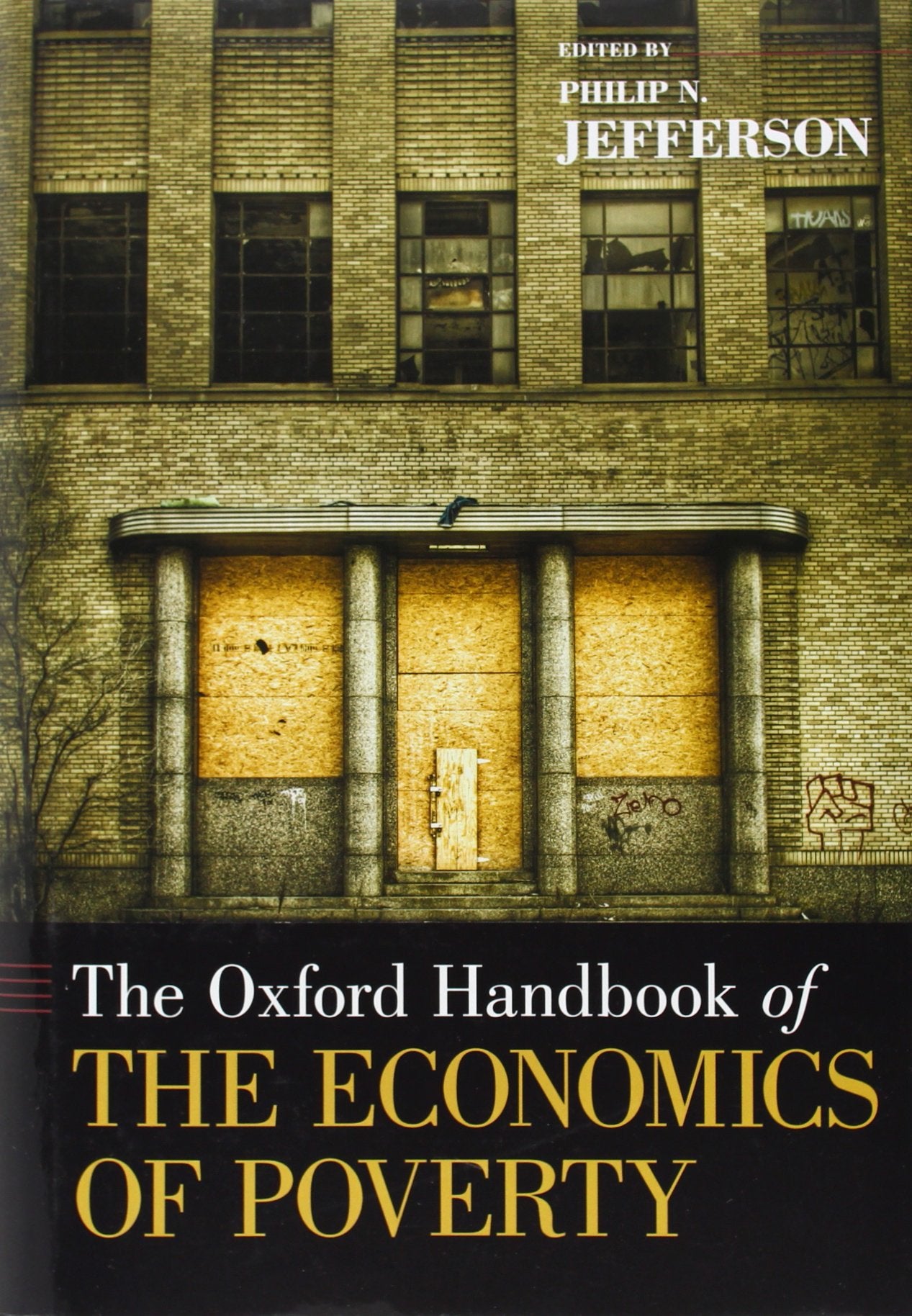
The Oxford Handbook of the Economics of Poverty (Oxford Handbooks),Used
Sold by Ergodebooks, an authorized reseller.
Returns accepted within 30 days | support@ergodebooks.com
Shipping Information
- Free Standard Shipping — United States only
- Processing Time: 3–5 business days
- Estimated Delivery: 6–10 business days after dispatch
- Double-boxed, fully insured & discreetly packaged
- Tracking number sent via email once dispatched
Returns & Refund
Returns accepted within 30 days of delivery.
Damaged or Defective Item
Free return shipping + replacement or full refund
Wrong Item Received
Free return shipping + replacement or full refund
Change of Mind
Return shipping at customer's expense · 25% restocking fee applies
Payment Option

Poverty is a pressing and persistent problem. While its extent varies across countries, its presence always represents the diminution of human capacity. Therefore, it seems natural to want to do something about it. Have countries made progress in mitigating poverty? How do we determine who is poor and who is not poor? What intuitions or theories guide the design of antipoverty policy? Is overall labor market performance the key to keeping the poverty rate low? Or, does it matter how wellconnected an individual is to those who know about the availability of jobs? Does being an immigrant increase the odds of being poor? Are there antipoverty policies that work? For whom do they work? If I'm poor, will I have access to health care and housing? Am I more likely to be obese, polluted upon, incarcerated, unbanked, and without assets if I'm poor? Is poverty too hard a problem for economic analysis? These are some of the questions that a distinguished group of scholars have come together to confront in this Handbook.The Handbook is written in a highlyaccessible style that encourages the reader to think critically about poverty. Theories are presented in a rigorous but not overlytechnical way; concise and straightforward empirical analyses enlighten key policy issues. The volume has six parts: Poverty in the 21st Century; Labor Market Factors; Poverty Policy; Poverty Dynamics; Dimensions of Poverty; and Trends and Issues in AntiPoverty Policy. A goal of the Handbook is to stimulate further research on poverty. To that end, several chapters challenge conventional thinking about poverty and in some cases present specific proposals for the reform of economic and social policy.
⚠️ WARNING (California Proposition 65):
This product may contain chemicals known to the State of California to cause cancer, birth defects, or other reproductive harm.
For more information, please visit www.P65Warnings.ca.gov.