If you have any questions, you are always welcome to contact us. We'll get back to you as soon as possible, withing 24 hours on weekdays.
Customer service
All questions about your order, return and delivery must be sent to our customer service team by e-mail at yourstore@yourdomain.com
Sale & Press
If you are interested in selling our products, need more information about our brand or wish to make a collaboration, please contact us at press@yourdomain.com
Help
If you have any questions, you are always welcome to contact us. We'll get back to you as soon as possible, withing 24 hours on weekdays.
Customer service
All questions about your order, return and delivery must be sent to our customer service team by e-mail at yourstore@yourdomain.com
Sale & Press
If you are interested in selling our products, need more information about our brand or wish to make a collaboration, please contact us at press@yourdomain.com
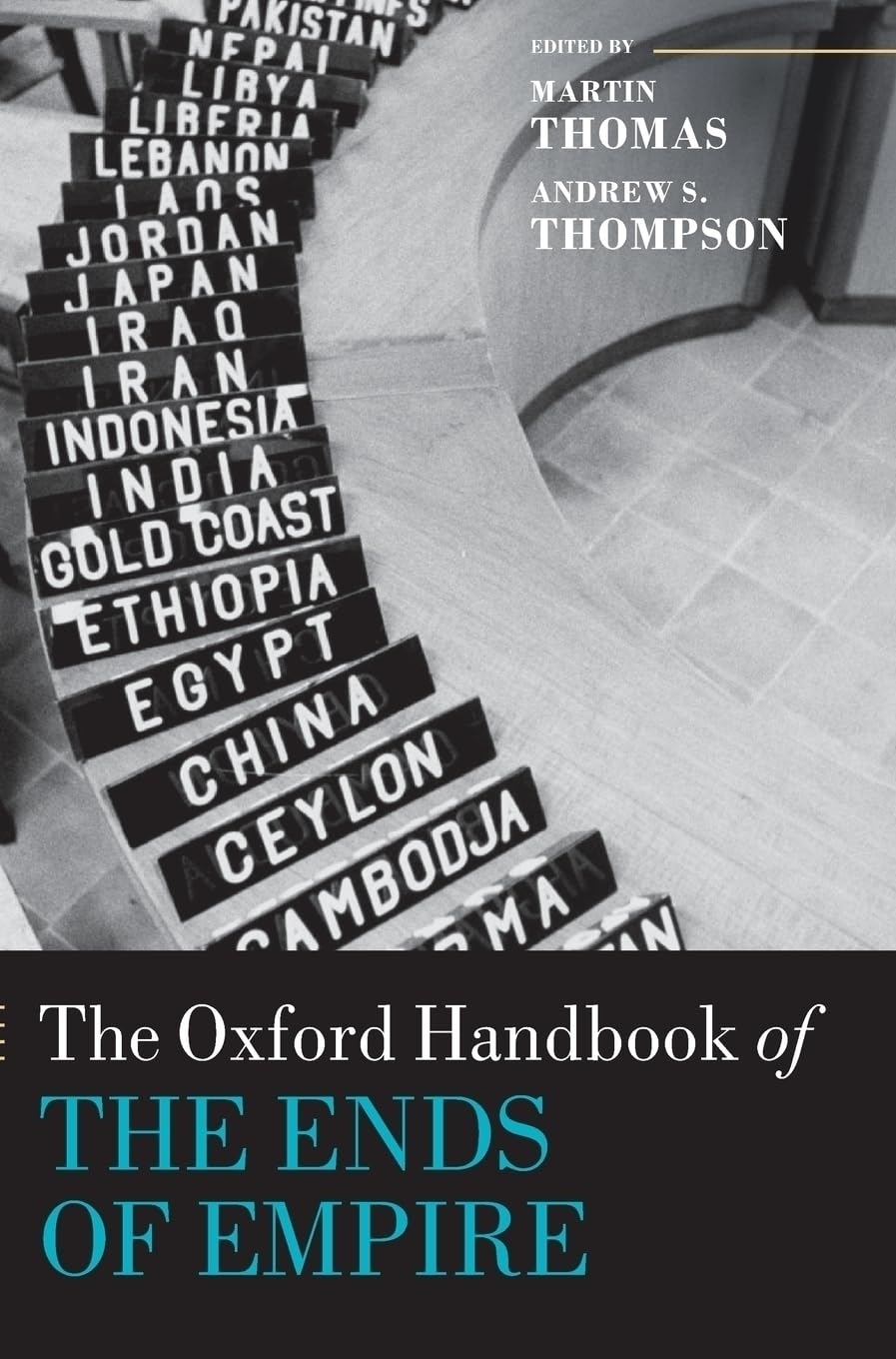
The Oxford Handbook of the Ends of Empire offers the most comprehensive treatment of the causes, course, and consequences of the ends of empire in the twentieth century. The volume's contributors convey the global reach of decolonization, with chapters analysing the empires of Western Europe, Eastern Europe, China and Japan.The Handbook combines broad, regional treatments of decolonization with chapter contributions constructed around particular themes or social issues. It considers how the history of decolonization is being rethought as a result of the rise of the 'new' imperial history, and its emphasis on race, gender, and culture, as well as the more recent growth of interest in histories of globalization, transnational history, and histories of migration and diaspora, humanitarianism and development, and human rights.The Handbook, in other words, seeks to identify the processes and commonalities of experience that make decolonization a unique historical phenomenon with a lasting resonance. In light of decades of historical and social scientific scholarship on modernization, dependency, neocolonialism, 'failed state' architectures and postcolonial conflict, the obvious question that begs itself is 'when did empires actually end?' In seeking to unravel this most basic dilemma the Handbook explores the relationship between the study of decolonization and the study of globalization. It connects histories of the latecolonial and postcolonial worlds, and considers the legacies of empire in European and formerly colonised societies.
⚠️ WARNING (California Proposition 65):
This product may contain chemicals known to the State of California to cause cancer,
birth defects, or other reproductive harm.
For MAP (Minimum Advertised Price) violations and Intellectual Property (IP) or Trademark concerns, please contact:
support@ergodebooks.com
⚠️ California Proposition 65 Warning: Some products sold on this website may expose you to chemicals known to the State of California to cause cancer, birth defects, or other reproductive harm. For more information, visit www.P65Warnings.ca.gov.