
Title
The Oxford History Of Literary Translation In English: Volume 4: 17901900,New
Sold by Ergodebooks, an authorized reseller.
Returns accepted within 30 days | support@ergodebooks.com
Shipping Information
- Free Standard Shipping — United States only
- Processing Time: 3–5 business days
- Estimated Delivery: 6–10 business days after dispatch
- Double-boxed, fully insured & discreetly packaged
- Tracking number sent via email once dispatched
Returns & Refund
Returns accepted within 30 days of delivery.
Damaged or Defective Item
Free return shipping + replacement or full refund
Wrong Item Received
Free return shipping + replacement or full refund
Change of Mind
Return shipping at customer's expense · 25% restocking fee applies
Payment Option

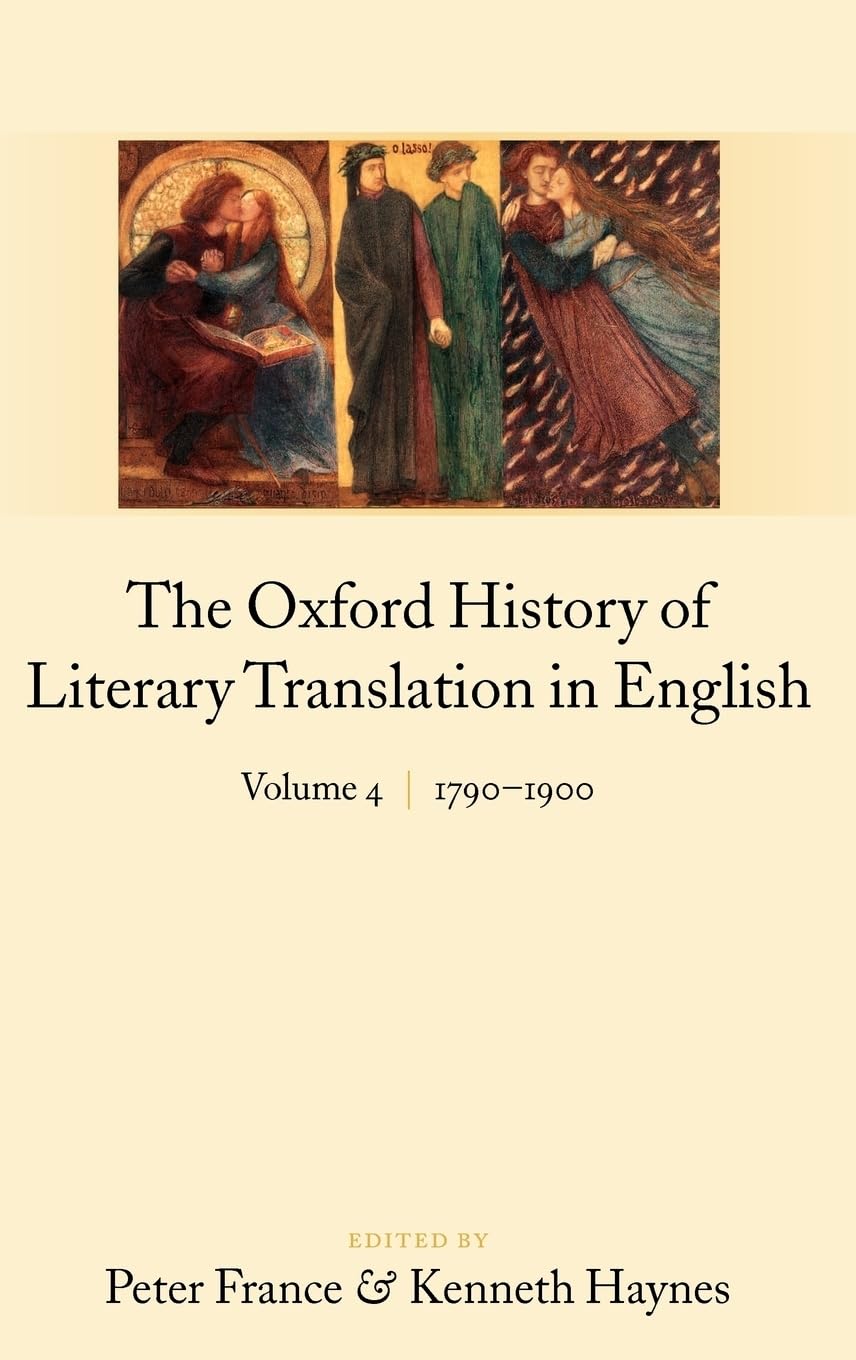
This groundbreaking fivevolume history runs from the Middle Ages to the year 2000. It is a critical history, treating translations wherever appropriate as literary works in their own right, and reveals the vital part played by translators and translation in shaping the literary culture of the Englishspeaking world, both for writers and readers. It thus offers new and often challenging perspectives on the history of literature in English. As well as examining the translations and their wider impact, it explores the processes by which they came into being and were disseminated, and provides extensive bibliographical and biographical reference material.In the one hundred and ten years covered by volume four of The Oxford History of Literary Translation in English, what characterized translation was above all the move to encompass what Goethe called 'world literature.' This occurred, paradoxically, at a time when English literature is often seen as increasingly selfsufficient. In Europe, the culture of Germany was a new source of inspiration, as were the medieval literatures and the popular ballads of many lands, from Spain to Serbia. From the midcentury, the other literatures of the North, both ancient and modern, were extensively translated, and the last third of the century saw the beginning of the Russian vogue. Meanwhile, as the British presence in the East was consolidated, translation helped readers to take possession of 'exotic' nonEuropean cultures, from Persian and Arabic to Sanskrit and Chinese.The thirtyfive contributors bring an enormous range of expertise to the exploration of these new developments and of the fascinating debates which reopened old questions about the translator's task, as the new literalism, whether scholarly or experimental, vied with established modes of translation. The complex story unfolds in Britain and its empire, but also in the United States, involving not just translators, publishers, and readers, but also institutions such as the universities and the periodical press. Nineteenthcentury English literature emerges as more open to the foreign than has been recognized before, with farreaching effects on its orientation.
⚠️ WARNING (California Proposition 65):
This product may contain chemicals known to the State of California to cause cancer, birth defects, or other reproductive harm.
For more information, please visit www.P65Warnings.ca.gov.