
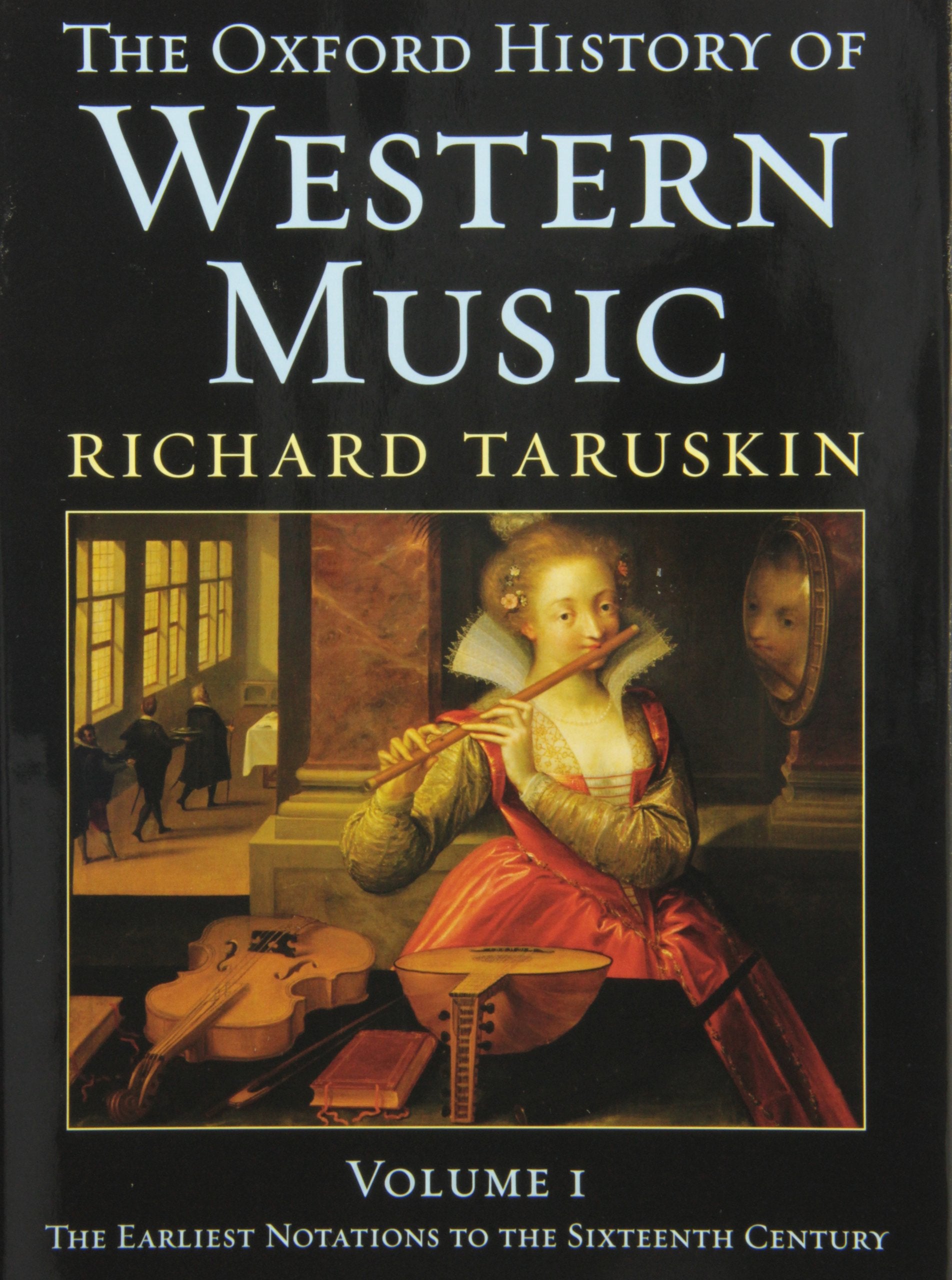
Title
The Oxford History Of Western Music, Vol. 6: Resources Chronology, Bibliography, Master Index,New
Sold by Ergodebooks, an authorized reseller.
Returns accepted within 30 days | support@ergodebooks.com
Shipping Information
- Free Standard Shipping — United States only
- Processing Time: 3–5 business days
- Estimated Delivery: 6–10 business days after dispatch
- Double-boxed, fully insured & discreetly packaged
- Tracking number sent via email once dispatched
Returns & Refund
Returns accepted within 30 days of delivery.
Damaged or Defective Item
Free return shipping + replacement or full refund
Wrong Item Received
Free return shipping + replacement or full refund
Change of Mind
Return shipping at customer's expense · 25% restocking fee applies
Payment Option

The History Of 'History'Our Changing Perspectives On The Act Of Narrating And Trying To 'Recapture' The Pastencompasses The Most Profound Seismic Shifts In Modern Consciousness. Once Seemingly Commonsensical, The Scienceaspiring Ambition Of Historiography To Recount The Past 'As It Actually Was' (To Borrow Leopold Von Ranke'S Famously Misunderstood Phase) Now Betrays Anachronistic Naivete, If Not A Dangerous Arrogance Masquerading As Objectivity. And The Business Of Cultural History Provides A Particularly Fascinatingand Contentiousindex To The Larger Issues At Stake. The Very Urgency Of The Debate Over 'How' To Tell The Story (And Indeed What The Story Is) Continues To Intensify In Proportion To The Uncertainty Of Our Times. Considering Its Official Title (Bearing An Impressive Imprimatur From Oxford University Press, The Vanguard Of Scholarly Reference Works), Richard Taruskin'S Grand Opus Might Appear At First Glance To Eschew The Moreheated Arenas Of Debate Involving Cultural History. Quite The Taruskin Throws Down The Gauntlet At Once And Passionately Joins In The Fray. In The Process, He Strips The Story Of Music'S Development In The West (I.E., Europe And America) Of Its Deceptively Innocuous Trappings And Received Ideas, Thrusting It Into The Spotlight Of Contemporary Critical Inquiry. The Result, Virtually A Priori, Is A Highly Controversial Reexamination Of A Narrative That Will Cause Even The Most Openminded Music Lover To Do A Number Of Doubletakes. What'S Extraordinary About Taruskin'S Achievement Is How Immensely Engrossing, Insightful, Provocative, Fresh, And Downright Brilliant The 'History Of Western Music' Becomes In His Weaving Of It. But Why Yet Another Sweeping History When The New Grove Dictionary Of Music Has Been Recently Overhauled (In An Edition To Which Taruskin Prolifically Contributed), And When Longstanding Classic Texts Such As Paul Henry Lang'S Music In Western Civilization Continue To Be Reissued? The Heart Of The Matter Lies In The Very Ambition Behind This New History. First, Some Of The Fun At Nearly 4,000 Pages (Along With An Additional Resource Volume Containing Master Index, Chronologies, And Bibliography), The Oxford History Of Western Music Weighs Nearly 20 Pounds And Took A Decade To Write. In Other Words, This Isn'T Historybycommittee. Its Perspective From The Point Of View Of One Massively Learned Individual Is At Once The Work'S Chief Strength And Its Achilles Heel. Taruskin'S Powerful Voice Echoes The Kind Of 'Oldfashioned' Synthesis, With Its Attempt At An 'Overarching Trajectory,' Of Such Pioneering Cultural Historians As Jacob Burckhardt Or Perhaps Even The Epic Sweep Of Gibbon'S The Decline And Fall Of The Roman Empirean Antidote To The Curse Of Ivorytower Specialization. But, More Crucially, Taruskin Arms That Voice With The Toolkit Of Contemporary Historiography To Pursue A Critical Rethinking Of How Western Music Turned Out As It Did, And Where It Is Today. His Singular Viewpoint Anchors Taruskin'S Attempt To Show That 'The Literate Tradition Of Western Music Is Coherent At Least Insofar As It Has A Completed Shape.' It'S Important To Realize, As Taruskin Early Acknowledges, That His Work Is Meant Not As A Stocktaking 'Survey' But As A History. That Is, It Involves An Unfolding Both Of That Larger Coherence And Of Many Smaller Narratives That Are Its Not Of The Artwork (Or Composer) Alone, But Those Of Its Production, Its Social And Political Context, And Its (Oftenchanging) Reception As Integral Components Of Musical 'Meaning.' Taruskin'S Aim Is To Filter Out The Distorting Perspectives Of 'Historicism' (The Myth Of Purposeful, Goaloriented Evolution Through History) And Aestheticism (Which Considers The Artwork As A 'Pure,' Timeless Entity). Along The Way, This Means Smashing Rows Upon Rows Of Icons And Legends (Not Surprisingly, The Bulk Of These Stemming From The 19Thcentury Germanic Tradition, But Also Comprising A Good Deal Of 20Thcentury Received Ideas About Stravinsky, Soviet Composers Such As Shostakovich, And Various Postwar 'Elitisms'). Inevitably, Taruskin Doesn'T Prove Immune To Resorting To Some Legends Of His Own. In An Extraordinary Overview Of Wagner, For Example, He Persuasively Debunks The Routine Citation Of Tristan Und Isolde As Pointing Toward The Coming 'Collapse Of Tonality,' Demonstrating How Such Thinking Is The Epitome Of 'The Historicist Tendency To Write History Backward With An Eye Toward Giving The Present A Justification.' Yet He'S Also Capable Of Reducing The Wagner Of The Ring To An Obsession With A 'Cult Of Strength' In What Is An Otherwise Deeply Insightful Discussion Of 'The Wagner Problem.' In Terms Of The Larger Stakes Of This History, Taruskin'S Strongly Argued Debating Points (And Debunkings) At Times Veer In More Eccentric Directions, Especially When It Comes To Such Pivotal Figures As Stravinsky, Who Gets A Particularly Intense Thrashing. And Regardless Of Taruskin'S Theoretical Stances, T
⚠️ WARNING (California Proposition 65):
This product may contain chemicals known to the State of California to cause cancer, birth defects, or other reproductive harm.
For more information, please visit www.P65Warnings.ca.gov.
- Q: How many pages does this book have? A: This book has three hundred twenty-nine pages. It provides a comprehensive exploration of Western music history.
- Q: What is the binding type of this book? A: This book is hardcover. The durable binding ensures longevity and protection for the extensive content.
- Q: Who is the author of this book? A: The author is Richard Taruskin. He is a renowned musicologist known for his critical perspective on Western music.
- Q: What themes are covered in this book? A: This book covers themes such as the evolution of Western music and critical historiography. It delves into social and political contexts affecting music development.
- Q: How do I read this book effectively? A: To read this book effectively, consider following the chronological structure and referencing the bibliography for deeper insights. Engage with the themes critically for a comprehensive understanding.
- Q: Is this book suitable for beginners? A: Yes, this book is suitable for both beginners and advanced readers. It provides a thorough overview while also offering depth for those more familiar with the subject.
- Q: How should I store this book? A: Store this book upright on a shelf in a cool, dry place. Avoid exposure to direct sunlight to preserve the hardcover and pages.
- Q: Can I clean the book if it gets dirty? A: Yes, you can clean the book by gently wiping the cover with a soft, dry cloth. Avoid using any liquids to prevent damage.
- Q: What if the book arrives damaged? A: If the book arrives damaged, you can contact customer support for a return or replacement. Be sure to provide details and photos of the damage.
- Q: Is this book appropriate for academic use? A: Yes, this book is appropriate for academic use. It includes extensive bibliographic resources and indexes, making it a valuable reference for research.
- Q: Does this book include a bibliography? A: Yes, this book includes a comprehensive bibliography. It provides references for further reading and research on the topics discussed.
- Q: Are there any illustrations in this book? A: No, this book does not contain illustrations. It focuses on textual analysis and critical discourse surrounding Western music.
- Q: Is there an index in this book? A: Yes, the book features a master index. This index helps readers locate specific topics and references throughout the text.
- Q: What makes this book different from other music histories? A: This book offers a critical reexamination of Western music history through Taruskin's unique perspective, distinguishing it from traditional narratives.
- Q: Can I use this book for music theory studies? A: Yes, you can use this book for music theory studies. It provides context for theoretical developments within the history of Western music.