
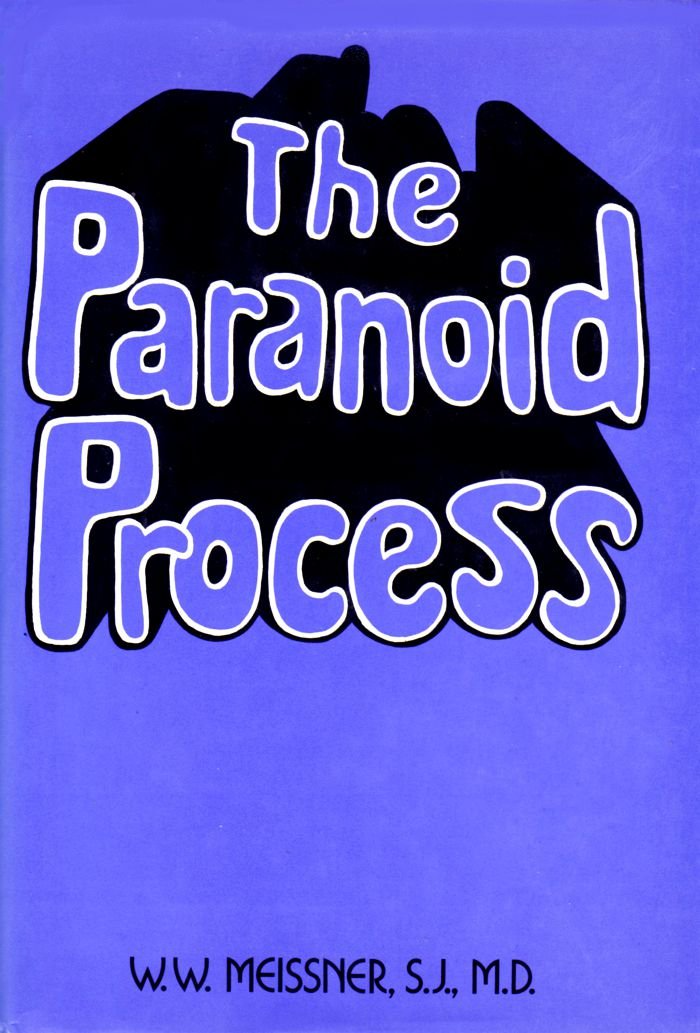
Title
The Paranoid Process (Classical Psychoanalysis And Its Applications)
Sold by Ergodebooks, an authorized reseller.
Returns accepted within 30 days | support@ergodebooks.com
Shipping Information
- Free Standard Shipping — United States only
- Processing Time: 3–5 business days
- Estimated Delivery: 6–10 business days after dispatch
- Double-boxed, fully insured & discreetly packaged
- Tracking number sent via email once dispatched
Returns & Refund
Returns accepted within 30 days of delivery.
Damaged or Defective Item
Free return shipping + replacement or full refund
Wrong Item Received
Free return shipping + replacement or full refund
Change of Mind
Return shipping at customer's expense · 25% restocking fee applies
Payment Option

Paranoid Forms Of Thinking Play A Significant Role In A Wide Variety Of Human Experiences. The Paranoid Process Is An Attempt To Define The Nature Of The Intrapsychic Mechanisms At Work In Such A Process, Specifically The Complex Interactions Of Interjections, Projections, And The Paranoid Construction. A Number Of Clinical Cases Of Differing Levels Of Pathology Are Presented, Each Offering An Example Of The Paranoid Process At Work. This Book Covers A Broad Range Of Approaches To The Paranoid Process As A Clinical And Social Phenomenon. Beginning With Freud And A Detailed Historical Survey Of The Concept Of The Paranoid Syndromes, Meissner Extends His Investigation Into The Most Recent Analytic And More General Psychological Findings. While The Basic Framework Is Classically Psychoanalytic, He Utilizes Material From Clinical Psychology, Cognition, Family Dynamics, And Sociology. Such Diverse Categories As Phobias, Cognitive Style, Narcissism, Parentchild Interaction, And Student Revolution Become Meaningfully Linked In Their Relation To The Paranoid Process. A Major Contribution To The Volume Is Its Emphasis On Human Personality As Influenced By The Constantly Interacting Social And Environmental Matrix Of The Individual, As Opposed To A More Limited Instinctbased Approach. On A Psychological Plane, The Primary Process Is Seen As Making A Contribution To Identity Formation In The Normal Development Process. While The Exploration Of Paranoia Does Not Include Descriptions Of Clinical Manifestations, The Emphasis Is On The Process Itself In Both Pathological And Socially Adaptive Realms.
⚠️ WARNING (California Proposition 65):
This product may contain chemicals known to the State of California to cause cancer, birth defects, or other reproductive harm.
For more information, please visit www.P65Warnings.ca.gov.
- Q: What is the page count of The Paranoid Process? A: The Paranoid Process has eight hundred seventy-two pages. This extensive length allows for a thorough exploration of paranoid thinking.
- Q: What is the binding type of this book? A: The book is available in hardcover format. This durable binding enhances the longevity of the book.
- Q: Who is the author of The Paranoid Process? A: The author is W. W. Meissner. He provides a comprehensive analysis of paranoid processes in psychology.
- Q: What genre does The Paranoid Process fall under? A: The book is categorized as Psychology & Counseling. It delves into psychoanalytic theories and clinical applications.
- Q: How should I approach reading this book? A: You can read this book at your own pace. It covers complex theories and case studies that may require reflection.
- Q: Is this book suitable for beginners in psychology? A: Yes, it can be suitable for beginners, though some sections may require prior knowledge of psychoanalysis.
- Q: How do I care for my hardcover copy of The Paranoid Process? A: Keep it in a dry place and avoid direct sunlight. Regular dusting can help maintain its condition.
- Q: Can I store this book on a bookshelf? A: Yes, you can store it on a bookshelf. Ensure it stands upright to prevent damage to the spine.
- Q: Does this book include clinical case studies? A: Yes, it presents numerous clinical case studies. These cases illustrate the paranoid process in various contexts.
- Q: What if my copy of the book arrives damaged? A: If the book arrives damaged, you can return it for a replacement or refund. Check the seller's return policy for details.
- Q: Is there a warranty for The Paranoid Process? A: Typically, books do not come with a warranty. However, you should inquire with the seller regarding their policies.
- Q: What makes this book stand out in its field? A: The book emphasizes the social and environmental influences on personality. This perspective adds depth to traditional psychoanalytic views.
- Q: Are there any phobias discussed in this book? A: Yes, various phobias are explored in relation to the paranoid process. These examples provide practical context to the theories.
- Q: Is there a specific audience for The Paranoid Process? A: The book is aimed at students, professionals, and anyone interested in psychology. It caters to both academic and clinical perspectives.
- Q: How does this book relate to Freud's theories? A: It begins with Freud's foundational theories and extends to modern psychological findings. This historical context enriches the analysis.