
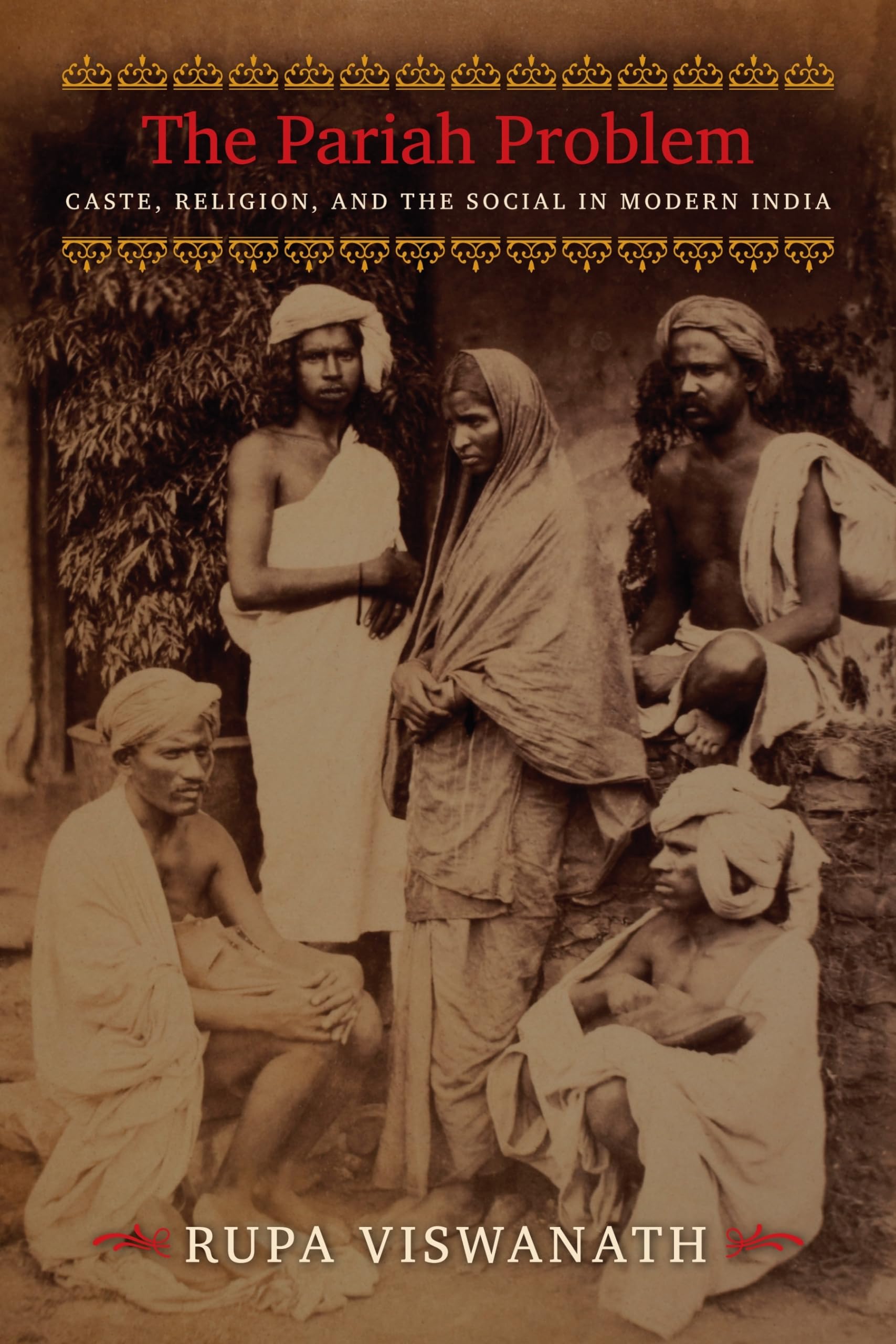
Title
The Pariah Problem: Caste, Religion, and the Social in Modern India (Cultures of History),Used
Sold by Ergodebooks, an authorized reseller.
Returns accepted within 30 days | support@ergodebooks.com
Shipping Information
- Free Standard Shipping — United States only
- Processing Time: 3–5 business days
- Estimated Delivery: 6–10 business days after dispatch
- Double-boxed, fully insured & discreetly packaged
- Tracking number sent via email once dispatched
Returns & Refund
Returns accepted within 30 days of delivery.
Damaged or Defective Item
Free return shipping + replacement or full refund
Wrong Item Received
Free return shipping + replacement or full refund
Change of Mind
Return shipping at customer's expense · 25% restocking fee applies
Payment Option

Once known as 'Pariahs,' Dalits are primarily descendants of unfree agrarian laborers. They belong to India's most subordinated castes, face overwhelming poverty and discrimination, and provoke public anxiety. Drawing on a wealth of previously untapped sources, this book follows the conception and evolution of the 'Pariah Problem' in public consciousness in the 1890s. It shows how highcaste landlords, state officials, and wellintentioned missionaries conceived of Dalit oppression, and effectively foreclosed the emergence of substantive solutions to the 'Problem'with consequences that continue to be felt today.Rupa Viswanath begins with a description of the everyday lives of Dalit laborers in the 1890s and highlights the systematic efforts made by the state and Indian elites to protect Indian slavery from public scrutiny. Protestant missionaries were the first nonDalits to draw attention to their plight. The missionaries' vision of the Pariahs' suffering as being a result of Hindu religious prejudice, however, obscured the fact that the entire agrarian politicaleconomic system depended on unfree Pariah labor. Both the Indian public and colonial officials came to share a view compatible with missionary explanations, which meant all subsequent welfare efforts directed at Dalits focused on religious and social transformation rather than on structural reform. Methodologically, theoretically, and empirically, this book breaks new ground to demonstrate how events in the early decades of statesponsored welfare directed at Dalits laid the groundwork for the present day, where the postcolonial state and wellmeaning social and religious reformers continue to downplay Dalits' landlessness, violent suppression, and political subordination.
⚠️ WARNING (California Proposition 65):
This product may contain chemicals known to the State of California to cause cancer, birth defects, or other reproductive harm.
For more information, please visit www.P65Warnings.ca.gov.