
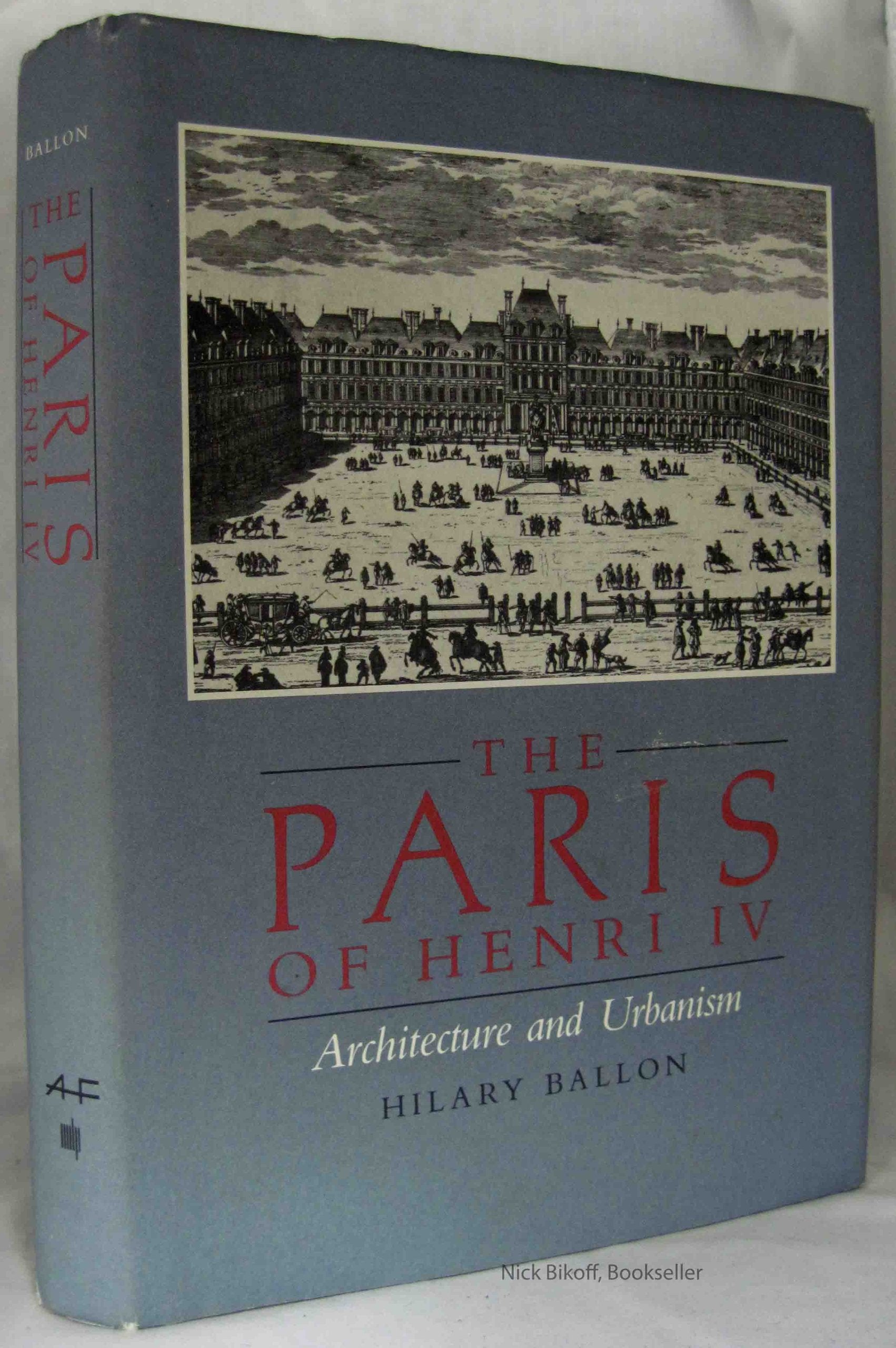
Title
The Paris Of Henry Iv: Architecture And Urbanism
Sold by Ergodebooks, an authorized reseller.
Returns accepted within 30 days | support@ergodebooks.com
Shipping Information
- Free Standard Shipping — United States only
- Processing Time: 3–5 business days
- Estimated Delivery: 6–10 business days after dispatch
- Double-boxed, fully insured & discreetly packaged
- Tracking number sent via email once dispatched
Returns & Refund
Returns accepted within 30 days of delivery.
Damaged or Defective Item
Free return shipping + replacement or full refund
Wrong Item Received
Free return shipping + replacement or full refund
Change of Mind
Return shipping at customer's expense · 25% restocking fee applies
Payment Option

The Louvre, The Place Royale (Now The Place Des Vosges), The Place And Rue Dauphine, The Pont Neuf, And The Hpital Saint Louis Were Part Of A Building Program Initiated By Henri Iv That Would Be Unmatched In Paris For More Than Two Centuries. Drawing On Previously Untapped Notarial Archives In Paris'S Minutier Central, Hilary Ballon Provides A Rich And Original Account Of The Crucial Period Between 1605 And 1610 When Paris Was Transformed From A Medieval City Decimated By War And Neglect Into A Modern Capital.Ballon Takes Up Each Of The Major Building Projects, Showing How Henri Iv'S Vision Of Paris Was Translated Into Brick And Stone. She Relates The Monarch'S Urbanism To His Broader Policy Objectives: Promoting Domestic Manufacturing, Linking The Court And Commerce, And Establishing Paris As The Focal Point Of A Unified French State.Ballon Reveals That Such Works As The Place Royale, The First Planned Square In Paris, And The Hpital Saint Louis, Built To Protect The City From The Destabilizing Effects Of The Plague, Were The Result Of An Interactive Process Between Architectural Form, Social Forces, And Political Vision Rather Than Reproductions Of An Unyielding Royal Idea. Setting Aside The Traditional View Of The Monarch'S Urbanism As Selfglorification, Of His Monuments And Squares As Static Icons, She Sees The Buildings In The Context Of Parisian Life, From Their Designs Through Construction To Their Use.Ballon Then Shifts From A Focus On The Monuments To Representations Of Henri Iv'S Paris In Maps, City Views, And History Books. She Argues That The King'S Building Program And Centralizing Policies Initiated The Development In France Of A Variety Of Topographical Arts: Among These Jacques Du Breul'S 1612 History Of Paris Was The First To Impose The City'S Topography As Its Organizing Principle.An Architectural History Foundation Book
⚠️ WARNING (California Proposition 65):
This product may contain chemicals known to the State of California to cause cancer, birth defects, or other reproductive harm.
For more information, please visit www.P65Warnings.ca.gov.
- Q: How many pages are in 'The Paris of Henry IV'? A: This book contains three hundred eighty-eight pages. It provides a detailed account of the urban transformation in Paris during Henri IV's reign.
- Q: What is the binding type of this book? A: The binding type is hardcover. This ensures durability and protection for the book's pages.
- Q: What are the dimensions of the book? A: The book measures seven point five two inches in length, one inch in width, and ten point five one inches in height. These dimensions make it suitable for reading and display.
- Q: Who is the author of 'The Paris of Henry IV'? A: The author is Hilary Ballon. She is an Assistant Professor in the Department of Art History and Archaeology at Columbia University.
- Q: What is the main subject of this book? A: The main subject is the architecture and urbanism of Paris during Henri IV's rule. It explores how the city evolved from medieval times into a modern capital.
- Q: How is this book structured? A: The book is structured around key architectural projects and their social and political contexts. It includes discussions on urbanism and public health initiatives.
- Q: Is this book suitable for beginners in history? A: Yes, it is suitable for beginners. The writing style is accessible, providing insights into urban history without requiring extensive prior knowledge.
- Q: Can advanced scholars benefit from this book? A: Yes, advanced scholars can benefit from it. It offers original research and analysis drawn from previously untapped notarial archives.
- Q: What themes are explored in this book? A: The themes include urban transformation, architectural innovation, and the relationship between political vision and social forces. It discusses both aesthetic and functional aspects of urban design.
- Q: How should I care for this hardcover book? A: To care for this hardcover book, keep it in a cool, dry place and avoid exposure to direct sunlight. Regularly dust the cover and pages to maintain its condition.
- Q: What is the recommended way to store this book? A: Store this book upright on a shelf or in a bookcase. Avoid stacking heavy items on top to prevent damage to the spine.
- Q: Is this book appropriate for children? A: While it contains historical content, it may not be specifically tailored for children. Parental discretion is advised based on the child's interest in history.
- Q: What if the book arrives damaged? A: If the book arrives damaged, contact the seller for assistance with returns or exchanges. Most sellers have policies in place for defective items.
- Q: Is there a warranty for this book? A: Typically, books do not come with a warranty. However, you should check the seller's return policy for any guarantees on quality.
- Q: What are the key architectural projects discussed in the book? A: Key projects include the Louvre, Place Royale, and Pont Neuf. These projects illustrate Henri IV's vision for a modern Paris.
- Q: How does the book relate to contemporary urban studies? A: The book provides historical context that can inform contemporary urban studies. It highlights the interplay of architecture, social forces, and political vision.