If you have any questions, you are always welcome to contact us. We'll get back to you as soon as possible, withing 24 hours on weekdays.
Customer service
All questions about your order, return and delivery must be sent to our customer service team by e-mail at yourstore@yourdomain.com
Sale & Press
If you are interested in selling our products, need more information about our brand or wish to make a collaboration, please contact us at press@yourdomain.com
Help
If you have any questions, you are always welcome to contact us. We'll get back to you as soon as possible, withing 24 hours on weekdays.
Customer service
All questions about your order, return and delivery must be sent to our customer service team by e-mail at yourstore@yourdomain.com
Sale & Press
If you are interested in selling our products, need more information about our brand or wish to make a collaboration, please contact us at press@yourdomain.com
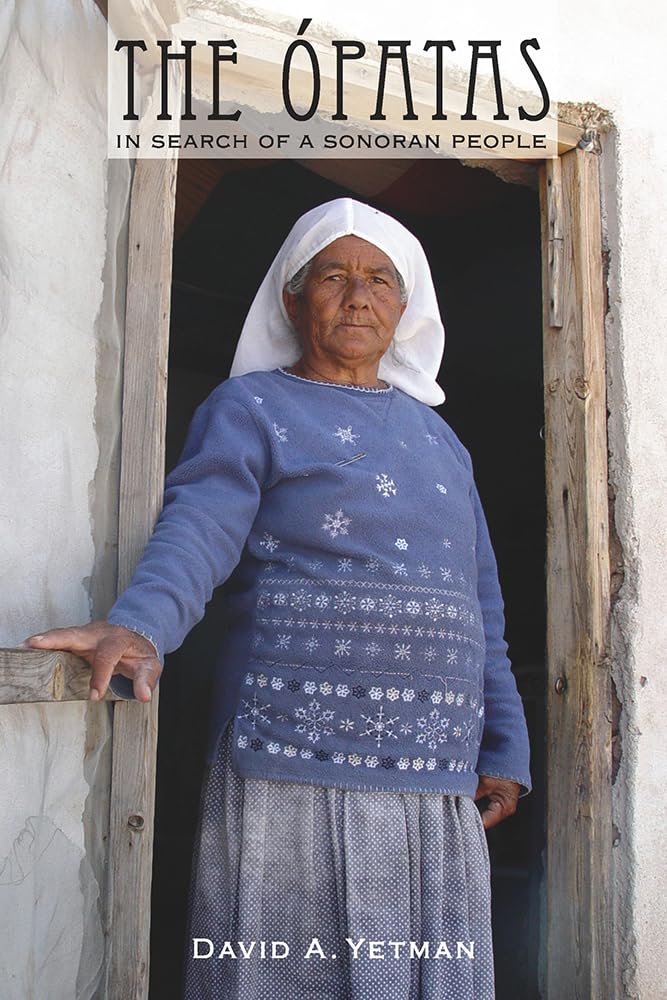
In 1600 they were the largest, most technologically advanced indigenous group in northwest Mexico, but today, though their descendants presumably live on in Sonora, almost no one claims descent from the patas. The patas seem to have disappeared as an ethnic group, their languages forgotten except for the names of the towns, plants, and geography of the Opatera, where they lived. Why did the patas disappear from the historical record while their neighbors survived?David Yetman, a leading ethnobotanist who has traveled extensively in Sonora, consulted more than two hundred archival sources to answer this question. The result is an accessible ethnohistory of the patas, one that embraces historical complexity with an eye toward Opatan strategies of resistance and assimilation. Yetmans account takes us through the Opatans initial encounters with the conquistadors, their resettlement in Jesuit missions, clashes with Apaches, their recruitment as miners, and several failed rebellions, and ultimately arrives at an explanation for their disappearance.Yetmans account is bolstered by conversations with presentday residents of the Opatera and includes a valuable appendix on the languages of the Opatera by linguistic anthropologist David Shaul. One of the few studies devoted exclusively to this indigenous group, The patas: In Search of a Sonoran People marks a significant contribution to the literature on the history of the greater Southwest.
⚠️ WARNING (California Proposition 65):
This product may contain chemicals known to the State of California to cause cancer,
birth defects, or other reproductive harm.
For MAP (Minimum Advertised Price) violations and Intellectual Property (IP) or Trademark concerns, please contact:
support@ergodebooks.com
⚠️ California Proposition 65 Warning: Some products sold on this website may expose you to chemicals known to the State of California to cause cancer, birth defects, or other reproductive harm. For more information, visit www.P65Warnings.ca.gov.