
Title
The Pathological Family: Postwar America and the Rise of Family Therapy (Cornell Studies in the History of Psychiatry),Used
Sold by Ergodebooks, an authorized reseller.
Returns accepted within 30 days | support@ergodebooks.com
Shipping Information
- Free Standard Shipping — United States only
- Processing Time: 3–5 business days
- Estimated Delivery: 6–10 business days after dispatch
- Double-boxed, fully insured & discreetly packaged
- Tracking number sent via email once dispatched
Returns & Refund
Returns accepted within 30 days of delivery.
Damaged or Defective Item
Free return shipping + replacement or full refund
Wrong Item Received
Free return shipping + replacement or full refund
Change of Mind
Return shipping at customer's expense · 25% restocking fee applies
Payment Option

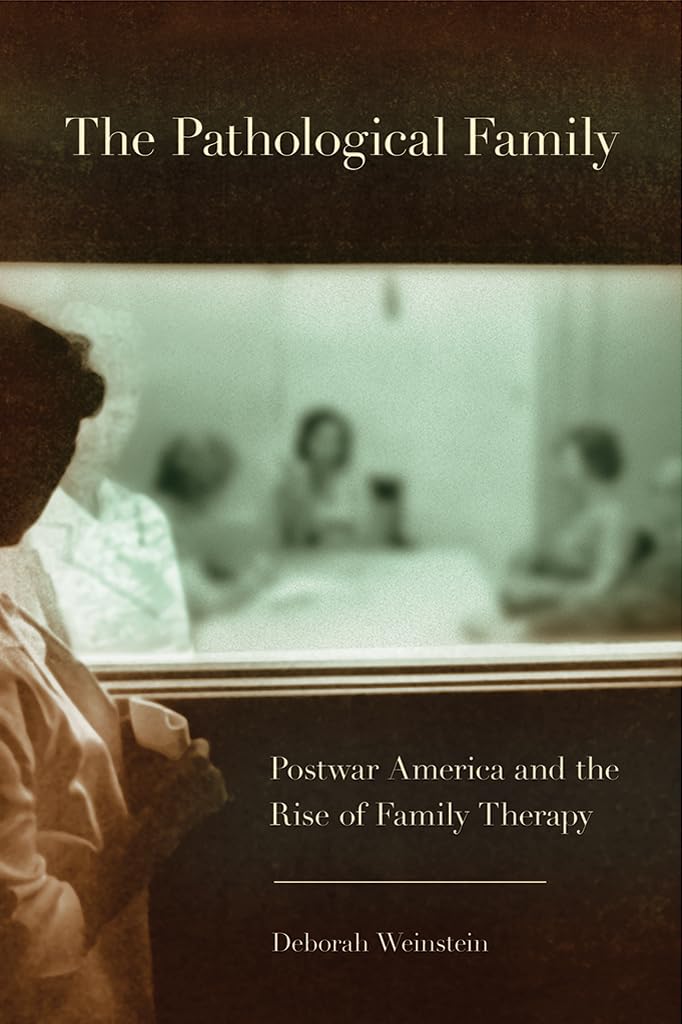
While iconic popular images celebrated family life during the 1950s and 1960s, American families were simultaneously regarded as potentially menacing sources of social disruption. The history of family therapy makes the complicated power of the family at midcentury vividly apparent. Clinicians developed a new approach to psychotherapy that claimed to locate the cause and treatment of mental illness in observable patterns of family interaction and communication rather than in individual psyches. Drawing on cybernetics, systems theory, and the social and behavioral sciences, they ambitiously aimed to cure schizophrenia and stop juvenile delinquency. With particular sensitivity to the importance of scientific observation and visual technologies such as oneway mirrors and training films in shaping the young field, The Pathological Family examines how family therapy developed against the intellectual and cultural landscape of postwar America.As Deborah Weinstein shows, the midcentury expansion of Americas therapeutic culture and the postwar fixation on family life profoundly affected one another. Family therapists and other postwar commentators alike framed the promotion of democracy in the language of personality formation and psychological health forged in the crucible of the family. As therapists in this era shifted their clinical gaze to whole families, they nevertheless grappled in particular with the role played by mothers in the onset of their childrens aberrant behavior. Although attitudes toward family therapy have shifted during intervening generations, the relations between family and therapeutic culture remain salient today.
⚠️ WARNING (California Proposition 65):
This product may contain chemicals known to the State of California to cause cancer, birth defects, or other reproductive harm.
For more information, please visit www.P65Warnings.ca.gov.