If you have any questions, you are always welcome to contact us. We'll get back to you as soon as possible, withing 24 hours on weekdays.
Customer service
All questions about your order, return and delivery must be sent to our customer service team by e-mail at yourstore@yourdomain.com
Sale & Press
If you are interested in selling our products, need more information about our brand or wish to make a collaboration, please contact us at press@yourdomain.com
Help
If you have any questions, you are always welcome to contact us. We'll get back to you as soon as possible, withing 24 hours on weekdays.
Customer service
All questions about your order, return and delivery must be sent to our customer service team by e-mail at yourstore@yourdomain.com
Sale & Press
If you are interested in selling our products, need more information about our brand or wish to make a collaboration, please contact us at press@yourdomain.com
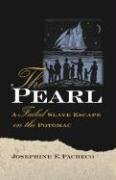
In the spring of 1848 seventysix slaves from the nation's capital hid aboard a schooner called the Pearl in an attempt to sail down the Potomac River and up the Chesapeake Bay to freedom in Pennsylvania. When inclement weather forced them to anchor for the night, the fugitive slaves and the ship's crew were captured and returned to Washington. Many of the slaves were sold to the Lower South, and two men sailing the Pearl were tried and sentenced to prison.Recounting this harrowing tale from the preparations for escape through the participants' trial, Josephine Pacheco provides fresh insight into the lives of enslaved blacks in the District of Columbia, putting a human face on the victims of the interstate slave trade, whose lives have been overshadowed by larger historical events. Pacheco also details the Congressional debates about slavery that resulted from this largescale escape attempt. She contends that although the incident itself and the trials and Congressional disputes that followed were not directly responsible for bringing an end to the slave trade in the nation's capital, they played a pivotal role in publicizing many of the issues surrounding slavery. Eventually, President Millard Fillmore pardoned the operators of the Pearl.
⚠️ WARNING (California Proposition 65):
This product may contain chemicals known to the State of California to cause cancer,
birth defects, or other reproductive harm.
For MAP (Minimum Advertised Price) violations and Intellectual Property (IP) or Trademark concerns, please contact:
support@ergodebooks.com
⚠️ California Proposition 65 Warning: Some products sold on this website may expose you to chemicals known to the State of California to cause cancer, birth defects, or other reproductive harm. For more information, visit www.P65Warnings.ca.gov.