If you have any questions, you are always welcome to contact us. We'll get back to you as soon as possible, withing 24 hours on weekdays.
Customer service
All questions about your order, return and delivery must be sent to our customer service team by e-mail at yourstore@yourdomain.com
Sale & Press
If you are interested in selling our products, need more information about our brand or wish to make a collaboration, please contact us at press@yourdomain.com
Help
If you have any questions, you are always welcome to contact us. We'll get back to you as soon as possible, withing 24 hours on weekdays.
Customer service
All questions about your order, return and delivery must be sent to our customer service team by e-mail at yourstore@yourdomain.com
Sale & Press
If you are interested in selling our products, need more information about our brand or wish to make a collaboration, please contact us at press@yourdomain.com
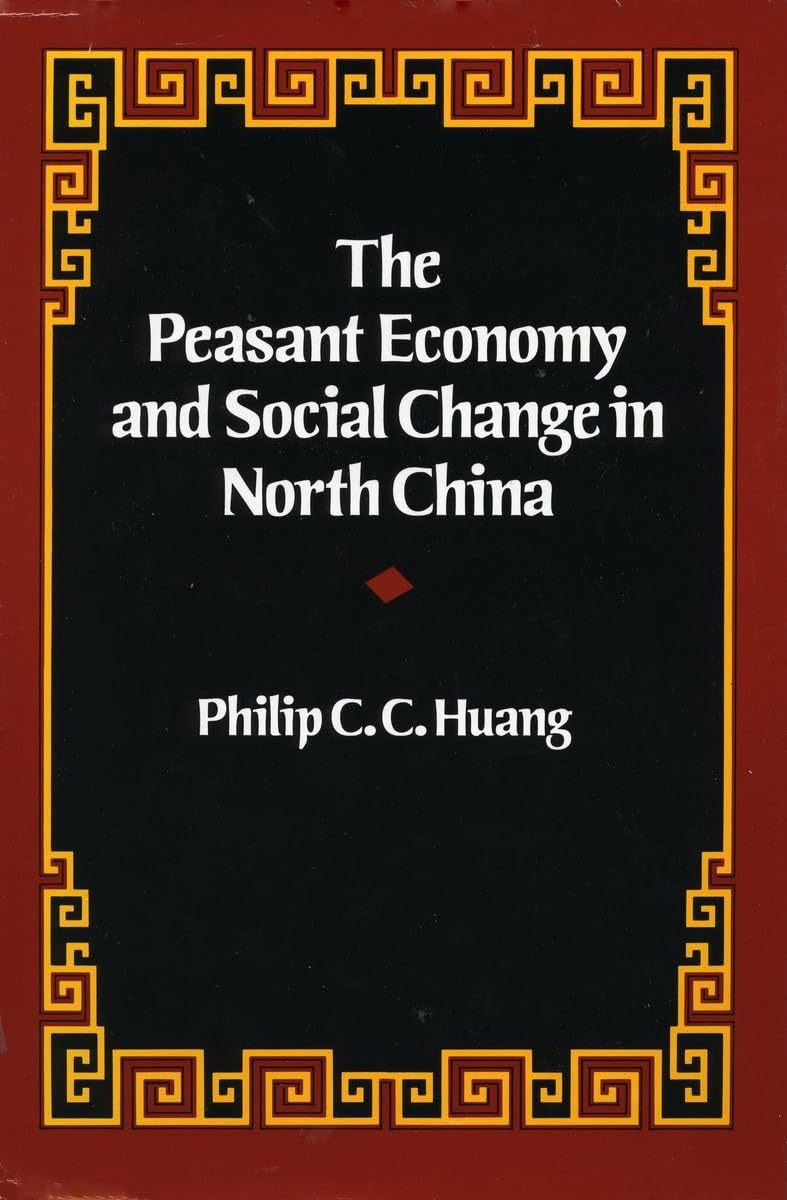
The author presents a convincing new interpretation of the origins and nature of the agrarian crisis that gripped the North China Plain in the two centuries before the Revolution. His extensive research included eighteenthcentury homicide case records, a nineteenthcentury country government archive, large quantities of 1930's Japanese ethnographic materials, and his own field studies in 1980.Through a comparison of the histories of small family farms and larger scale managerial farms, the author documents and illustrates the longterm trends of agricultural commercialization, social stratification, and mounting population pressure in the peasant economy. He shows how those changes, in the absence of dynamic economic growth, combined over the course of several centuries to produce a majority, not simply of landshort peasants or of exploited tenants and agricultural laborers, but of poor peasants who required both family farming and agricultural wage income to survive. This interlocking of family farming with wage labor furnished a large supply of cheap labor, which in turn acted as a powerful brake of capital accumulation in the economy. The formation of such a poor peasantry ultimately altered both the nature of village communities and their relations with the elites and the state, creating tensions that led in the end to revolution.
⚠️ WARNING (California Proposition 65):
This product may contain chemicals known to the State of California to cause cancer,
birth defects, or other reproductive harm.
For MAP (Minimum Advertised Price) violations and Intellectual Property (IP) or Trademark concerns, please contact:
support@ergodebooks.com
⚠️ California Proposition 65 Warning: Some products sold on this website may expose you to chemicals known to the State of California to cause cancer, birth defects, or other reproductive harm. For more information, visit www.P65Warnings.ca.gov.