
Title
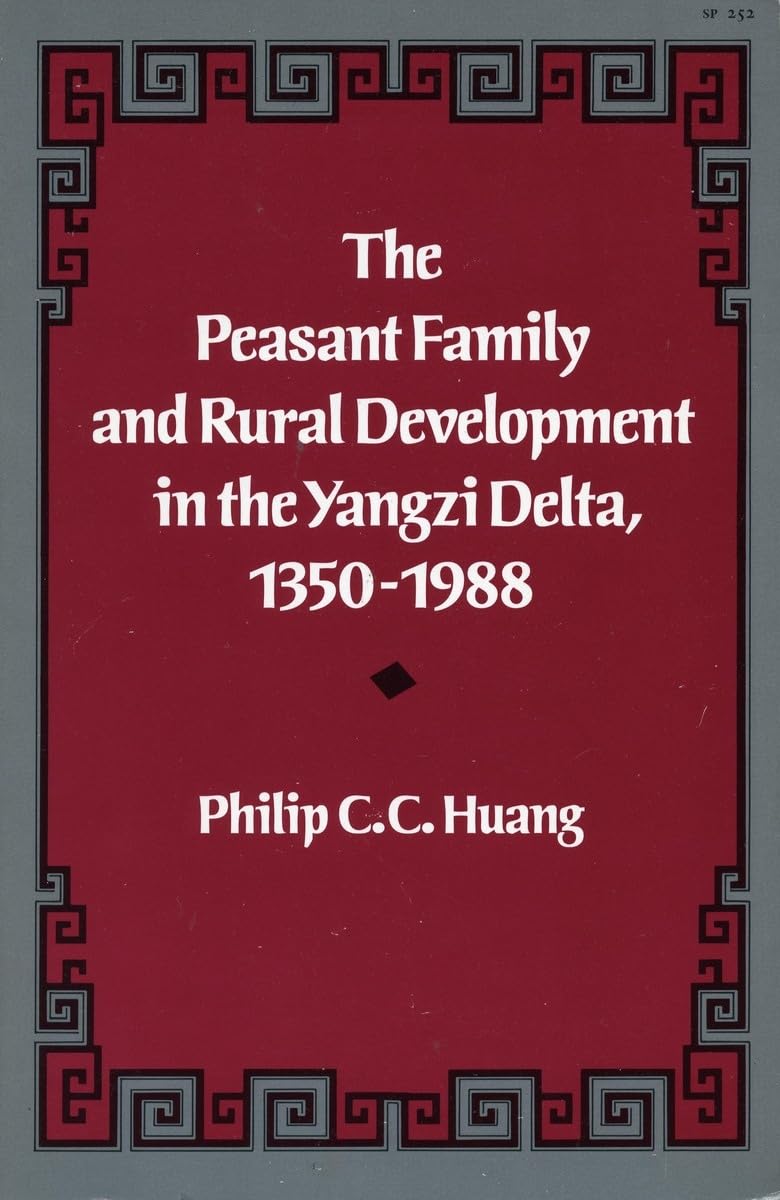
The Peasant Family And Rural Development In The Yangzi Delta, 13501988,New
Sold by Ergodebooks, an authorized reseller.
Returns accepted within 30 days | support@ergodebooks.com
Shipping Information
- Free Standard Shipping — United States only
- Processing Time: 3–5 business days
- Estimated Delivery: 6–10 business days after dispatch
- Double-boxed, fully insured & discreetly packaged
- Tracking number sent via email once dispatched
Returns & Refund
Returns accepted within 30 days of delivery.
Damaged or Defective Item
Free return shipping + replacement or full refund
Wrong Item Received
Free return shipping + replacement or full refund
Change of Mind
Return shipping at customer's expense · 25% restocking fee applies
Payment Option

How Can We Account For The Durability Of Subsistence Farming In China Despite Six Centuries Of Vigorous Commercialization From 1350 To 1950 And Three Decades Of Collectivization Between 1950 To 1980? Why Did The Chinese Rural Economy Not Undergo The Transformation Predicted By The Classical Models Of Adam Smith And Karl Marx? In Attempting To Answer This Question, Scholars Have Generally Treated Commercialization And Collectivization As Distinct From Population Increase, The Other Great Rural Change Of The Past Six Centuries. This Book Breaks New Ground In Arguing That In The Yangzi Delta, China'S Most Advanced Agricultural Region, Population Increase Was What Drove Commercialization And Collectivization, Even As It Was Made Possible By Them. The Processes At Work, Which The Author Terms Involutionary Commercialization And Involutionary Growth, Entailed Everincreasing Labor Input Per Unit Of Land, Resulting In Expanded Total Output But Diminishing Marginal Returns Per Workday. In The Mingqing Period, Involution Usually Meant A Switch To More Laborintensive Cash Crops And Lowreturn Household Sidelines. In Postrevolutionary China, It Typically Meant Greatly Intensified Crop Production. Stagnant Or Declining Returns Per Workday Were Absorbed First By The Family Production Unit And Then By The Collective. The True Significance Of The 1980'S Reforms, The Author Argues, Lies In The Diversion Of Labour From Farming To Rural Industries And Profitable Sidelines And The First Increases For Centuries In Productivity And Income Per Workday. With These Changes Have Come A Measure Of Rural Prosperity And The Genuine Possibility Of Transformative Rural Development. By Reconstructing Mingqing Agricultural History And Drawing On Twentiethcentury Ethnographic Data And His Own Field Investigations, The Author Brings His Large Themes Down To The Level Of Individual Peasant Households. Like His Acclaimed The Peasant Economy And Social Change In North China (1985), This Study Is Noteworthy For Both Its Empirical Richness And Its Theoretical Sweep, But It Goes Well Beyond The Earlier Work In Its Interregional Comparisons And Its Use Of The Pre And Post1949 Periods To Illuminate Each Other.
⚠️ WARNING (California Proposition 65):
This product may contain chemicals known to the State of California to cause cancer, birth defects, or other reproductive harm.
For more information, please visit www.P65Warnings.ca.gov.