If you have any questions, you are always welcome to contact us. We'll get back to you as soon as possible, withing 24 hours on weekdays.
Customer service
All questions about your order, return and delivery must be sent to our customer service team by e-mail at yourstore@yourdomain.com
Sale & Press
If you are interested in selling our products, need more information about our brand or wish to make a collaboration, please contact us at press@yourdomain.com
Help
If you have any questions, you are always welcome to contact us. We'll get back to you as soon as possible, withing 24 hours on weekdays.
Customer service
All questions about your order, return and delivery must be sent to our customer service team by e-mail at yourstore@yourdomain.com
Sale & Press
If you are interested in selling our products, need more information about our brand or wish to make a collaboration, please contact us at press@yourdomain.com
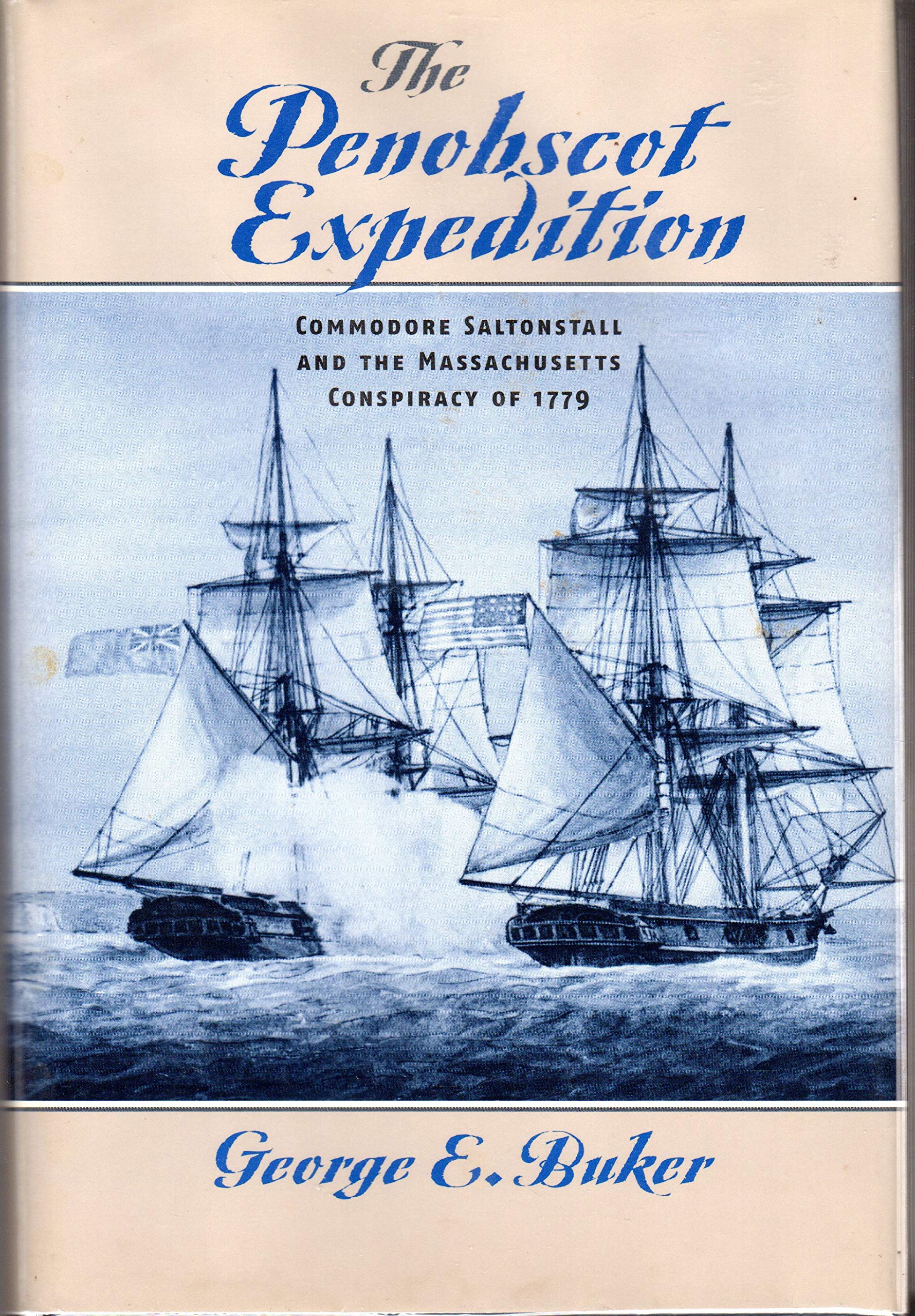
Although a seminal event in early U.S. naval history, the illfated Penobscot Expedition of 1779 remains one of the least studied aspects of the American Revolution and one of the most controversial. As part of the largest fleet ever assembled by the fledgling American navy, the vessels comprising the expedition were expected to swiftly defeat the British at Fort George on Maine's Penobscot Bay. But the armada lost some forty ships during the battle, suffering a defeat the magnitude of which would not be seen again until Pearl Harbor. Blame for the debacle was placed on Commo. Dudley Saltonstall, who was accused of cowardice and courtmartialed.In this book George E. Buker provides a compelling defense of Saltonstall. Bypassing historical speculation, he analyzes concrete factors that might well have caused the American defeat, namely the limitations of squarerigged ships in restricted waters, the geographic setting, and the British defensive alignment.Thorough in his research and his arguments, Buker presents evidence that the Massachusetts Committee of Inquiry and the General Court conspired against Saltonstall and interfered with the commodore's courtmartial proceedings to ensure a finding that would allow the state to assess Congress for part of the expenses. In 1793 Massachusetts did, in fact, receive $1.2 million from the federal government. Buker's conclusions, which solve a mystery that has puzzled generations of historians, are certain to foster a reassessment of Saltonstall and his actions.
⚠️ WARNING (California Proposition 65):
This product may contain chemicals known to the State of California to cause cancer,
birth defects, or other reproductive harm.
For MAP (Minimum Advertised Price) violations and Intellectual Property (IP) or Trademark concerns, please contact:
support@ergodebooks.com
⚠️ California Proposition 65 Warning: Some products sold on this website may expose you to chemicals known to the State of California to cause cancer, birth defects, or other reproductive harm. For more information, visit www.P65Warnings.ca.gov.