
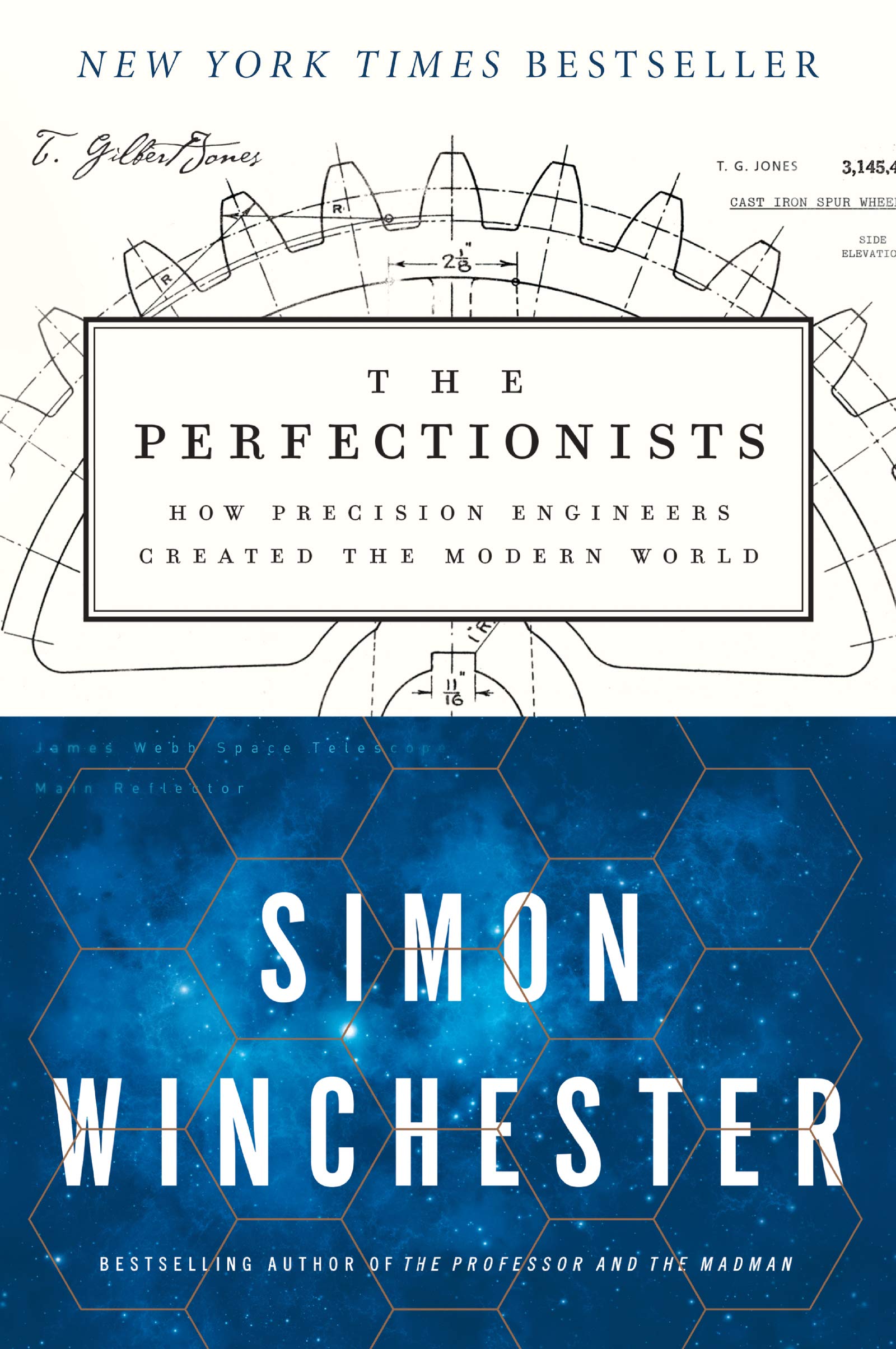
Title
The Perfectionists: How Precision Engineers Created The Modern World,New
Sold by Ergodebooks, an authorized reseller.
Returns accepted within 30 days | support@ergodebooks.com
Shipping Information
- Free Standard Shipping — United States only
- Processing Time: 3–5 business days
- Estimated Delivery: 6–10 business days after dispatch
- Double-boxed, fully insured & discreetly packaged
- Tracking number sent via email once dispatched
Returns & Refund
Returns accepted within 30 days of delivery.
Damaged or Defective Item
Free return shipping + replacement or full refund
Wrong Item Received
Free return shipping + replacement or full refund
Change of Mind
Return shipping at customer's expense · 25% restocking fee applies
Payment Option

Another Gem From One Of The Worlds Justly Celebrated Historians Specializing In Unusual And Always Fascinating Subjects And People. Booklist (Starred Review)The Revered New York Times Bestselling Author Traces The Development Of Technology From The Industrial Age To The Digital Age To Explore The Single Component Crucial To Advancementprecisionin A Superb History That Is Both An Homage And A Warning For Our Future.The Rise Of Manufacturing Could Not Have Happened Without An Attention To Precision. At The Dawn Of The Industrial Revolution In Eighteenthcentury England, Standards Of Measurement Were Established, Giving Way To The Development Of Machine Toolsmachines That Make Machines. Eventually, The Application Of Precision Tools And Methods Resulted In The Creation And Mass Production Of Items From Guns And Glass To Mirrors, Lenses, And Camerasand Eventually Gave Way To Further Breakthroughs, Including Gene Splicing, Microchips, And The Hadron Collider.Simon Winchester Takes Us Back To Origins Of The Industrial Age, To England Where He Introduces The Scientific Minds That Helped Usher In Modern Production: John Wilkinson, Henry Maudslay, Joseph Bramah, Jesse Ramsden, And Joseph Whitworth. It Was Thomas Jefferson Who Later Exported Their Discoveries To The Fledgling United States, Setting The Nation On Its Course To Become A Manufacturing Titan. Winchester Moves Forward Through Time, To Todays Cuttingedge Developments Occurring Around The World, From America To Western Europe To Asia.As He Introduces The Minds And Methods That Have Changed The Modern World, Winchester Explores Fundamental Questions. Why Is Precision Important? What Are The Different Tools We Use To Measure It? Who Has Invented And Perfected It? Has The Pursuit Of The Ultraprecise In So Many Facets Of Human Life Blinded Us To Other Things Of Equal Value, Such As An Appreciation For The Ageold Traditions Of Craftsmanship, Art, And High Culture? Are We Missing Something That Reflects The World As It Is, Rather Than The World As We Think We Would Wish It To Be? And Can The Precise And The Natural Coexist In Society?
⚠️ WARNING (California Proposition 65):
This product may contain chemicals known to the State of California to cause cancer, birth defects, or other reproductive harm.
For more information, please visit www.P65Warnings.ca.gov.
- Q: How many pages does the book have? A: The book has four hundred sixteen pages. This length provides an in-depth exploration of precision engineering and its impact on modern society.
- Q: What are the dimensions of the book? A: The book measures five point thirty-one inches in length, zero point ninety-four inches in width, and eight inches in height. These dimensions make it a convenient size for reading and storage.
- Q: What is the binding type of this book? A: The book is paperback bound. This makes it lightweight and easy to carry, ideal for readers who enjoy taking it on the go.
- Q: Who is the author of this book? A: The author is Simon Winchester. He is a renowned historian known for his engaging narratives and detailed research.
- Q: What genre does this book belong to? A: The book belongs to the Civilization & Culture genre. It explores technological advancements and their societal implications throughout history.
- Q: Is this book suitable for all ages? A: Yes, the book is suitable for a general audience, including young adults and older. It provides insights that can be appreciated by anyone interested in history and technology.
- Q: What themes are explored in the book? A: The book explores themes of precision, technological advancement, and the balance between modernity and traditional craftsmanship. These themes provide a comprehensive view of human progress.
- Q: How can I best read this book? A: You can read this book at your own pace, but it's recommended to take notes on key concepts. This will help in understanding the complex ideas presented by the author.
- Q: Is this book part of a series? A: No, this book is a standalone title. It provides a thorough examination of its subject without requiring prior reading of other works.
- Q: How should I store this book? A: Store the book in a cool, dry place away from direct sunlight. This will help maintain its condition and prevent any damage over time.
- Q: Can I lend this book to others? A: Yes, you can lend the book to others. However, be sure to keep it in good condition to ensure that future readers can enjoy it.
- Q: What should I do if the book arrives damaged? A: If the book arrives damaged, you should contact the retailer for a replacement or refund. Most retailers have policies in place for such situations.
- Q: Is there any specific care required for this book? A: No specific care is required for this book. Just handle it gently and avoid exposing it to moisture or extreme temperatures.
- Q: Can this book help me understand modern engineering? A: Yes, this book provides valuable insights into the evolution of engineering practices. It connects historical context with modern advancements in precision engineering.
- Q: What kind of reader would enjoy this book? A: Readers interested in history, technology, and cultural studies will likely enjoy this book. Its rich narrative appeals to both casual readers and scholars alike.
- Q: Does the book include any illustrations or images? A: No, the book does not include illustrations or images. It focuses on written content to convey its themes and ideas effectively.