If you have any questions, you are always welcome to contact us. We'll get back to you as soon as possible, withing 24 hours on weekdays.
Customer service
All questions about your order, return and delivery must be sent to our customer service team by e-mail at yourstore@yourdomain.com
Sale & Press
If you are interested in selling our products, need more information about our brand or wish to make a collaboration, please contact us at press@yourdomain.com
Help
If you have any questions, you are always welcome to contact us. We'll get back to you as soon as possible, withing 24 hours on weekdays.
Customer service
All questions about your order, return and delivery must be sent to our customer service team by e-mail at yourstore@yourdomain.com
Sale & Press
If you are interested in selling our products, need more information about our brand or wish to make a collaboration, please contact us at press@yourdomain.com
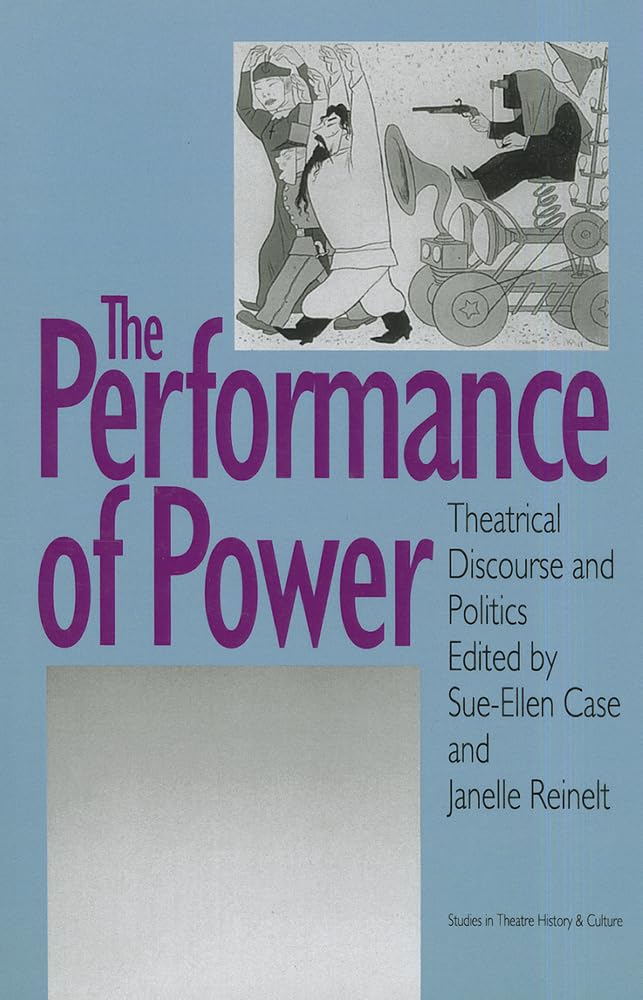
Recently in the field of theatre studies there has been an increasing amount of debate and dissonance regarding the borders of its territory, its methodologies, subject matter, and scholarly perspectives. The nature of this debate could be termed 'political' and, in fact, concerns 'the performance of power'the struggle over power relations embedded in texts, methodologies, and the academy itself.This striking new collection of nineteen divergent essays represents this performance of power and the way in which the recent convergence of new critical theories with historical studies has politicized the study of the theatre. Neither play text, performance, nor scholarship and teaching can safely reside any longer in the 'free,' politically neutral, selfsignifying realm of the aesthetic. Politicizing theatrical discourse means that both the hermeneutics and the histories of theatre reveal the role of ideology and power dynamics.New strategies and conceptsand a vital new phase of awarenessappear in these illuminating essays. A variety of historical periods, from the Renaissance through the Victorian and up to the most contemporary work of the Wooster group, illustrate the ways in which contemporary strategies do not require contemporary texts and performances but can combine with historical methods and subjects to produce new theatrical discourse.
⚠️ WARNING (California Proposition 65):
This product may contain chemicals known to the State of California to cause cancer,
birth defects, or other reproductive harm.
For MAP (Minimum Advertised Price) violations and Intellectual Property (IP) or Trademark concerns, please contact:
support@ergodebooks.com
⚠️ California Proposition 65 Warning: Some products sold on this website may expose you to chemicals known to the State of California to cause cancer, birth defects, or other reproductive harm. For more information, visit www.P65Warnings.ca.gov.