
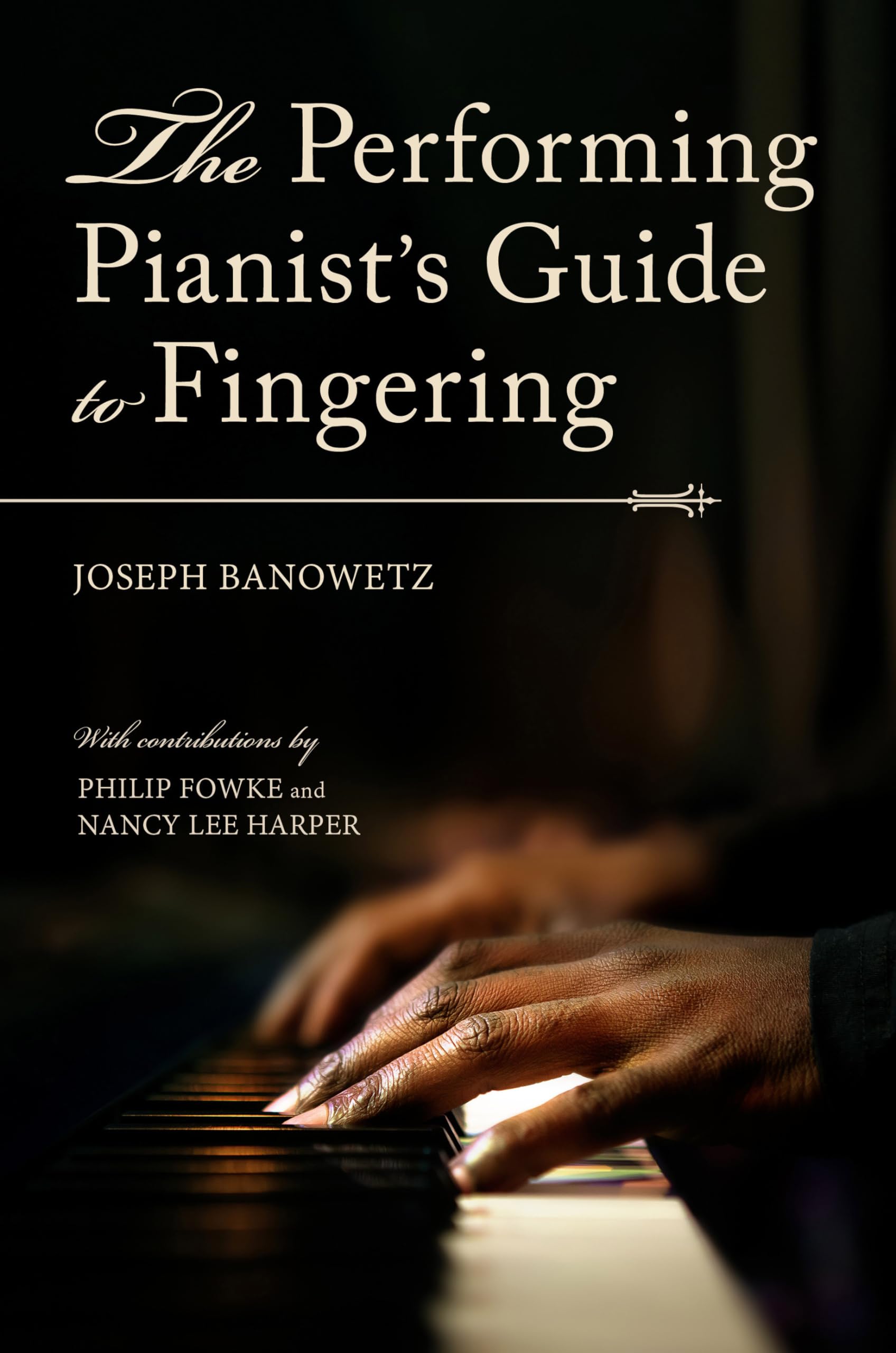
Title
The Performing Pianist's Guide to Fingering by Indiana University Press - Essential Techniques for Pianists and Music Students
Sold by Ergodebooks, an authorized reseller.
Returns accepted within 30 days | support@ergodebooks.com
Shipping Information
- Free Standard Shipping — United States only
- Processing Time: 3–5 business days
- Estimated Delivery: 6–10 business days after dispatch
- Double-boxed, fully insured & discreetly packaged
- Tracking number sent via email once dispatched
Returns & Refund
Returns accepted within 30 days of delivery.
Damaged or Defective Item
Free return shipping + replacement or full refund
Wrong Item Received
Free return shipping + replacement or full refund
Change of Mind
Return shipping at customer's expense · 25% restocking fee applies
Payment Option

The Performing Pianist's Guide to Fingering is an essential resource for advanced pianists and music instructors. This comprehensive guide offers practical fingering solutions for challenging technical passages, ensuring that pianists can approach their performances with confidence and clarity. Authored by acclaimed pianist and educator Joseph Banowetz, this book serves as a vital companion to his previous work, The Pianist's Guide to Pedaling.
In this insightful guide, Banowetz emphasizes the importance of thoughtful fingering choices. He argues that many pianists rely too heavily on historical traditions and preconceived notions rather than considering the specific demands of each piece. By examining unedited original compositions, Banowetz encourages pianists to connect with the composer?s musical intent while taking into account the performance tempo and dynamics. This approach ensures that the fingering selected is not only practical but also enhances the overall musical interpretation.
Key Features:
- Practical Solutions: Provides effective fingering strategies for complex musical passages, tailored for the advanced pianist.
- Historical Context: Challenges traditional fingering methods influenced by historical practices, promoting a more personalized approach.
- Expert Contributions: Features invaluable insights from renowned pianists Philip Fowke and Nancy Lee Harper. Fowke delves into redistributions by Benno Moiseiwitsch in Rachmaninoff's works, while Harper explores unique fingering techniques in Baroque keyboard music.
- Enhanced Musical Understanding: Aids pianists in grasping the composer's intent through practical application of fingering choices, improving performance quality.
- Educational Resource: Ideal for instructors seeking to guide students in mastering the art of fingering, making it a must-have in music education.
This guide is particularly beneficial for the advanced pianist who seeks to refine their technique and enhance their interpretative skills. It is a well-rounded resource that bridges the gap between historical understanding and contemporary performance practices, enabling musicians to achieve a higher level of artistry.
By integrating practical fingering solutions with deep musical analysis, The Performing Pianist's Guide to Fingering stands out as a crucial addition to any pianist's library. Whether you are preparing for a performance, teaching students, or simply looking to deepen your understanding of piano technique, this guide will provide the tools needed to elevate your playing.
Published by Indiana University Press, this book is a testament to the rich tradition of piano pedagogy and an invaluable resource for all serious pianists.
⚠️ WARNING (California Proposition 65):
This product may contain chemicals known to the State of California to cause cancer, birth defects, or other reproductive harm.
For more information, please visit www.P65Warnings.ca.gov.
- Q: How many pages does the book have? A: The book has two hundred forty-four pages. This provides ample content for pianists seeking fingering solutions.
- Q: What is the binding type of the book? A: The book is hardcover. This durable binding is ideal for frequent use and longevity.
- Q: What are the dimensions of the book? A: The book measures six point one two inches in length, zero point nine one inches in width, and nine point two five inches in height. These dimensions make it portable and easy to handle.
- Q: Who is the author of the book? A: The author of the book is Joseph Banowetz. He is a recognized authority on piano techniques and pedagogy.
- Q: What topics does the book cover? A: The book covers practical fingering solutions for technical musical passages. It helps pianists analyze compositions and select appropriate fingerings.
- Q: Who are the contributors to this book? A: The contributors include Philip Fowke and Nancy Lee Harper. They provide additional insights into specific fingering techniques and historical context.
- Q: How can I apply the techniques in this book? A: You can apply the techniques by practicing the suggested fingerings on your piano. The book helps you to think critically about the composer's intent.
- Q: Is this book suitable for beginners? A: No, this book is primarily aimed at advanced pianists. It is best for those with a solid foundation in piano playing.
- Q: Can piano instructors use this book for teaching? A: Yes, piano instructors can use this book as a resource. It is designed to guide students in improving their fingering techniques.
- Q: What is the recommended reading level for this book? A: The recommended reading level is for advanced pianists. It assumes prior knowledge of piano techniques and musical concepts.
- Q: How should I care for this hardcover book? A: You should keep the book in a dry place and avoid exposing it to direct sunlight. This helps maintain its condition over time.
- Q: Is this book safe for all ages? A: Yes, the book is safe for all ages, but it is recommended for advanced pianists. Younger readers may need supervision.
- Q: What should I do if the book arrives damaged? A: If the book arrives damaged, you should contact the seller for a return or exchange. Always keep your receipt for reference.
- Q: Can I return this book if I don't like it? A: Yes, you can typically return the book if it is in original condition. Check the seller's return policy for specific details.
- Q: Is this book available in different formats? A: No, this book is only available in hardcover format. This format is preferred for its durability and ease of use.
- Q: Does this book include exercises for fingering? A: Yes, the book includes practical exercises for fingering techniques. These exercises are designed to enhance your piano playing skills.