
Title
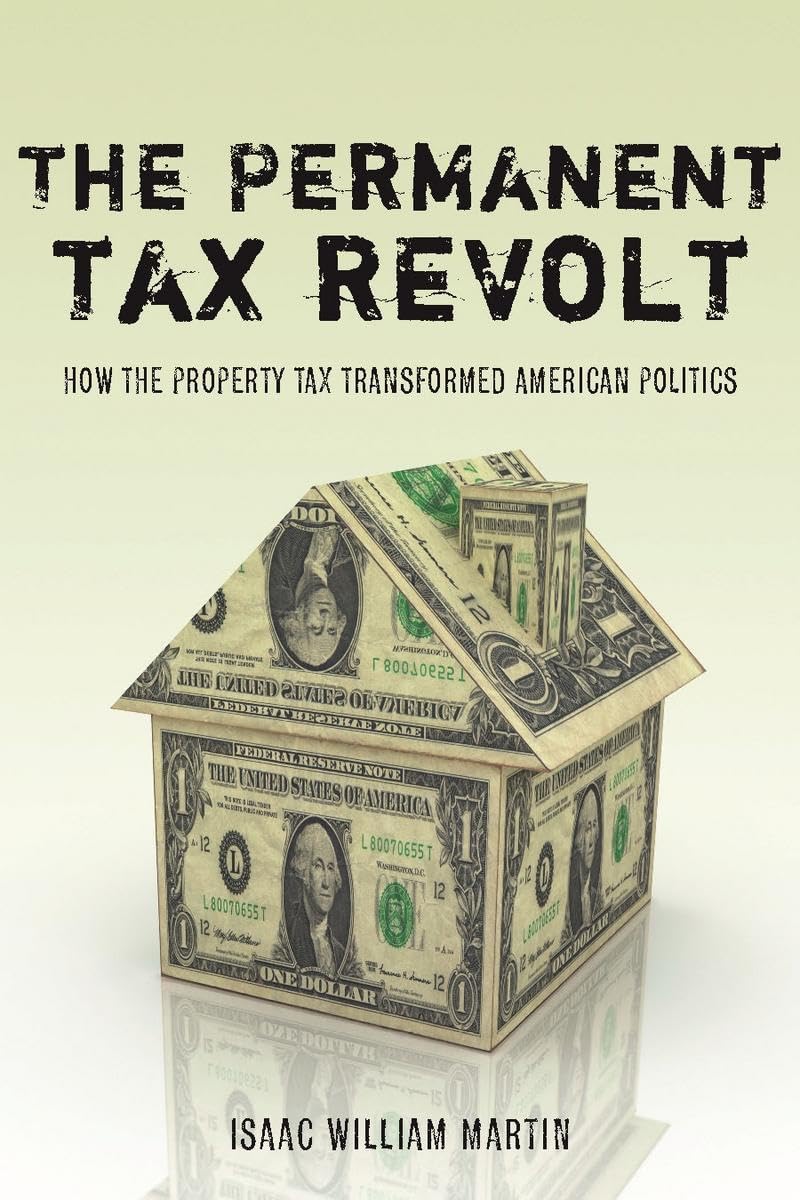
The Permanent Tax Revolt: How The Property Tax Transformed American Politics,Used
Sold by Ergodebooks, an authorized reseller.
Returns accepted within 30 days | support@ergodebooks.com
Shipping Information
- Free Standard Shipping — United States only
- Processing Time: 3–5 business days
- Estimated Delivery: 6–10 business days after dispatch
- Double-boxed, fully insured & discreetly packaged
- Tracking number sent via email once dispatched
Returns & Refund
Returns accepted within 30 days of delivery.
Damaged or Defective Item
Free return shipping + replacement or full refund
Wrong Item Received
Free return shipping + replacement or full refund
Change of Mind
Return shipping at customer's expense · 25% restocking fee applies
Payment Option

Tax cuts are such a pervasive feature of the American political landscape that the political establishment rarely questions them. Since 2001, Congress has abolished the tax on inherited wealth and passed a major income tax cut every year, including two of the three largest income tax cuts in American history despite a long drawnout war and massive budget deficits. The Permanent Tax Revolt traces the origins of this antitax campaign to the 1970s, in particular, to the influence of grassroots tax rebellions as homeowners across the United States rallied to protest their local property taxes. Isaac William Martin advances the provocative new argument that the property tax revolt was not a conservative backlash against big government, but instead a defensive movement for government protection from the market. The tax privilege that the tax rebels were defending was in fact one of the largest government social programs in the postwar era. While the movement to defend homeowners' tax breaks drew much of its inspirationand many of its early leadersfrom the progressive movement for welfare rights, politicians on both sides of the aisle quickly learned that supporting big tax cuts was good politics. In time, American political institutions and the strategic choices made by the protesters ultimately channeled the movement toward the kind of tax relief favored by the political right, with dramatic consequences for American politics today.
⚠️ WARNING (California Proposition 65):
This product may contain chemicals known to the State of California to cause cancer, birth defects, or other reproductive harm.
For more information, please visit www.P65Warnings.ca.gov.
- Q: How many pages are in this book? A: This book has two hundred sixty-four pages. It offers an in-depth exploration of the property tax's impact on American politics.
- Q: What is the binding type of this book? A: This book is a paperback. Paperback bindings are flexible and lightweight, making it easy to carry and read.
- Q: What are the dimensions of this book? A: This book measures six inches in length, zero point sixty-seven inches in width, and nine point zero two inches in height. These dimensions make it a convenient size for reading.
- Q: What is the main theme of this book? A: The main theme explores the history of the property tax revolt in America. It argues that this movement was a defense for government protection rather than a conservative backlash.
- Q: Who is the author of this book? A: The author is Isaac William Martin. He presents a provocative analysis of the intersection of tax policies and American politics.
- Q: Is this book suitable for beginners in accounting? A: Yes, this book is suitable for beginners in accounting. It provides historical context and insights that are accessible to readers new to the subject.
- Q: How can I apply the concepts from this book? A: You can apply the concepts by understanding how tax policies affect political decisions. This knowledge can be useful in discussions about taxation and governance.
- Q: What audience is this book intended for? A: This book is intended for readers interested in politics and economics. It appeals to both scholars and general readers who want to understand tax dynamics.
- Q: How should I take care of this book? A: Keep this book in a dry place to prevent damage. Handle it gently to avoid creases or tears in the pages.
- Q: Can I store this book on a shelf? A: Yes, you can store this book on a shelf. Ensure it is upright and supported to maintain its shape.
- Q: What should I do if the book arrives damaged? A: If the book arrives damaged, you should contact customer service for a replacement. Ensure to provide photos of the damage for assistance.
- Q: Is there a return policy for this book? A: Yes, there is a return policy for this book. Typically, you can return it within a specified number of days if it's in original condition.
- Q: What if I have questions about the book after purchasing? A: If you have questions after purchasing, you can reach out to customer support for clarification. They can provide additional insights or help.
- Q: Are there any common issues readers face with this book? A: Some readers may find the themes complex. It's recommended to take notes while reading for better comprehension.
- Q: Is this book a good resource for political science students? A: Yes, this book is an excellent resource for political science students. It offers a critical examination of tax policies and their political implications.
- Q: Is there any special content in this book? A: Yes, the book includes historical case studies of property tax revolts. These examples help illustrate the author's arguments effectively.