
Title
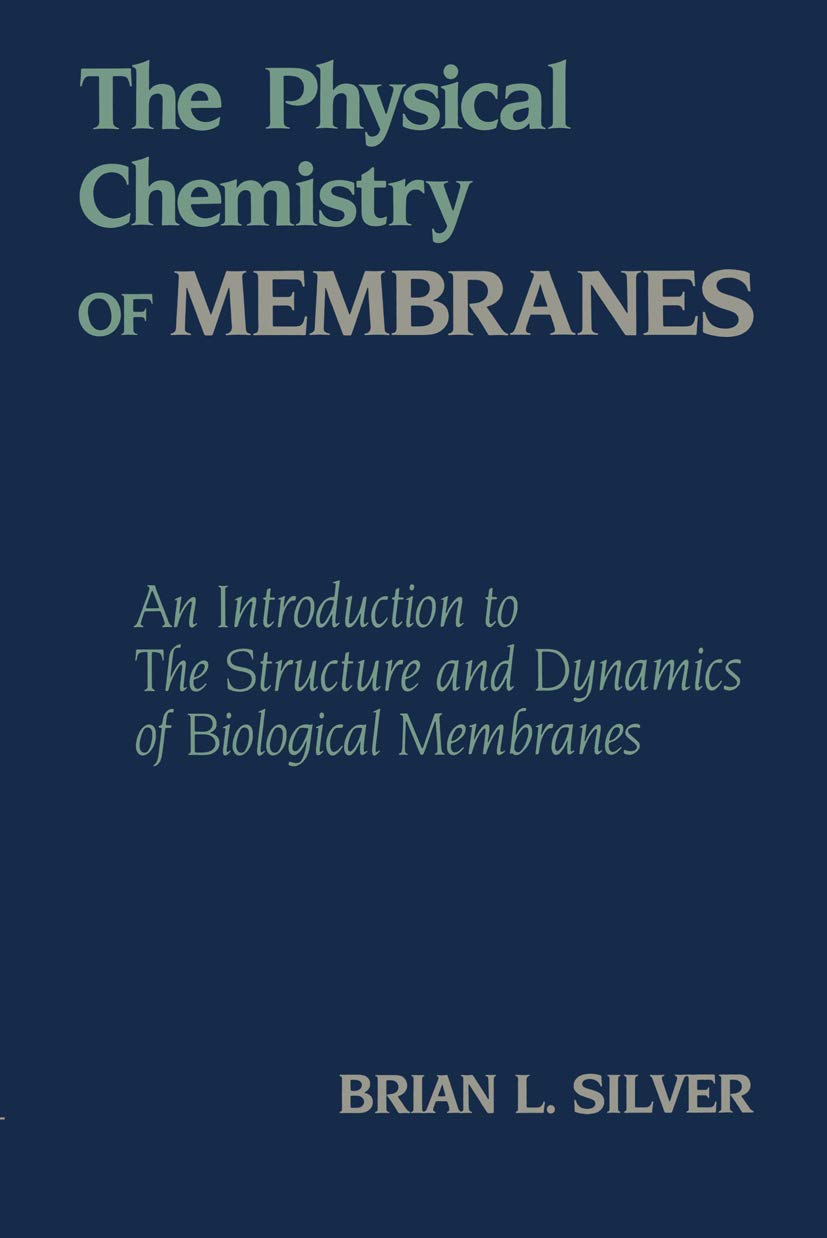
The Physical Chemistry of MEMBRANES: An Introduction to the Structure and Dynamics of Biological Membranes,Used
Sold by Ergodebooks, an authorized reseller.
Returns accepted within 30 days | support@ergodebooks.com
Shipping Information
- Free Standard Shipping — United States only
- Processing Time: 3–5 business days
- Estimated Delivery: 6–10 business days after dispatch
- Double-boxed, fully insured & discreetly packaged
- Tracking number sent via email once dispatched
Returns & Refund
Returns accepted within 30 days of delivery.
Damaged or Defective Item
Free return shipping + replacement or full refund
Wrong Item Received
Free return shipping + replacement or full refund
Change of Mind
Return shipping at customer's expense · 25% restocking fee applies
Payment Option

Product Description Ls book is an account of what physical chemistry h . . to say about the structural, electrical and transport properties of biological membranes and their simplest modelthe lipid bilayer. The accent throughout is on basic ideas. In contrast to the essentially descriptive ap proach characteristic of texts on membrane biochemistry, our underlying themes are the role of force and entropy in maintaining membrane organization, in determining the electric fields and ionic environment of membranes, and in regulating the passage of molecules and ions across membranes. Although experimental findings will always be the touch stone against which theory will be tried, no attempt is made to present an exhaustive survey of experimental data. On the other hand, there is discussion of the nature and limitations of the results obtainable by the major laboratory techniques. The treatment is at the level of an advanced undergraduate course or an introductory survey suitable for post graduate students carrying out research in biochemistry, biophysics, or physiology. The mathematical demands on the reader are trivial. The few forbidding equations appearing in Chapter 7 are soon whittled away to simple practical expressions. Although the currentvoltage characteristics of nerves are traditionally the province of biophysics rather than physical chemistry, certain aspects relevant to the electrical activity of nerves are nevertheless included in this text, namely, mem brane and diffusion potentials and conductivity fluctuations. Where rival theories exist, conflicting convictions have been presented, but not necessarily accorded equal approbation. The author has a viewpoint. Review Teachers of undergraduate courses in chemistry, biochemistry and biophysics... will find in this book much useful material for some finalyear options of biophysical nature. Its greatest impact, however, will be on postgraduate courses taking a deeper look at membrane phenomena. Times Higher Education Supplement
⚠️ WARNING (California Proposition 65):
This product may contain chemicals known to the State of California to cause cancer, birth defects, or other reproductive harm.
For more information, please visit www.P65Warnings.ca.gov.