
Title
The Physiology of Crop Yield,Used
Sold by Ergodebooks, an authorized reseller.
Returns accepted within 30 days | support@ergodebooks.com
Shipping Information
- Free Standard Shipping — United States only
- Processing Time: 3–5 business days
- Estimated Delivery: 6–10 business days after dispatch
- Double-boxed, fully insured & discreetly packaged
- Tracking number sent via email once dispatched
Returns & Refund
Returns accepted within 30 days of delivery.
Damaged or Defective Item
Free return shipping + replacement or full refund
Wrong Item Received
Free return shipping + replacement or full refund
Change of Mind
Return shipping at customer's expense · 25% restocking fee applies
Payment Option

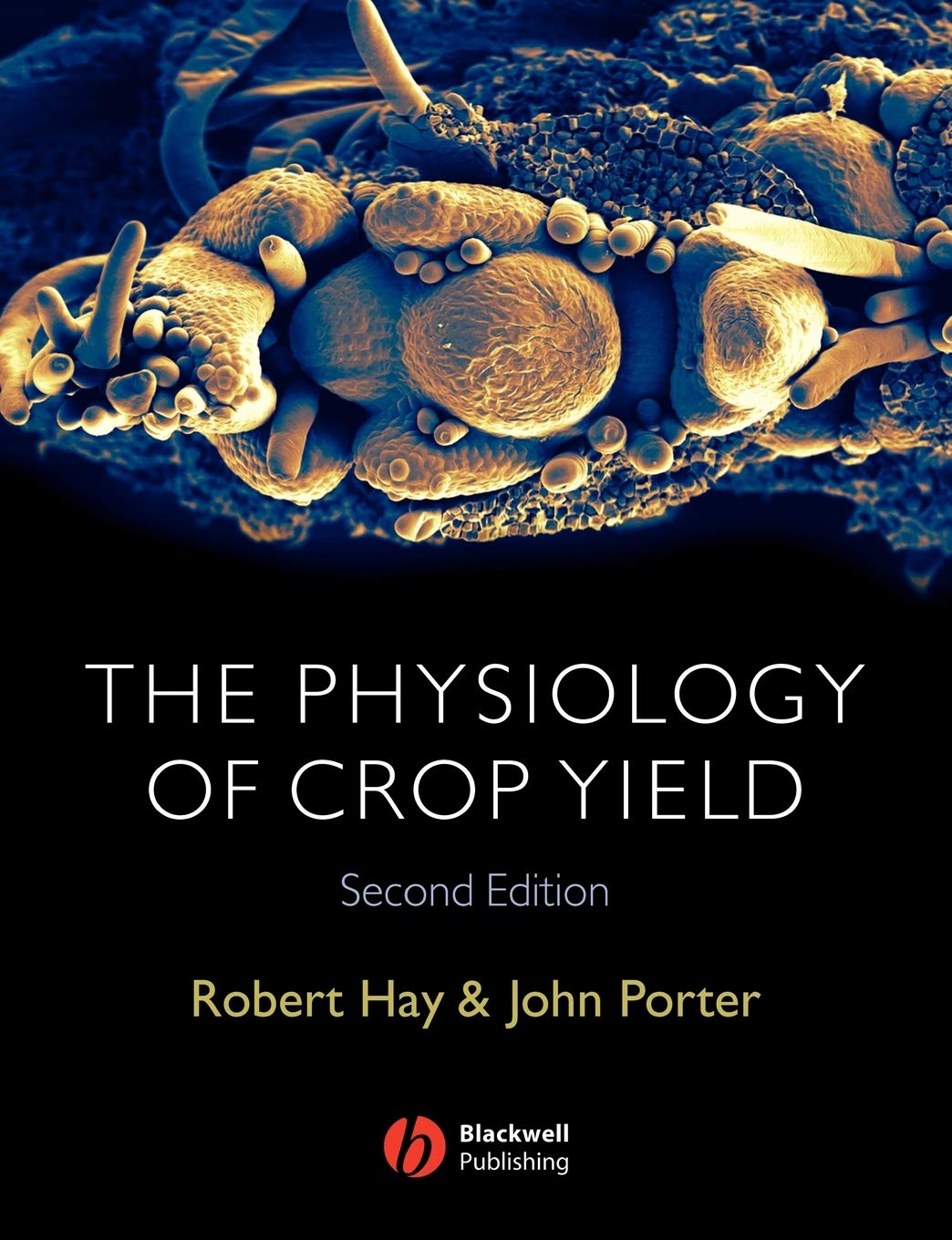
First published in 1989, Physiology of Crop Yield was the first student textbook to digest and assimilate the many advances in crop physiology, within a framework of resource capture and use. Retaining the central core of the first edition, this longawaited second edition draws on recent developments in areas such as phenology, canopy dynamics and crop modelling, and the concepts of sustainable crop production. A broad perspective is developed, from the gene through the plant and crop to the ecosystem, covering:Advances in molecular biology relating to crop scienceLimitation of crop yield by the supply of water or nitrogenGlobal climate change and its impact on crop modellingPhysiological aspects of crop qualityA wider range of species, with emphasis on wheat, maize and soybeanThis book will be a valuable tool for advanced undergraduate and postgraduate students of agricultural science, plant science, applied ecology and environmental science. It will be an essential addition to all libraries in universities and relevant research establishments.
⚠️ WARNING (California Proposition 65):
This product may contain chemicals known to the State of California to cause cancer, birth defects, or other reproductive harm.
For more information, please visit www.P65Warnings.ca.gov.
- Q: How many pages does the book have? A: This book contains three hundred thirty-six pages. It offers a comprehensive look into crop physiology and sustainable practices.
- Q: What is the binding type of this book? A: The book is paperback bound. This makes it lightweight and flexible for easy handling.
- Q: What are the dimensions of the book? A: The book measures seven and a half inches by nine point seven inches and is zero point seventy-one inches thick.
- Q: Who is the author of 'The Physiology of Crop Yield'? A: The author is Robert Hay. He presents insights into crop physiology and advancements in agricultural science.
- Q: What is the publication date of this book? A: The book was first published in nineteen eighty-nine. It has been updated to reflect recent developments in crop science.
- Q: What topics does this book cover? A: The book covers topics including molecular biology, crop yield limitations, and the effects of climate change on crops. It provides a broad perspective from genes to ecosystems.
- Q: How should I store this book? A: Store the book in a dry, cool place to prevent moisture damage. Avoid direct sunlight to maintain its condition over time.
- Q: Can this book be used for beginner students? A: Yes, this book is suitable for advanced undergraduate and postgraduate students. It serves as an essential resource for those studying agricultural and environmental sciences.
- Q: What care does this book require? A: Keep the book clean by dusting it off regularly. Avoid exposing it to excessive humidity or heat to prolong its lifespan.
- Q: Is this book suitable for libraries? A: Yes, it is an essential addition to libraries in universities and research establishments. It provides valuable insights into crop physiology.
- Q: Does this book discuss sustainable crop production? A: Yes, it includes concepts of sustainable crop production. This is emphasized throughout the text to reflect modern agricultural practices.
- Q: What makes this book different from the first edition? A: The second edition features updates on recent developments in crop physiology. It retains the core content while expanding on new scientific advancements.
- Q: Is this book focused on specific crops? A: Yes, it emphasizes major crops like wheat, maize, and soybean. This focus helps in understanding their physiological aspects and yield improvements.
- Q: What is the condition of the used book? A: This is a used book in good condition. It has been maintained to ensure it remains a valuable resource for readers.
- Q: Does the book address climate change impacts? A: Yes, the book discusses global climate change and its impact on crop modeling. This is crucial for understanding future agricultural challenges.
- Q: Who is the publisher of this book? A: The book is published by Wiley-Blackwell. This publisher is known for its academic and educational publications.