
Title
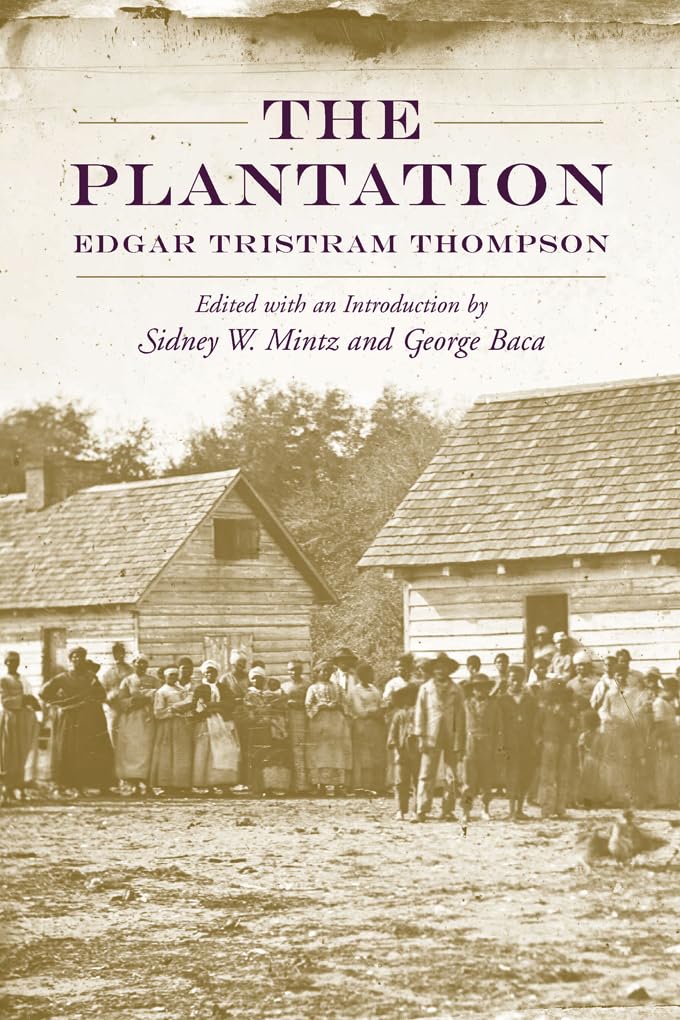
The Plantation (Southern Classics),Used
Sold by Ergodebooks, an authorized reseller.
Returns accepted within 30 days | support@ergodebooks.com
Shipping Information
- Free Standard Shipping — United States only
- Processing Time: 3–5 business days
- Estimated Delivery: 6–10 business days after dispatch
- Double-boxed, fully insured & discreetly packaged
- Tracking number sent via email once dispatched
Returns & Refund
Returns accepted within 30 days of delivery.
Damaged or Defective Item
Free return shipping + replacement or full refund
Wrong Item Received
Free return shipping + replacement or full refund
Change of Mind
Return shipping at customer's expense · 25% restocking fee applies
Payment Option

The first complete publication of an overlooked gem in American intellectual historyA rare classic in American social science, Edgar Thompson's 1932 University of Chicago dissertation, 'The Plantation,' broke new analytic ground in the study of the southern plantation system. Thompson refuted longespoused climatic theories of the origins of plantation societies and offered instead a richly nuanced understanding of the links between plantation culture, the global history of capitalism, and the political and economic contexts of hierarchical social classification. This first complete publication of Thompson's study makes available to modern readers one of the earliest attempts to reinterpret the history of the American South as an integral part of global processes. In this Southern Classics edition, editors Sidney W. Minz and George Baca provide a thorough introduction explicating Thompson's guiding principles and grounding his germinal work in its historical context.Thompson viewed the plantation as a political institution in which the quasiindustrial production of agricultural staples abroad through racemaking labor systems solidified and advanced European state power. His interpretation marks a turning point in the scientific study of an ancient agricultural institution, in which the plantation is seen as a pioneering instrument for the expansion of the global economy. Further, his awareness of the farreaching history of economic globalization and of the conception of race as socially constructed predicts viewpoints that have since become standard. As such, this overlooked gem in American intellectual history is still deeply relevant for ongoing research and debate in social, economic, and political history.
⚠️ WARNING (California Proposition 65):
This product may contain chemicals known to the State of California to cause cancer, birth defects, or other reproductive harm.
For more information, please visit www.P65Warnings.ca.gov.