If you have any questions, you are always welcome to contact us. We'll get back to you as soon as possible, withing 24 hours on weekdays.
Customer service
All questions about your order, return and delivery must be sent to our customer service team by e-mail at yourstore@yourdomain.com
Sale & Press
If you are interested in selling our products, need more information about our brand or wish to make a collaboration, please contact us at press@yourdomain.com
Help
If you have any questions, you are always welcome to contact us. We'll get back to you as soon as possible, withing 24 hours on weekdays.
Customer service
All questions about your order, return and delivery must be sent to our customer service team by e-mail at yourstore@yourdomain.com
Sale & Press
If you are interested in selling our products, need more information about our brand or wish to make a collaboration, please contact us at press@yourdomain.com
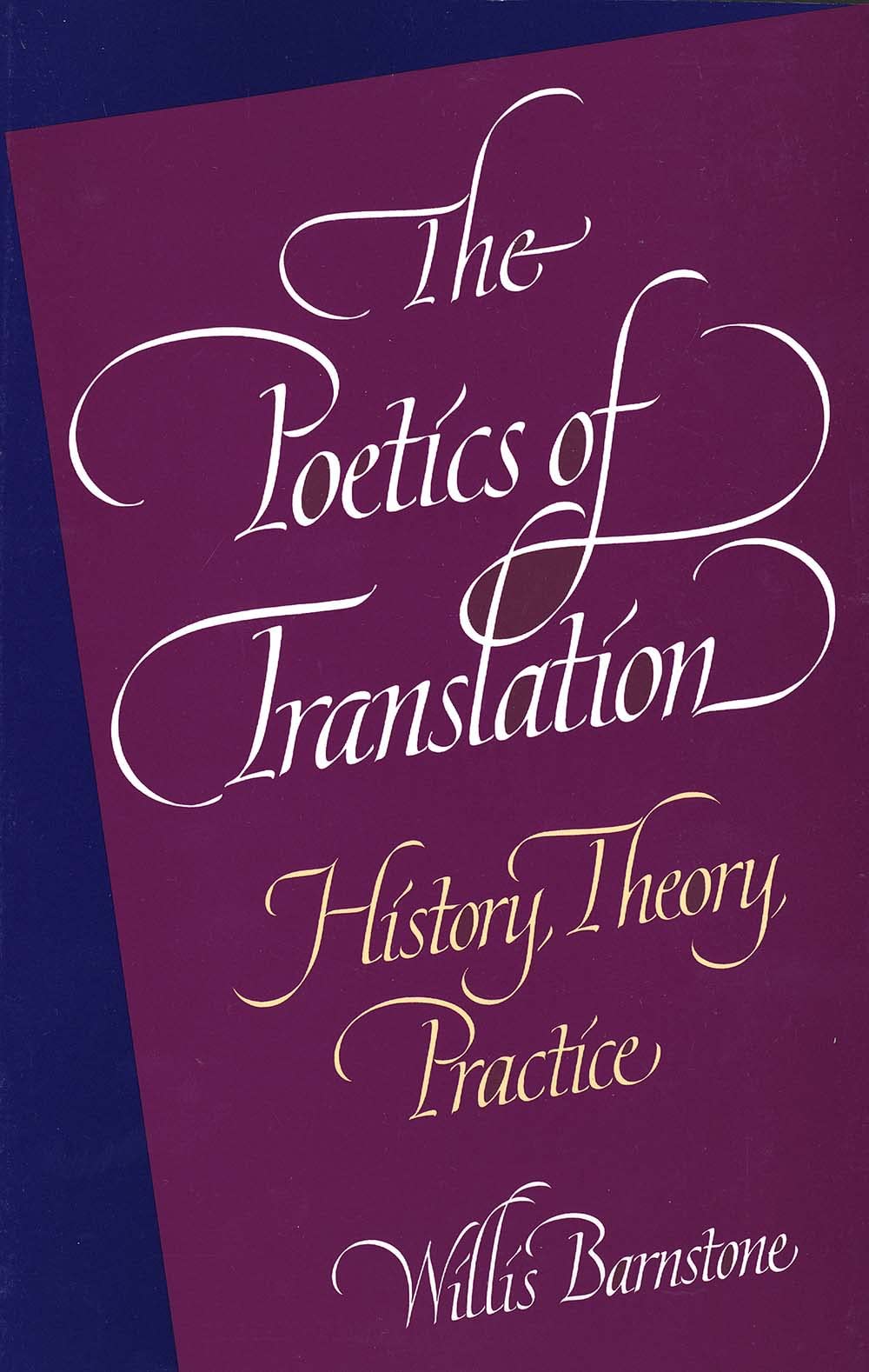
In a lucid, pioneering volume, Willis Barnstone explores the history and theory of literary translation as an art form. Arguing that literary translation goes beyond the transfer of linguistic information, he emphasizes that imaginative originality resides as much in the translation as in the source texta view that skews conventional ideas of artistic primacy.Barnstone begins by dealing with general issues of literalness, fidelity, and originality: with translation as metaphor, aesthetic transformation, and recreation. He looks as well at translation as a traditionally stigmatized genre. Then he discusses the history of translation, using as his paradigm the most translated book in the world, the Bible, tracing it from its original Hebrew and Greek to Jerome's Latin and the English of Tyndale and the King James Version. Citing the way authors intentionally mistranslate for religious and political purposes, Barnstone provides fascinating insights into how, by altering names in the Gospels, the Virgin Mary and Jesus cease to be Jews, the Jews are turned into villains, and Christianity becomes an original rather than a mere translation. In the next section Barnstone analyzes translation theory, ranging from the second century B.C. Letter of Aristeas to Roman Jakobson's linguistic categories and Walter Benjamin's 'Task of the Translator.' The book ends with an aphoristic ABC of translating.
⚠️ WARNING (California Proposition 65):
This product may contain chemicals known to the State of California to cause cancer,
birth defects, or other reproductive harm.
For MAP (Minimum Advertised Price) violations and Intellectual Property (IP) or Trademark concerns, please contact:
support@ergodebooks.com
⚠️ California Proposition 65 Warning: Some products sold on this website may expose you to chemicals known to the State of California to cause cancer, birth defects, or other reproductive harm. For more information, visit www.P65Warnings.ca.gov.