If you have any questions, you are always welcome to contact us. We'll get back to you as soon as possible, withing 24 hours on weekdays.
Customer service
All questions about your order, return and delivery must be sent to our customer service team by e-mail at yourstore@yourdomain.com
Sale & Press
If you are interested in selling our products, need more information about our brand or wish to make a collaboration, please contact us at press@yourdomain.com
Help
If you have any questions, you are always welcome to contact us. We'll get back to you as soon as possible, withing 24 hours on weekdays.
Customer service
All questions about your order, return and delivery must be sent to our customer service team by e-mail at yourstore@yourdomain.com
Sale & Press
If you are interested in selling our products, need more information about our brand or wish to make a collaboration, please contact us at press@yourdomain.com
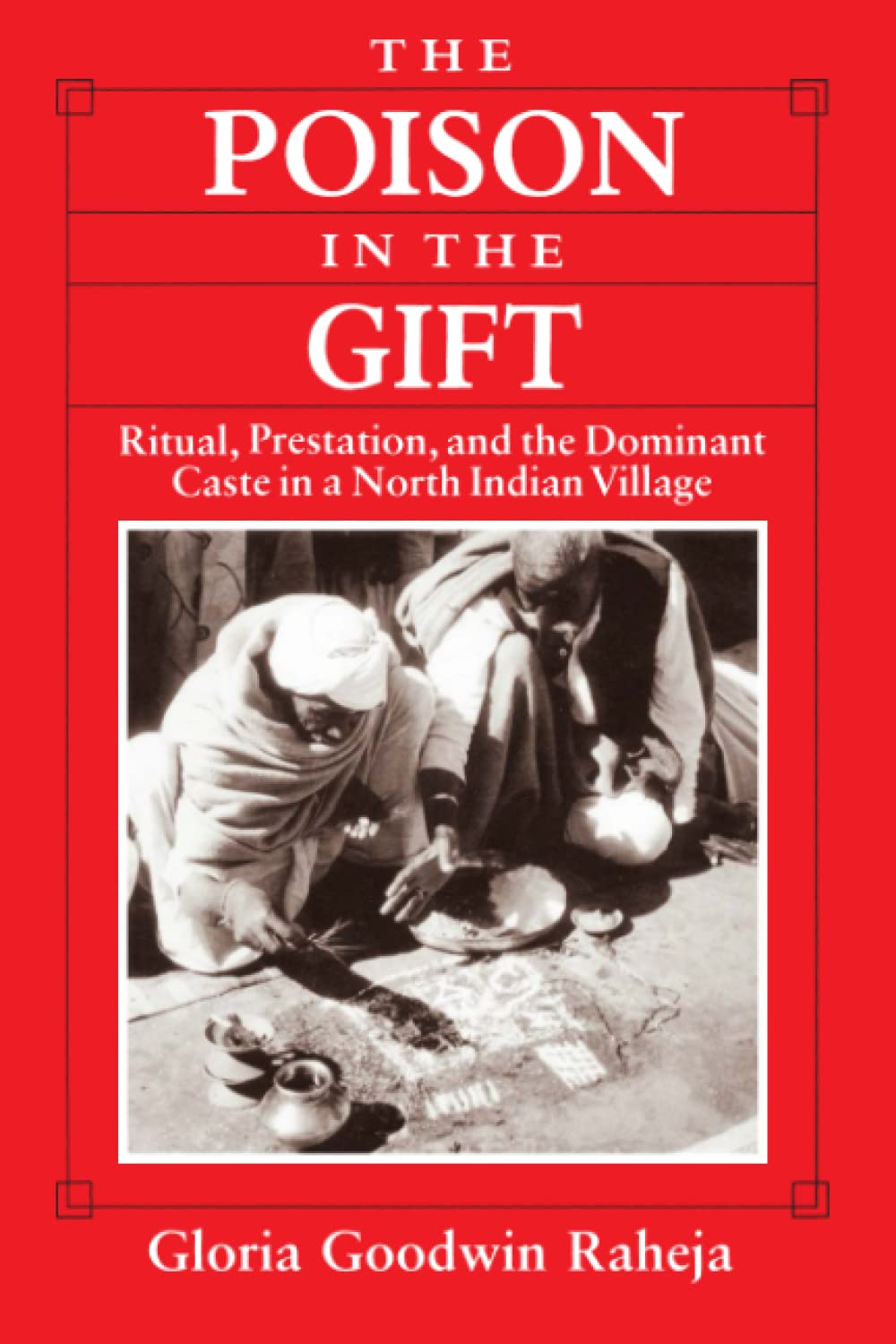
The Poison in the Gift is a detailed ethnography of giftgiving in a North Indian village that powerfully demonstrates a new theoretical interpretation of caste. Introducing the concept of ritual centrality, Raheja shows that the position of the dominant landholding caste in the village is grounded in a centralperipheral configuration of castes rather than a hierarchical ordering. She advances a view of caste as semiotically constituted of contextually shifting sets of meanings, rather than one overarching ideological feature. This new understanding undermines the controversial interpretation advanced by Louis Dumont in his 1966 book, Homo Hierarchicus, in which he proposed a disjunction between the ideology of hierarchy based on the 'purity' of the Brahman priest and the 'temporal power' of the dominant caste or the king.
⚠️ WARNING (California Proposition 65):
This product may contain chemicals known to the State of California to cause cancer,
birth defects, or other reproductive harm.
For MAP (Minimum Advertised Price) violations and Intellectual Property (IP) or Trademark concerns, please contact:
support@ergodebooks.com
⚠️ California Proposition 65 Warning: Some products sold on this website may expose you to chemicals known to the State of California to cause cancer, birth defects, or other reproductive harm. For more information, visit www.P65Warnings.ca.gov.