
Title
The Political Economy Of Rural Livelihoods In Transition Economies (Routledge Iss Studies In Rural Livelihoods),New
Sold by Ergodebooks, an authorized reseller.
Returns accepted within 30 days | support@ergodebooks.com
Shipping Information
- Free Standard Shipping — United States only
- Processing Time: 3–5 business days
- Estimated Delivery: 6–10 business days after dispatch
- Double-boxed, fully insured & discreetly packaged
- Tracking number sent via email once dispatched
Returns & Refund
Returns accepted within 30 days of delivery.
Damaged or Defective Item
Free return shipping + replacement or full refund
Wrong Item Received
Free return shipping + replacement or full refund
Change of Mind
Return shipping at customer's expense · 25% restocking fee applies
Payment Option

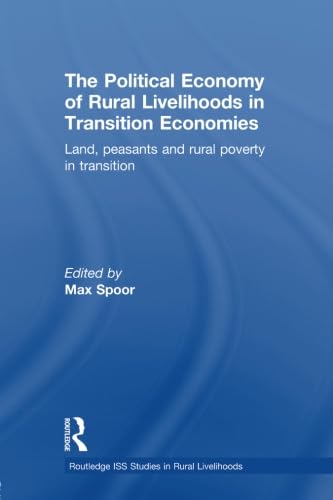
Rural poverty is a phenomenon that is widespread yet often ignored by policy makers and researchers. This edited volume looks critically at rural poverty in Central Eastern Europe, Russia, the Caucasus and Central Asia, China and Vietnam in relation to land reform, farm restructuring and the development of rural markets and in the context of a large gap between rural and urban incomes and deteriorating rural social services and infrastructure. Although in most countries rural poverty has been decreasing in the past few years, economic growth in rural areas is slow, and rural incomes are not catching up with the rapid overall growth rates of these transition economies. In general, the livelihoods of rural dwellers remain relatively poor.Next to comparative studies, the chapters in this book explore various aspects of agrarian reform, and analyze the interlocking or interlinking (land, input and output) markets that are crucial for rural development that have often remained weakly developed in transition economies, including case studies from Russia, Moldova, Uzbekistan, Armenia, Vietnam and China and a wealth of detailed analysis. These chapters reflect the striking differences between transition countries in their processes of rural reform and development of rural poverty. These differences are generally dependent on the initial conditions at the eve of transition, the policies implemented, the sequencing of reforms, and the importance that was given to the sector in the overall development strategy, such as can be seen if the Asian transition economies (ATEs) are compared with many of those in Eastern Europe.
⚠️ WARNING (California Proposition 65):
This product may contain chemicals known to the State of California to cause cancer, birth defects, or other reproductive harm.
For more information, please visit www.P65Warnings.ca.gov.