
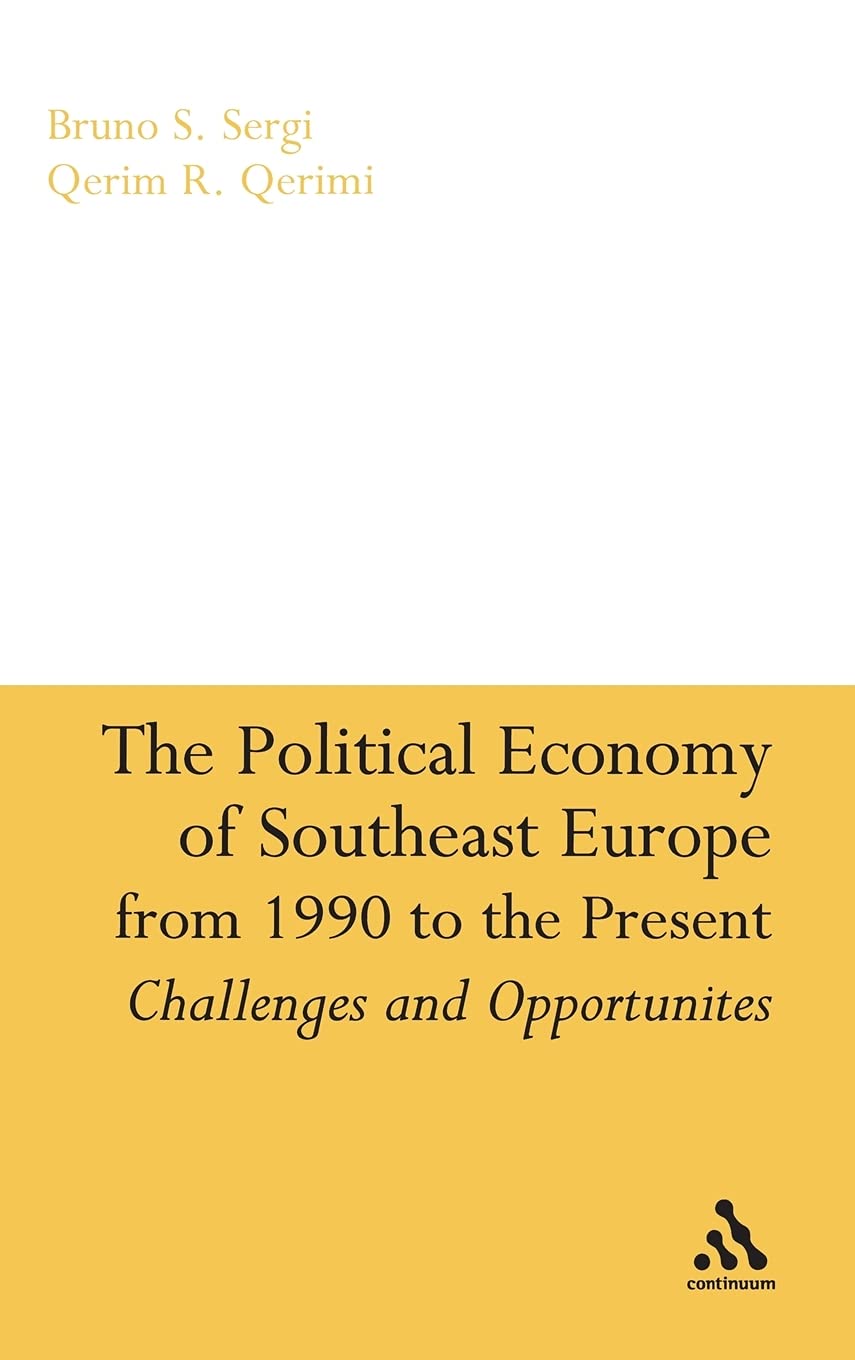
Title
The Political Economy Of Southeast Europe From 1990 To The Present,New
Sold by Ergodebooks, an authorized reseller.
Returns accepted within 30 days | support@ergodebooks.com
Shipping Information
- Free Standard Shipping — United States only
- Processing Time: 3–5 business days
- Estimated Delivery: 6–10 business days after dispatch
- Double-boxed, fully insured & discreetly packaged
- Tracking number sent via email once dispatched
Returns & Refund
Returns accepted within 30 days of delivery.
Damaged or Defective Item
Free return shipping + replacement or full refund
Wrong Item Received
Free return shipping + replacement or full refund
Change of Mind
Return shipping at customer's expense · 25% restocking fee applies
Payment Option

Political Instability And Military Clashes In The Balkans During The 1990S Resulted In Many Countries Joining The European Union, Or Obtaining The Status Of Candidate Countries. Many Others Are Hoping To Do So Soon, While Moving Toward Greater Socioeconomic Stability. The Coauthors Of This Book, Both Experts In The Politics And Economics Of The Region, Argue That The Balkan Peninsula Is A Critical Region In The Struggle For International Stability Today.The Political Economy Of Southeast Europe From 1990 To The Present Takes The Reader On A Historical Journey Through The Region. The Authors Examine The Process Of European Union Enlargement, With A Particular Focus On The Integration Of The Balkans. They Also Look Closely At Economic Growth In The Region, And Pursue Ideas For More Effective Policies Against Corruption And Organized Crime.The Political Economy Of Southeast Europe From 1990 To The Present Clearly Illustrates The Causes That Have Conditioned Policy Response And Prospective Policy Options. The Book Paints A Definitive Picture Of A Peninsula That Needs To Move Toward A Clear And Lasting Membership Of The European Union.
⚠️ WARNING (California Proposition 65):
This product may contain chemicals known to the State of California to cause cancer, birth defects, or other reproductive harm.
For more information, please visit www.P65Warnings.ca.gov.
- Q: What is the binding type of this book? A: This book is a hardcover edition. Hardcover books are known for their durability and premium feel, making them ideal for collectors.
- Q: How many pages does this book have? A: This book contains two hundred eight pages. It provides a detailed examination of the political economy of Southeast Europe.
- Q: What are the dimensions of this book? A: The dimensions of this book are six inches in length, zero point five one inches in width, and nine point zero two inches in height. These dimensions make it a convenient size for reading.
- Q: Who is the author of this book? A: The author of this book is Bruno S. Sergi. He is known for his expertise in the politics and economics of the Southeast European region.
- Q: What is the main theme of this book? A: The main theme of this book is the political economy of Southeast Europe since 1990. It addresses key issues like EU integration and economic stability.
- Q: Is this book suitable for beginners in political science? A: Yes, this book is suitable for beginners. It provides a clear historical context and key insights into the region's political dynamics.
- Q: How does this book address corruption? A: This book discusses ideas for more effective policies against corruption. It emphasizes the importance of addressing corruption for economic growth.
- Q: Can I read this book for a university course? A: Yes, this book is a valuable resource for university courses. It offers in-depth analysis relevant to political and economic studies in Southeast Europe.
- Q: How should I store this hardcover book? A: Store this hardcover book upright on a bookshelf. Avoid placing heavy items on top to maintain its shape and condition.
- Q: Is this book safe for children? A: Yes, this book is appropriate for older teens and adults. It addresses mature themes related to politics and economics.
- Q: What is the focus of the authors in this book? A: The authors focus on the process of European Union enlargement and the integration of the Balkans. They provide insights into the region's socioeconomic challenges.
- Q: Does this book include case studies? A: Yes, the book includes case studies of various Southeast European countries. These case studies illustrate the political and economic conditions in the region.
- Q: What should I consider before buying this book? A: Consider your interest in Southeast European politics and economics. This book is best suited for readers looking to understand the region's historical context.
- Q: How does the book address the impact of military clashes? A: The book discusses how military clashes in the 1990s influenced EU membership aspirations. It highlights the link between stability and integration.
- Q: Is there a bibliography or references section in this book? A: Yes, the book includes a bibliography section. This section provides references for further reading on Southeast European political economics.
- Q: What publisher released this book? A: This book is published by Bloomsbury, specifically under their Continuum imprint. Bloomsbury is known for academic and scholarly publications.