If you have any questions, you are always welcome to contact us. We'll get back to you as soon as possible, withing 24 hours on weekdays.
Customer service
All questions about your order, return and delivery must be sent to our customer service team by e-mail at yourstore@yourdomain.com
Sale & Press
If you are interested in selling our products, need more information about our brand or wish to make a collaboration, please contact us at press@yourdomain.com
Help
If you have any questions, you are always welcome to contact us. We'll get back to you as soon as possible, withing 24 hours on weekdays.
Customer service
All questions about your order, return and delivery must be sent to our customer service team by e-mail at yourstore@yourdomain.com
Sale & Press
If you are interested in selling our products, need more information about our brand or wish to make a collaboration, please contact us at press@yourdomain.com
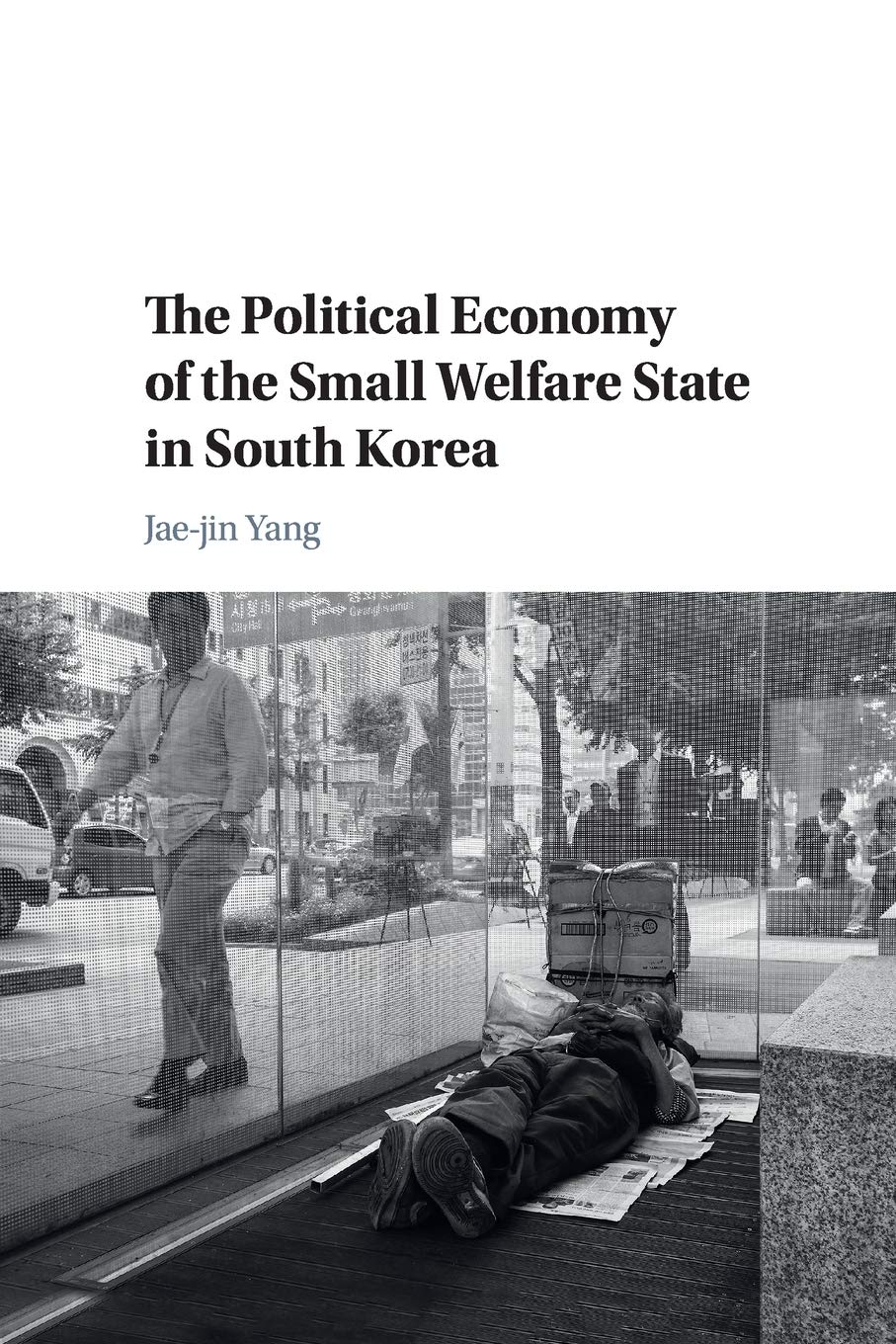
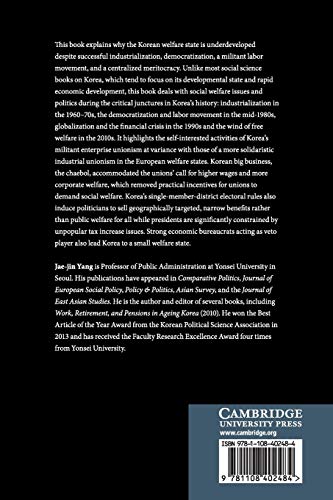
This book explains why the Korean welfare state is underdeveloped despite successful industrialization, democratization, a militant labor movement, and a centralized meritocracy. Unlike most social science books on Korea, which tend to focus on its developmental state and rapid economic development, this book deals with social welfare issues and politics during the critical junctures in Korea's history: industrialization in the 196070s, the democratization and labor movement in the mid1980s, globalization and the financial crisis in the 1990s, and the wind of free welfare in the 2010s. It highlights the selfinterested activities of Korea's enterprise unionism at variance with those of a more solidaristic industrial unionism in the European welfare states. Korean big business, the chaebol, accommodated the unions' call for higher wages and more corporate welfare, which removed practical incentives for unions to demand social welfare. Korea's singlememberdistrict electoral rules also induce politicians to sell geographically targeted, narrow benefits rather than public welfare for all while presidents are significantly constrained by unpopular tax increase issues. Strong economic bureaucrats acting as veto player also lead Korea to a small welfare state.
⚠️ WARNING (California Proposition 65):
This product may contain chemicals known to the State of California to cause cancer,
birth defects, or other reproductive harm.
For MAP (Minimum Advertised Price) violations and Intellectual Property (IP) or Trademark concerns, please contact:
support@ergodebooks.com
⚠️ California Proposition 65 Warning: Some products sold on this website may expose you to chemicals known to the State of California to cause cancer, birth defects, or other reproductive harm. For more information, visit www.P65Warnings.ca.gov.