
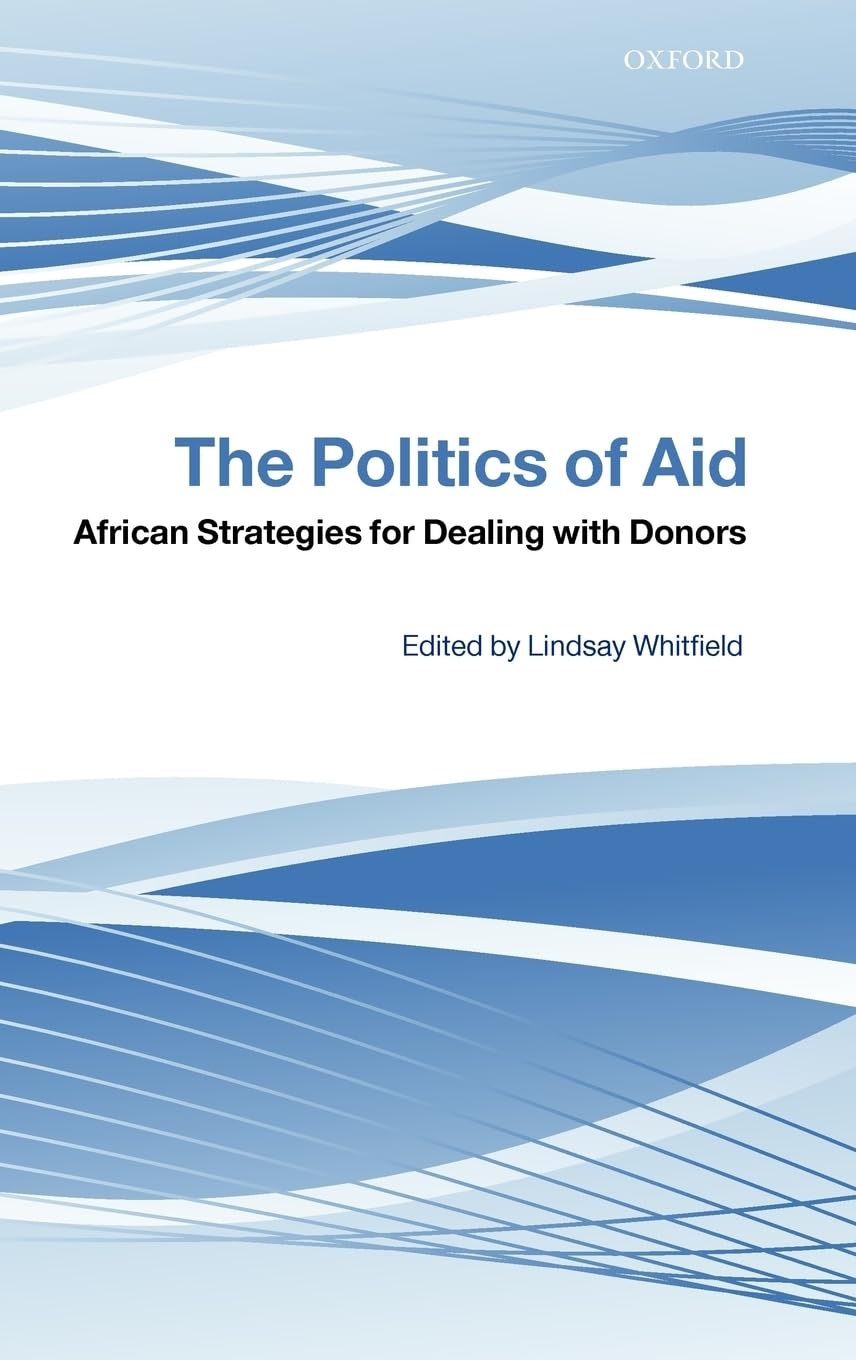
Title
The Politics Of Aid: African Strategies For Dealing With Donors
Sold by Ergodebooks, an authorized reseller.
Returns accepted within 30 days | support@ergodebooks.com
Shipping Information
- Free Standard Shipping — United States only
- Processing Time: 3–5 business days
- Estimated Delivery: 6–10 business days after dispatch
- Double-boxed, fully insured & discreetly packaged
- Tracking number sent via email once dispatched
Returns & Refund
Returns accepted within 30 days of delivery.
Damaged or Defective Item
Free return shipping + replacement or full refund
Wrong Item Received
Free return shipping + replacement or full refund
Change of Mind
Return shipping at customer's expense · 25% restocking fee applies
Payment Option

This book presents an original approach to understanding the relationship between official aid agencies and aidreceiving African governments. The first part provides a challenge to the hazy official claims of aid donors that they have stopped trying to force African governments to do what 'we' think is best for 'them' and instead are now promoting African 'ownership' of the policies and projects which foreign aid supports. The authors tease out the multiple meanings of the term 'ownership', demonstrating why it became popular when it did, but also the limits to this discourse of ownership observed in aid practices. The authors set out to defend a particular vision of ownershipone that involves African governments taking back control of their development policies and priorities. Based largely on interviews with the people who do the negotiating on both sides of the aid relationship, the country case studies put the rhetoric of the new aid system to a more practical test. The authors ask how donors seek to achieve their policy objectives without being seen to push too hard, what preconditions they place on transferring authority to African governments, and what effect the constant discussions over development policy have on state institutions, democracy and political culture in recipient countries. It investigates the strategies that African states have adopted to advance their objectives in aid negotiations and how successful their efforts have been. Comparing the country experiences, it points out the conditions accounting for the varying success of eight African countries: Botswana, Ethiopia, Ghana, Mali, Mozambique, Rwanda, Tanzania and Zambia. It concludes by asking whether the conditions African countries face in aid negotiations are changing.
⚠️ WARNING (California Proposition 65):
This product may contain chemicals known to the State of California to cause cancer, birth defects, or other reproductive harm.
For more information, please visit www.P65Warnings.ca.gov.