
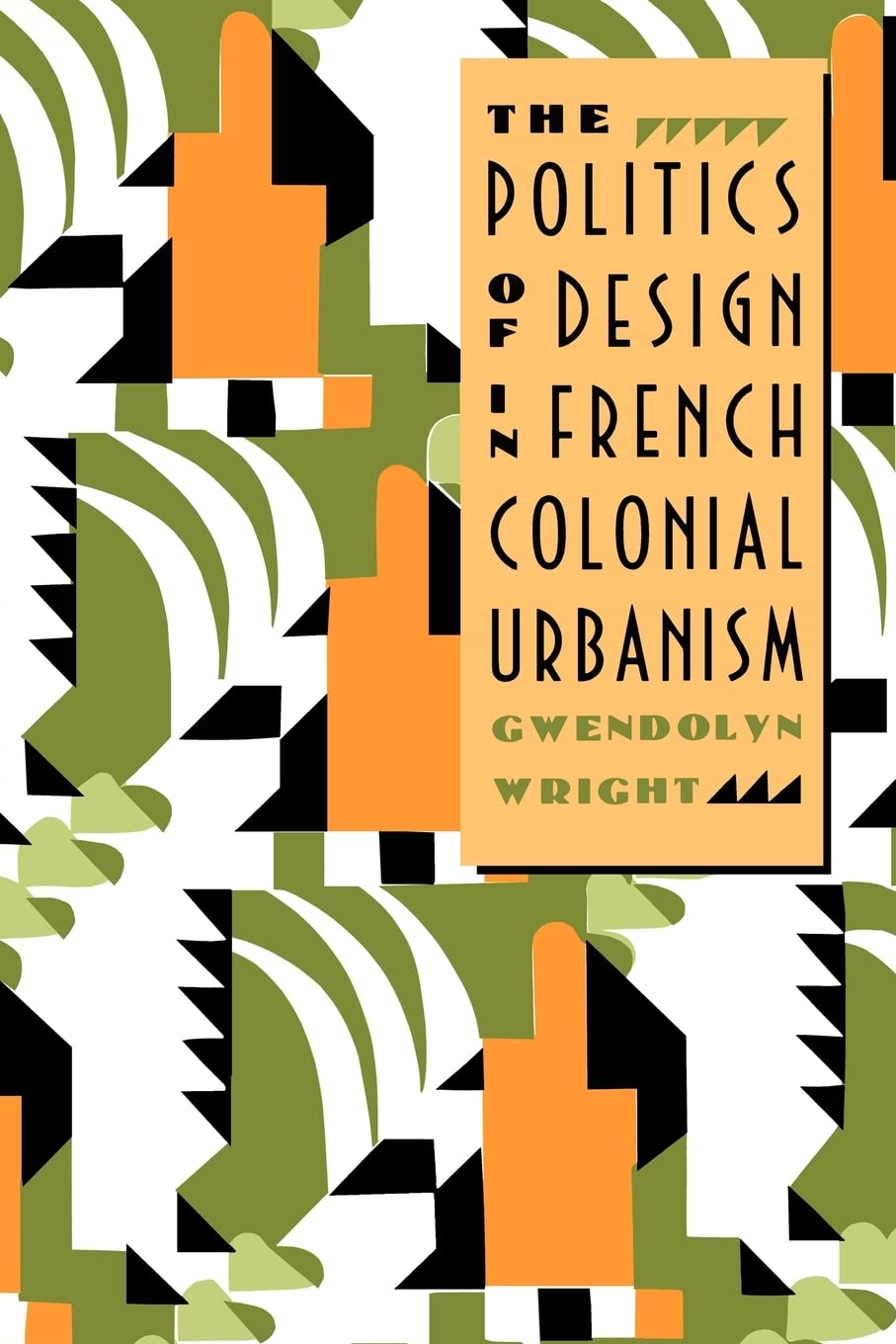
Title
The Politics of Design in French Colonial Urbanism,Used
Sold by Ergodebooks, an authorized reseller.
Returns accepted within 30 days | support@ergodebooks.com
Shipping Information
- Free Standard Shipping — United States only
- Processing Time: 3–5 business days
- Estimated Delivery: 6–10 business days after dispatch
- Double-boxed, fully insured & discreetly packaged
- Tracking number sent via email once dispatched
Returns & Refund
Returns accepted within 30 days of delivery.
Damaged or Defective Item
Free return shipping + replacement or full refund
Wrong Item Received
Free return shipping + replacement or full refund
Change of Mind
Return shipping at customer's expense · 25% restocking fee applies
Payment Option

Politics and culture are at once semiautonomous and intertwined. Nowhere is this more revealingly illustrated than in urban design, a field that encompasses architecture and social life, traditions and modernization. Here aesthetic goals and political intentions meet, sometimes in collaboration, sometimes in conflict. Here the formal qualities of art confront the complexities of history. When urban design policies are implemented, they reveal underlying aesthetic, cultural, and political dilemmas with startling clarity.Gwendolyn Wright focuses on three French coloniesIndochina, Morocco, and Madagascarthat were the most discussed, most often photographed, and most admired showpieces of the French empire in the early twentieth century. She explores how urban policy and design fit into the French colonial policy of 'association,' a strategy that accepted, even encouraged, cultural differences while it promoted modern urban improvements that would foster economic development for Western investors. Wright shows how these colonial cities evolved, tracing the distinctive nature of each locale under French imperialism. She also relates these cities to the larger category of French architecture and urbanism, showing how consistently the French tried to resolve certain stylistic and policy problems they faced at home and abroad.With the advice of architects and sociologists, art historians and geographers, colonial administrators sought to exert greater control over such matters as family life and working conditions, industrial growth and cultural memory. The issues Wright confrontsthe potent implications of traditional norms, cultural continuity, modernization, and radical urban experimentsstill challenge us today.
⚠️ WARNING (California Proposition 65):
This product may contain chemicals known to the State of California to cause cancer, birth defects, or other reproductive harm.
For more information, please visit www.P65Warnings.ca.gov.